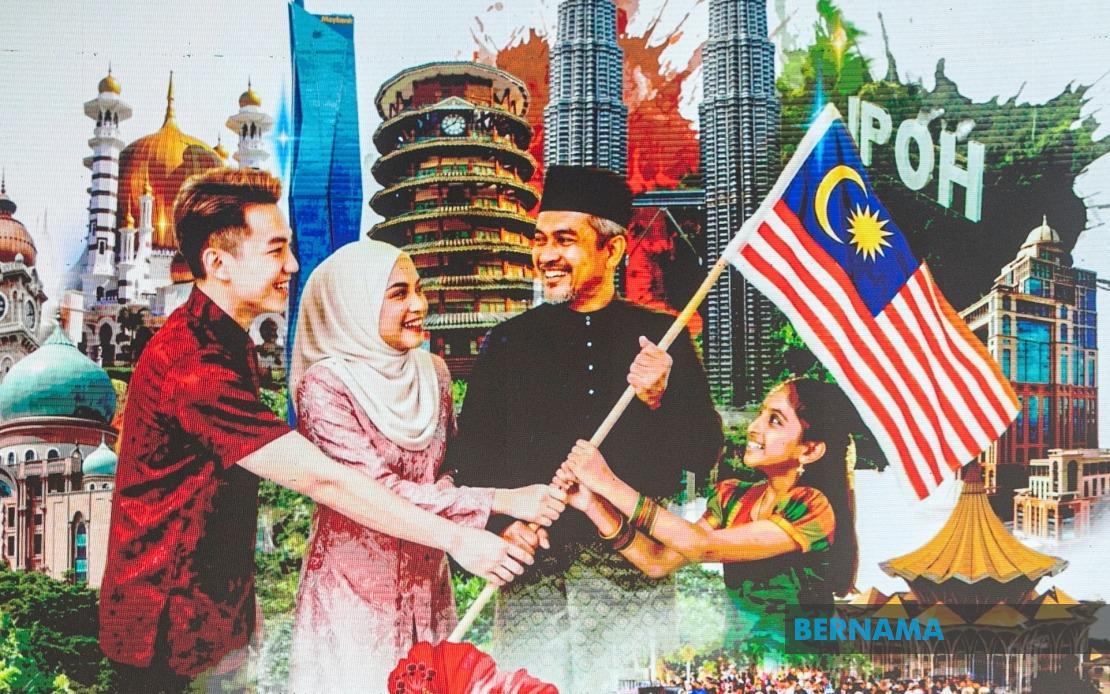
Communications Minister Datuk Seri Fahmi Fadzil has called for heightened vigilance among content creators using artificial intelligence technology to produce material involving Malaysia's national flag, warning that the nation's iconic symbol must be represented with complete accuracy. Speaking at the launch of the 2026 National Month and Fly the Jalur Gemilang campaign at the Sultan Azlan Shah Ministry of Health Training Institute in Tanjung Rambutan, Ipoh, on July 19, Fahmi emphasised the risks posed by AI-generated imagery that fails to capture the flag's defining features, particularly its distinctive 14 stripes.
The minister's intervention reflects a growing concern about the proliferation of digitally generated content during Malaysia's patriotic calendar, when citizens and organisations increasingly deploy AI tools to create promotional materials, social media graphics, and commemorative imagery. As artificial intelligence becomes more accessible and prevalent, the potential for technical errors in reproducing national symbols has emerged as a tangible problem requiring government attention. Fahmi's statement underscores the significance of maintaining fidelity in how national icons are presented, especially when technology intermediates their creation.
Fahmi stressed that content creators bear responsibility for ensuring AI systems produce accurate representations of the Jalur Gemilang rather than accepting whatever output the technology generates. The omission of even a single stripe—a mistake that AI systems might easily make due to the flag's complex design—would fundamentally misrepresent Malaysia's national emblem. This concern is not merely aesthetic; the Jalur Gemilang carries profound symbolic weight as a representation of national identity and sovereignty, making its accurate depiction a matter of cultural and civic importance.
The minister outlined a collaborative approach involving Malaysia's media sector to maintain standards throughout National Month celebrations. The Communications Ministry will partner with the Malaysian Press Institute and Malaysian Media Council to ensure that news organisations, which frequently publish flag imagery during August and early September, employ rigorous verification processes for any AI-generated content. This coordination signals recognition that the problem extends beyond individual creators to institutional practices affecting how millions of Malaysians encounter their national symbol.
When asked about enforcement mechanisms, Fahmi indicated a gradualist approach prioritising education over punitive measures. His ministry's initial strategy involves contacting parties responsible for inaccurate flag representations and requesting voluntary corrections. This advisory framework acknowledges that many errors likely stem from carelessness or unfamiliarity with AI limitations rather than deliberate disrespect. The minister noted that while specific legal frameworks govern misuse of national symbols, his office would exhaust advisory channels before escalating to formal enforcement action.
The emphasis on persuasion over prosecution reflects broader tensions around regulating AI-generated content in Malaysia. As creative industries increasingly adopt these tools, distinguishing between genuine mistakes and intentional violations becomes legally and practically complex. An approach grounded in initial engagement with content creators allows space for correction while preserving legal options if violations persist or prove deliberate. This methodology also avoids the reputational damage that aggressive enforcement against minor technical errors might generate.
Fahmi's comments come as Malaysia intensifies preparations for National Day and Malaysia Day celebrations in 2026. National Day festivities will take place in Putrajaya, while Sarawak will host Malaysia Day commemorations. The government's Fly the Jalur Gemilang campaign encourages citizens to display the national flag continuously from mid-July through September 16, aiming to foster patriotic sentiment throughout residential areas, villages, and government institutions. This extended campaign period dramatically increases the volume of flag-related content circulating across digital and physical spaces, magnifying the importance of accuracy.
The campaign also aims to reinforce proper flag etiquette among the general population, recognising that many Malaysians possess only superficial familiarity with correct display protocols and the flag's structural elements. Educational outreach accompanying the campaign should clarify the 14 stripes' significance and explain why precision matters. By contextualising technical accuracy within a broader patriotic framework, the government frames flag fidelity as an expression of national respect rather than bureaucratic pedantry.
For Malaysia's technology sector and digital content creators, Fahmi's warning signals emerging regulatory attention to how AI tools represent state symbols. Developers and platforms offering AI image generation services may face pressure to incorporate constraints preventing the generation of inaccurate flag imagery. This precedent could extend to other sensitive national or religious symbols, establishing broader expectations for responsible AI deployment in Malaysian contexts. Technology companies operating in Malaysia should anticipate future requirements to implement safeguards ensuring their systems do not produce culturally or legally problematic content.
The minister's intervention also reflects institutional anxiety about maintaining cultural cohesion in an increasingly digital society. When national symbols become subject to mechanical reproduction through AI systems, concerns arise about whether the technology might inadvertently dilute the symbols' significance or introduce discord into collective expressions of nationalism. By emphasising careful human oversight of AI-generated flag content, the government attempts to preserve the symbolic power of national icons even as digital tools reshape how such symbols are produced and disseminated.
Looking forward, the Communications Ministry's collaboration with media organisations and press institutes provides a model for sector-specific governance of AI content generation. Rather than implementing blanket prohibitions, this approach establishes professional standards and best practices that voluntary participants adopt. Success depends partly on media organisations viewing accurate flag representation as integral to professional integrity, similar to other editorial quality standards. If this framework gains traction, it could inform government policy toward AI-generated content in other sensitive domains.

