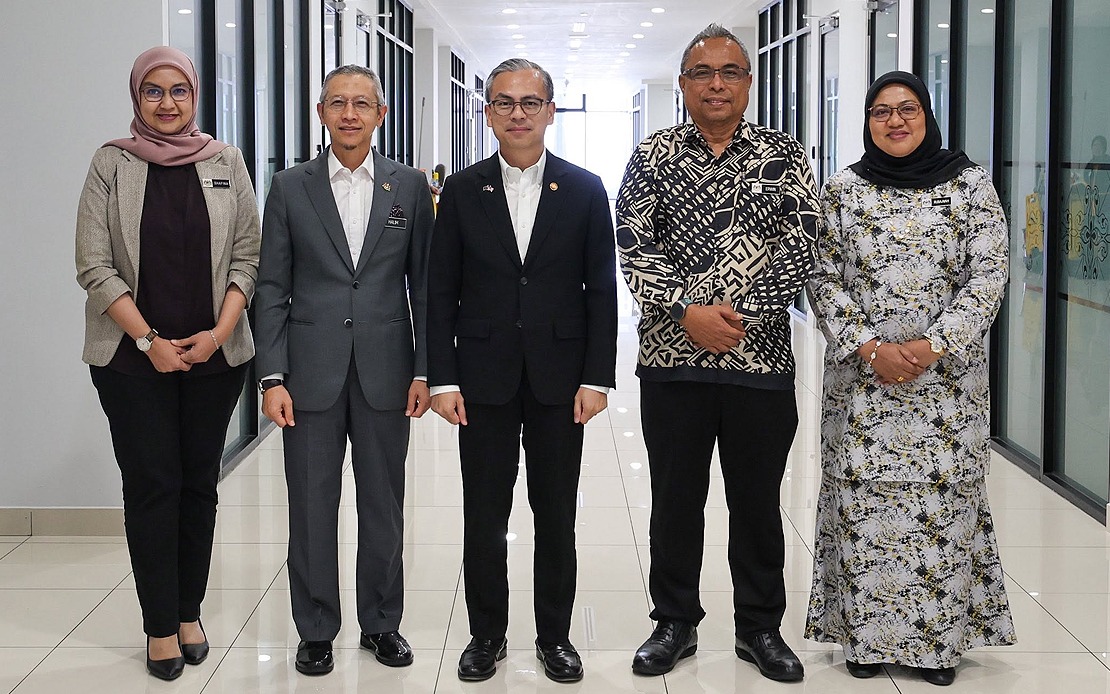
Communications Minister Datuk Fahmi Fadzil has offered his formal congratulations to Erwin Khairul Ahmad following his appointment as the new director-general of the Information Department, commonly known as JaPen, and to Wan Saidatul Shafina Mohd Amin, who has been named deputy director-general overseeing digital content operations. The announcements mark a significant shift in leadership at one of Malaysia's key government communications agencies, which plays a crucial role in shaping how official information reaches the public.
In a statement acknowledging the transition, Fahmi called upon the new appointees to execute their responsibilities with unwavering commitment and prudent judgment. His remarks underscore the ministry's expectations that the Information Department will continue functioning as an essential conduit for delivering timely and accurate information to Malaysian citizens across all demographic segments and geographical regions. The emphasis on effectiveness reflects growing recognition within government circles that public communication strategies must adapt to contemporary information consumption patterns, particularly as digital platforms increasingly dominate how citizens access news and official announcements.
The Public Service Department formally presented appointment letters to both officials, with the ceremony conducted by Tan Sri Wan Ahmad Dahlan Abdul Aziz, the department's director-general. This procedural formality represents the culmination of a deliberative selection process designed to identify candidates whose qualifications and experience align with the evolving demands of government communications in an era marked by rapid technological change and heightened public scrutiny of institutional messaging.
Fahmi also took the occasion to express gratitude toward Julina Johan, the outgoing director-general, acknowledging her tenure as marked by dedicated service and substantive contributions to advancing the department's mission. Recognising predecessor leadership in this manner reflects established practice within Malaysian civil service culture, where institutional continuity and respect for those who have previously held positions remain valued principles. Julina's exit after leading the agency through a period encompassing significant developments in media policy and communications strategy sets the stage for fresh approaches under new stewardship.
The timing of this leadership transition carries particular significance given Malaysia's evolving information landscape. The appointment of Wan Saidatul Shafina specifically to oversee digital content initiatives signals recognition that the department must substantially strengthen its capacity to communicate through contemporary channels. Digital platforms now represent the primary information source for substantial portions of the Malaysian population, particularly younger demographics, making sophisticated online engagement capabilities essential for government agencies seeking meaningful public connection.
Erwin Khairul Ahmad's elevation to the top position at JaPen places him at the helm during a period when government communication faces mounting complexity. Beyond routine information dissemination, the department operates within an environment where misinformation circulates rapidly, competing narratives proliferate across social media, and public trust in institutions requires consistent, transparent, and credible messaging. The incoming director-general will necessarily contend with these contemporary challenges while maintaining the department's traditional functions.
The restructuring within JaPen's leadership hierarchy also reflects broader governmental awareness that digital transformation demands dedicated expertise and focused attention. By establishing a dedicated deputy position specifically for digital content, the department acknowledges that online communication strategies cannot merely supplement conventional public relations approaches but must constitute integral components of comprehensive information architecture. This structural recognition mirrors patterns observed across successful government communication operations worldwide.
For Malaysian observers and stakeholders engaged with government communications, the transition represents an opportunity to assess whether the department will adapt its operational frameworks to meet citizens' contemporary information needs more effectively. The appointments of both Erwin Khairul and Wan Saidatul Shafina therefore warrant close attention, as their approaches to resource allocation, technological adoption, and public engagement will substantially influence how Malaysian citizens receive and interpret official information during their tenure.
The broader implications of this leadership change extend beyond the Information Department itself. As one of Southeast Asia's most developed nations with sophisticated media infrastructure and increasingly digitally literate population, Malaysia's approach to government communications often influences neighbouring countries' evolving practices. The emphasis that Fahmi placed upon the department's role as an "effective medium" suggests that Malaysian authorities recognise communication capacity as fundamentally intertwined with effective governance and public confidence in institutions—a recognition that positions information strategy as central rather than peripheral to state functioning.

