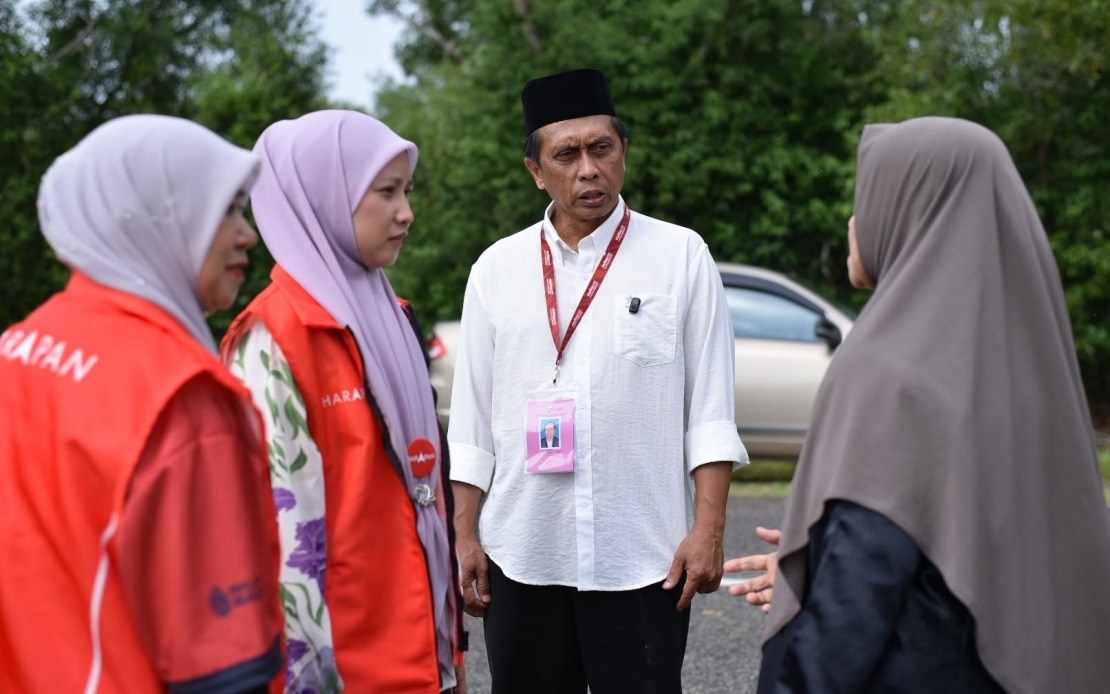
Pakatan Harapan's candidate for the Tanjung Surat state seat has rejected the characterisation that his coalition is simply going through the motions in what has traditionally been a Barisan Nasional bastion. Speaking during the campaign for the 16th Johor state election, Faizul Abdul Ghani expressed unwavering determination to secure what would represent a significant upset victory in the southern state, dismissing any notion that PH is merely padding out the candidate list in this particular contest.
At 56 years old, Faizul believes the electoral dynamics in Tanjung Surat have fundamentally shifted from the patterns of previous elections. He contends that grassroots opinion is increasingly gravitating towards Pakatan Harapan, a development that he argues creates genuine prospects for an unexpected outcome against the sitting assemblyman, Aznan Tamin of BN. The observation reflects broader regional political currents, as constituencies once considered safe for the ruling coalition have shown increasing volatility in recent electoral cycles across Malaysia.
Faizul's assessment of the political terrain differs sharply from conventional wisdom that has long painted Tanjung Surat as difficult territory for opposition forces. Rather than engaging with the framing that positions certain seats as inherently challenging or easy to win, he has adopted a framework emphasising sustained effort and principle-driven campaigning. His stated approach prioritises persistent engagement with constituents over electoral calculations, a positioning that aims to distinguish PH's campaign methodology from what he characterises as transactional politics.
The candidate pointed to receptiveness among voters across the political spectrum as evidence bolstering his optimism. He noted that his cross-party appeal throughout the campaign phase has generated positive feedback from people with varying political affiliations, suggesting that Tanjung Surat voters may be looking beyond traditional party lines. This observation holds significance for understanding contemporary Malaysian electoral behaviour, where younger and increasingly cosmopolitan constituencies demonstrate reduced allegiance to historical party structures.
Campaign disruptions during the opening week of the election period, including sabotage of PH's campaign materials, have not visibly dented either Faizul's determination or the coalition's campaign machinery. Drawing on extensive experience within Parti Keadilan Rakyat spanning nearly 27 years, Faizul contextualised such incidents as relatively minor provocations compared to more serious disruptions from earlier political eras. His measured response reflects a calculated strategy of maintaining campaign momentum while avoiding escalation of tensions that could alienate swing voters.
The approach adopted by Faizul's campaign team emphasises discipline and voter engagement over reactive responses to provocations. Campaign workers have been instructed to absorb disruptions without reciprocal action and maintain focus on direct interaction with the electorate. This strategy acknowledges that appearing defensive or embroiled in conflicts could undermine broader efforts to position PH as the more constructive alternative in Tanjung Surat.
Following extensive grassroots mobilisation across nearly every locality in the constituency, often with repeat visits to high-priority areas, the PH campaign is now entering a consolidation phase aimed at converting awareness into actual voting support. This deliberate shift from expansion to consolidation suggests confidence that the campaign has successfully penetrated the constituency's voter base and now requires focusing on converting soft support into firm electoral commitments.
Faizul's policy platform addresses specific local economic concerns, particularly those affecting Tanjung Surat's fishing community concentrated in Sungai Rengit. His priorities include streamlining the fishing licence approval process and upgrading deteriorating maritime infrastructure such as breakwaters and jetties, challenges that have accumulated due to insufficient attention from incumbent representatives. Such targeted commitments allow candidates to demonstrate local knowledge and commitment to specific constituency problems rather than generic national platforms.
Beyond primary industry concerns, Faizul envisions leveraging Tanjung Surat's tourism potential as an economic development strategy. Areas including Sungai Rengit, Batu Layar, and Tanjung Belungkor possess attraction potential that remains underdeveloped, according to his analysis. Tourism-led development could diversify income sources for homestay operators and small traders, addressing economic anxieties that drive electoral decisions in less urbanised constituencies. This vision represents an attempt to connect immediate livelihood concerns with longer-term prosperity narratives.
The Johor state election encompasses 172 candidates competing across 56 state seats, with polling scheduled for July 11. Tanjung Surat represents one of numerous contests where traditional political alignments face genuine challenge from opposition forces. The overall electoral environment reflects ongoing reconfiguration of Malaysian politics, where demographic shifts, economic pressures, and evolving voter expectations create opportunities for parties capable of articulating alternative visions.
The significance of Tanjung Surat extends beyond the individual constituency. Should Pakatan Harapan achieve an unexpected victory here, it would signal successful repositioning in previously difficult territory and suggest that the coalition's appeal transcends urban and developed areas. Conversely, a BN retention would confirm continued strength in constituencies with older demographic profiles and primary industry bases. The result will provide important data for interpreting broader Johor electoral trends and the trajectory of Malaysian politics in coming years.

