The moment Suwanna Saeteaw, 38, spotted her sister's mobile phone among recovered belongings on a television news broadcast, her worst fears crystallized. The device belonged to Jarawee Sermsiri, her 25-year-old sibling, displayed as evidence from the inferno that consumed the Rong Beer Na Lat Phrao bar and restaurant shortly before midnight on July 12 in Bangkok. When Suwanna called the number in desperation, a rescue worker answered instead of the familiar voice she had hoped to hear. Standing devastated yet refusing to surrender to despair, she articulated the anguish gripping countless families across the Thai capital: a mixture of heartbreak tempered by fragile determination to locate their loved ones against mounting odds.
The scale of the catastrophe became apparent over the following hours as authorities reported 28 confirmed deaths and more than 70 injured. This tragedy marks Thailand's deadliest fire incident in nearly two decades, surpassed only by the Santika club disaster during New Year celebrations in 2009, which claimed 67 lives and injured over 200 patrons. The parallel to that earlier tragedy underscores a persistent vulnerability in Thailand's entertainment venues despite interventions and heightened awareness. For Malaysian observers, the incident reflects wider Southeast Asian concerns about safety compliance in hospitality sectors where rapid expansion and profit motives sometimes outpace regulatory oversight and genuine enforcement mechanisms.
Suwanna spent the agonizing hours following the fire traversing between hospitals and forensic facilities, studying survivor lists while fearing that her sister might be among the unidentified deceased in the morgue. Authorities informed her that DNA analysis could confirm identities within approximately three days, a timeframe that felt impossibly distant to a sister desperate for answers. She persevered nonetheless, exhausting every available avenue to locate Jarawee among the living before accepting darker possibilities. Her experience mirrored that of dozens of families engaged in the same grim search, physically and emotionally drained by uncertainty and the machinery of disaster response.
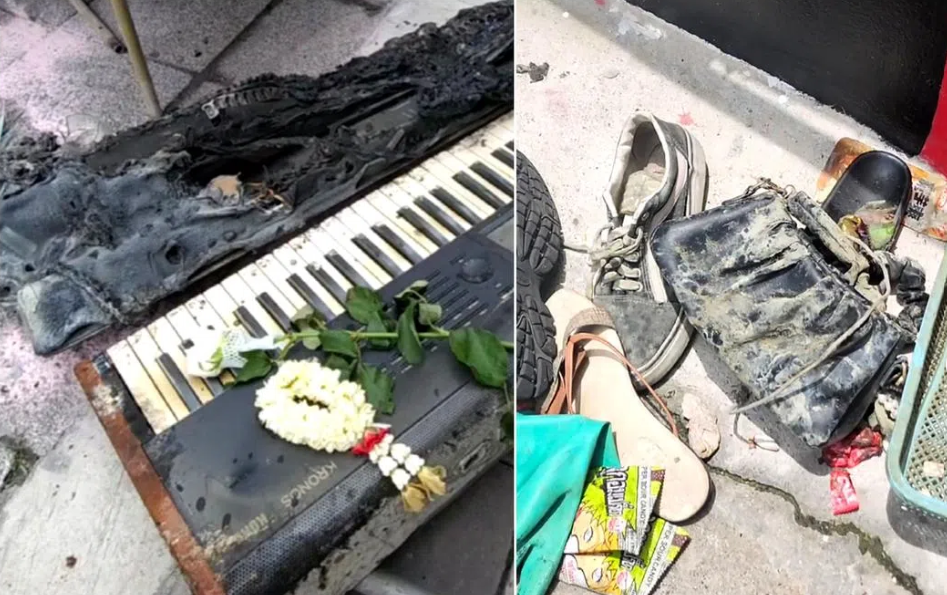
At the charred venue itself, the physical remnants of panic lay scattered—abandoned shoes, discarded bags, and personal effects marking the desperate flight of patrons as flames and dense black smoke enveloped the single-storey concrete structure. This visceral evidence of chaos formed the backdrop for investigators attempting to reconstruct how a licensed establishment that had passed April inspections transformed into a death trap within minutes. The building's history, stretching back five decades, suggested aging infrastructure vulnerable to the rapid fire spread that witnesses described. Bangkok's Governor Chadchart Sittipunt indicated that approximately 300 patrons were present when the blaze ignited, well below the venue's typical nightly capacity of 600 to 700, suggesting that mortality rates could have escalated dramatically under fuller conditions.
Investigators rapidly identified several critical factors that likely amplified the tragedy's severity. National police chief Kitrat Panphet revealed a disturbing pattern: most victims were discovered in toilet areas, having frantically sought refuge in spaces offering no escape routes when panic overwhelmed them in darkness. One exit door was partially obstructed by a shelf arrangement, creating a bottleneck that allowed passage for merely one person at a time—a catastrophic design flaw that transformed an already dangerous situation into a lethal chokepoint. The presence of combustible polyurethane foam decorations adorning the ceiling, combined with inadequate ventilation in the cramped venue, created conditions for rapid toxic smoke accumulation. Amorn Pimanmas, president of the Thailand Structural Engineers Association, emphasized that such decorative materials would have accelerated the fire's intensity while producing noxious fumes that incapacitated evacuees before they could reach safety.
The examination of the venue's structural and electrical systems revealed additional concerns about maintenance and safety practices. The building's half-century age meant that original wiring likely deteriorated significantly over the decades, potentially creating ignition sources or accelerating electrical fires. Investigators examined whether faulty wiring contributed to the initial spark, and whether the venue's physical layout—notorious for cramped conditions and narrow passageways—genuinely complied with fire code requirements for emergency egress. Despite having passed official inspection merely three months prior, the venue apparently harbored systematic deficiencies that inspection protocols failed to detect or enforce. This gap between regulatory approval and actual safety conditions speaks to broader enforcement challenges across Southeast Asia's hospitality sectors.
Prime Minister Anutin Charnvirakul visited the disaster site and acknowledged the presence of "blind spots" lacking visible fire escape routes—a tacit admission that even senior government officials recognized fundamental design failures in an ostensibly licensed establishment. His warning that "there will be no leniency if any laws have been broken" reflected political pressure to appear responsive, yet also hinted at acknowledgment that rules existed but were inadequately enforced. The distinction between having laws and actually implementing them represents a central challenge across the region, where regulation often exists on paper but struggles in practice due to corruption, inadequate resources, or institutional weakness. For Malaysian stakeholders in hospitality and public safety, the Bangkok incident serves as a cautionary reminder that licensing and periodic inspections alone cannot guarantee adequate protection without rigorous, unannounced enforcement and genuine institutional commitment to compliance.
Survivors' accounts provided harrowing testimony to the sudden onset of the catastrophe. Panathaporn Thongyord, 19, escaped the flames but lost a close friend of 14 years in the process. The friend's final words—urging her to flee without attempting a rescue—encapsulated the sudden transition from a normal evening to a life-or-death scenario. A waiter named Chaiyo Piwisol, 30, who had visited the bar previously, recalled the venue as perpetually crowded and cramped with narrow doorways that had always prompted unease about safety adequacy. His observation that decorations, lights, and hanging objects proliferated throughout the space, yet no enhanced safety measures compensated for these hazards, suggested that operational decisions prioritized ambiance over patron protection. Such testimonies highlight how safety culture—or its absence—permeates decision-making at individual establishment levels across the region's entertainment sectors.
The tragedy reignites fundamental questions about Thailand's fire safety standards and the mechanisms for their enforcement, particularly in bars and nightclubs that have historically been sites of repeated catastrophes. The Santika club fire of 2009 prompted reforms and heightened awareness, yet the Bangkok incident indicates that lessons failed to translate into comprehensive, systemic improvements. Establishments continue operating with questionable exit provisions, combustible decorations, and cramped layouts that present obvious hazards. The involvement of the venue owner in intensive care, limiting police ability to conduct timely investigations, further complicates efforts to establish responsibility and accountability. Questions remain about who failed to enforce existing regulations, whether inspectors received adequate training, and whether corrupt practices compromised the inspection process.
For Malaysia and other Southeast Asian nations, the Bangkok fire serves as a sobering case study in the necessity of rigorous, transparent safety enforcement rather than mere regulatory existence. The region shares similar challenges: rapid hospitality sector growth, competitive pressures that reward cutting costs over safety investments, and enforcement agencies sometimes lacking resources or political will for consistent inspection regimes. The difference between establishments where lives are protected and those where tragedies occur often hinges not on whether rules exist, but whether implementation occurs with genuine commitment to public welfare. Thailand's initial investigation will likely identify specific violations and enforcement failures; the critical question becomes whether these findings prompt regional reflection and concrete improvements across Southeast Asia's entertainment sectors, or whether they fade into historical memory until the next catastrophe occurs.

