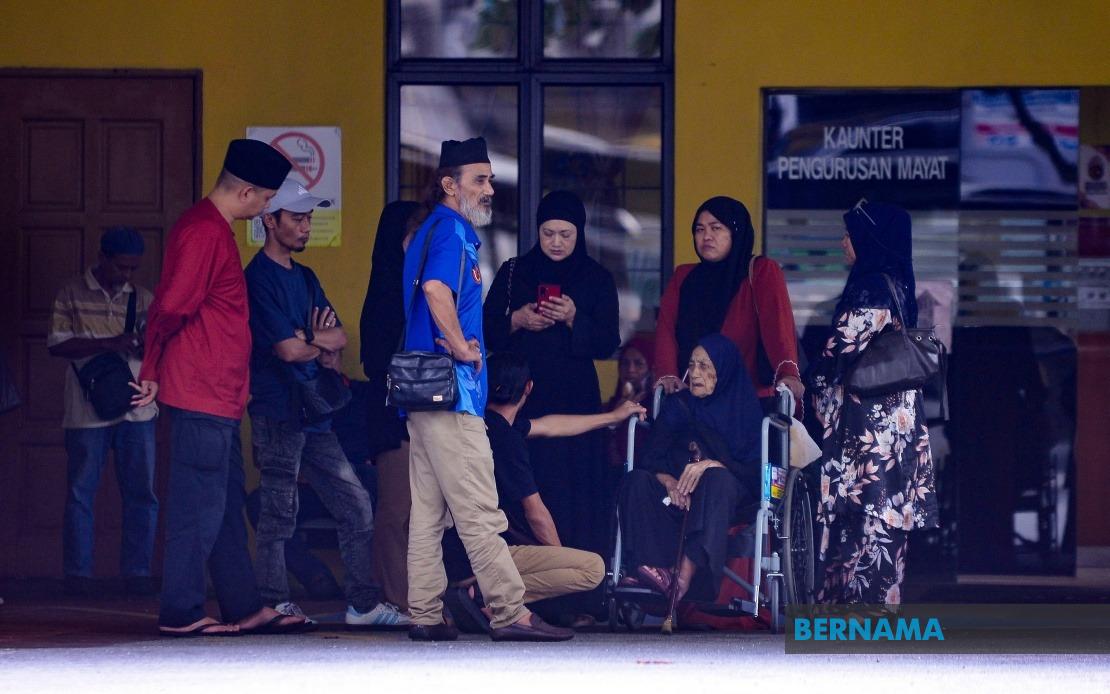
A grieving family has called for a comprehensive and impartial investigation into a pre-dawn collision at Maju Junction that claimed three lives, with questions arising over whether an Immigration Department vehicle proceeded through a red traffic signal. Mohd Nadzri Razali, speaking from his home in Taman Aman Fasa 2 in the Mambang Di Awam area near Kampar, expressed his determination to secure justice for his relatives who perished when an Isuzu Black Maria lorry operated by the Immigration Department struck pedestrians near the busy intersection in the early hours of the morning. The 69-year-old, who is the brother-in-law of one of the deceased, said he has heard accounts suggesting the lorry may have disregarded traffic regulations at the moment of impact.
The tragedy unfolded around 1 am when the Immigration Department's empty Black Maria was en route from the Kuala Lumpur Immigration Office to Chow Kit, where officers intended to conduct an enforcement operation targeting individuals without valid documentation. Accounts of the incident describe the lorry entering the Maju Junction intersection whilst its traffic light displayed red, though the vehicle had activated both its beacon lights and audible siren. At the same moment, a Proton Saga that was proceeding lawfully on a green signal proved unable to avoid collision with the much larger Immigration vehicle. The impact proved catastrophic, sending the lorry spinning violently out of control in what witnesses described as an uncontrollable skid that carried it directly into a cluster of pedestrians and subsequently an Inokom Matrix multipurpose vehicle.
The pedestrians struck were members of a single family unit. Shaik Mohd Firdaus Shaikh Yahya, aged 53, and two of his daughters—Siti Nor Sazlin, 25, and Siti Darwisyah Auni, just 12 years old—were pronounced dead at the scene. His wife, Norhayati Razali, sustained severe injuries and was immediately hospitalised. Mohd Nadzri confirmed that his younger sister, now 55, remains under intensive medical supervision at Kuala Lumpur Hospital. He expressed uncertainty about her discharge prospects, noting that while she has regained consciousness, her condition remains serious enough that the family has requested transfer to either Hospital Ipoh or Teluk Intan for continued specialist treatment closer to their Perak home.
The loss compounds a series of recent tragedies that have devastated this extended family. Mohd Nadzri revealed that just months earlier, on 30 May, the family had buried another relative. The sudden removal of three members from their immediate circle within a matter of hours has created profound emotional and practical challenges. The family has already made arrangements to honour their deceased together, planning a joint burial at the Muslim Cemetery in Kampung Air Hitam Labu in Kampar, underscoring the close bonds that united the three who were killed.
Mohd Nadzri, who resides in the same residential area as his sister's household, recalled that his last encounter with the family occurred approximately two weeks before the accident. At that time, they had travelled together to Teluk Bakong in the Ayer Tawar region to perform the customary cleaning and maintenance of family grave sites. That routine family outing now stands as his final memory of relatives now gone.
The circumstances surrounding the collision have raised significant public concern about operational procedures governing emergency vehicles. The lorry was operating under emergency conditions with lights and siren activated, yet the critical question remains whether these safety measures exempt large government vehicles from observing standard traffic regulations, or whether the driver bore responsibility for ensuring it was safe to proceed. This incident intersects with broader discussions within Southeast Asia about balancing emergency response protocols with public safety and accountability.
The case has been formally registered and is proceeding under Section 41(1) of the Road Transport Act 1987, which addresses causing death by rash or negligent driving. This legislative framework provides the legal basis for determining culpability, though Mohd Nadzri's explicit call for transparency suggests the family harbours concerns that standard investigation procedures may not adequately address the specific question of whether proper protocols were followed by the Immigration Department vehicle.
The incident occurs amid ongoing national conversations about road safety and the conduct of government agencies in high-speed operations. Malaysia has consistently grappled with high road fatality rates, and collisions involving emergency vehicles raise questions about training, protocols, and oversight. The family's demand for transparency reflects a broader public expectation that all road users, regardless of institutional affiliation, must be held to consistent safety standards and answerable when procedures go awry.
For the immediate family members left behind, the investigation represents more than a procedural requirement. It represents acknowledgment of loss, clarity about how tragedy befell their loved ones, and assurance that the system will not minimise accountability simply because one of the vehicles involved was operated by a government department. Mohd Nadzri's advocacy from his modest home in Kampar carries the weight of a family's collective grief and determination to ensure that the circumstances leading to three deaths are fully and objectively examined. The outcome of this inquiry will likely resonate beyond this single household, setting precedent for how Malaysian authorities investigate incidents involving their own operations and respond to public demands for justice.

