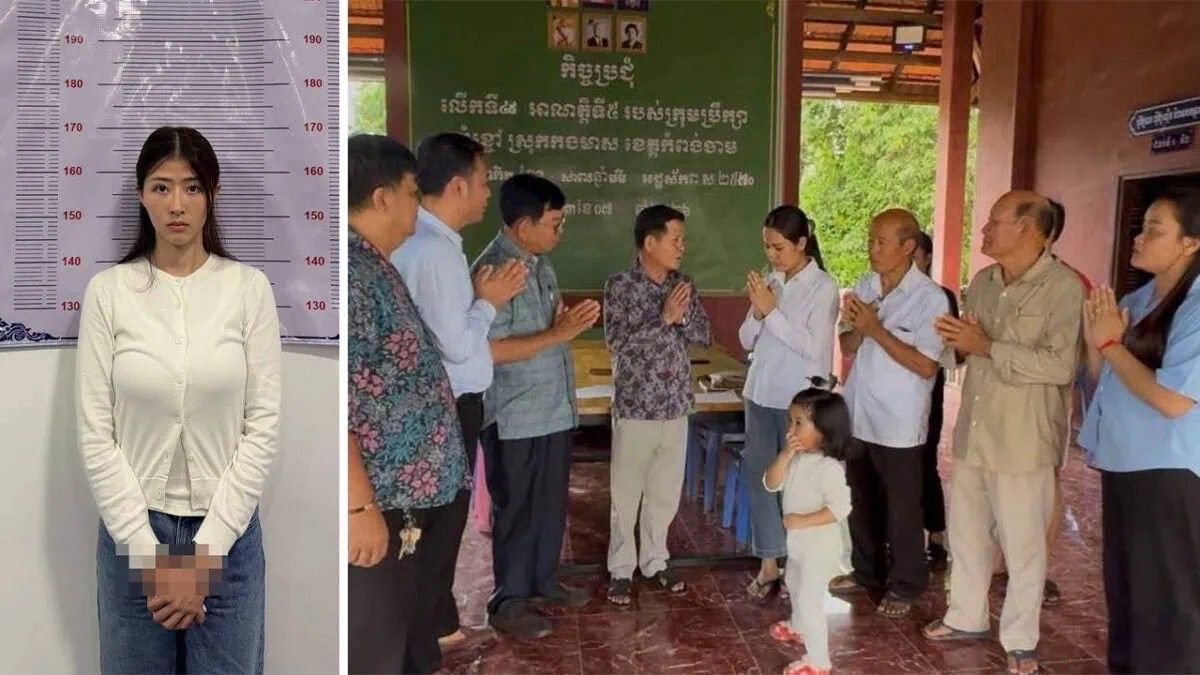
The family of Kuoch Limhan, a construction laboratory official with Cambodia's Ministry of Public Works and Transport who died in a traffic collision in Phnom Penh last month, has resolved its civil dispute with the driver through an out-of-court settlement worth S$60,000. Under the agreement signed on August 6, the victim's widow received the compensation payment from Oknha Tong Hok Seng, father of the accused driver Sam Meychou, leading the family to formally withdraw its civil complaint. The settlement was witnessed by commune chief Kong Sekleng and lawyer Phon Thearin, with Seung Kimhor representing the victim's family in the negotiations. However, the resolution of the civil matter does not extend to the criminal case, which will proceed independently through the Cambodian justice system.
The fatal incident occurred on the evening of July 28 in Phnom Penh's Sen Sok district under circumstances that suggest reckless driving. According to the prosecution's account, Meychou crossed the centreline while attempting to overtake another vehicle and struck Limhan's motorcycle head-on. The victim, who was reportedly heading home carrying milk for his young daughter, was killed instantly by the impact. Video evidence from the scene documented the immediate aftermath, showing Meychou and an associate departing the collision site in a tuk tuk while Limhan's body lay motionless on the rain-drenched roadway, a particularly damning visual record that would likely prove significant in the criminal proceedings.
Meychou's response to the incident compounded the severity of the allegations against her. Rather than remaining at the scene to provide assistance and cooperate with authorities, she fled the location, which transformed what might have been classified as a traffic accident into a more serious offence. She did not voluntarily surrender herself to police until the afternoon of July 30, two days after the collision. Upon her surrender, she faced immediate charges of causing a fatal traffic accident while also fleeing the scene, offences that carry substantially greater penalties under Cambodian law than a simple traffic collision would warrant.
The Phnom Penh Municipal Court moved swiftly through the initial procedures. On July 31, the same day Meychou was formally charged, the court announced that an investigating judge had ordered her placement in pre-trial detention following questioning and examination of the evidence gathered at the scene. This detention order reflected the court's assessment of the severity of the charges and the circumstances surrounding them, suggesting that authorities viewed the case as warranting serious prosecution rather than a minor traffic matter.
The civil settlement represents a common mechanism in Southeast Asian jurisdictions for resolving certain aspects of cases involving death or injury, allowing families to secure financial compensation without necessarily pursuing protracted legal battles. The stated terms of the agreement between the parties emphasise that both sides resolved the matter "amicably" through "mutual understanding and goodwill",language that suggests negotiation occurred and both parties reached a position they found acceptable. Under the settlement's provisions, neither party agreed to pursue any additional claims or demands related to the incident, effectively binding them to the terms of the compensation arrangement.
This distinction between civil and criminal proceedings reflects fundamental principles of justice systems across the region. Civil compensation addresses the financial and material losses suffered by the victim's family and serves to make them whole to whatever extent money can achieve in the aftermath of loss. Criminal prosecution, by contrast, serves the public interest by holding accountable those who breach traffic laws and endanger lives. The withdrawal of the family's civil complaint does not diminish the state's interest in prosecuting the criminal case, as the charges represent violations of traffic statutes designed to protect all road users.
The case illustrates broader concerns about road safety in Cambodia and Southeast Asia more generally. Hit-and-run incidents, where drivers flee the scene rather than remaining to assist victims, represent particularly egregious violations of both law and basic moral responsibility. The fatal outcome in this instance, combined with the victim's status as a government official responsible for infrastructure work, likely elevated public and official attention to the matter. Limhan's role in the Ministry of Public Works and Transport lends additional significance, as his death removes institutional knowledge and reflects the human cost of inadequate traffic enforcement or driver negligence on Cambodia's roads.
The S$60,000 compensation figure, while substantial in Cambodian currency terms, underscores the economic dimensions of such tragedies in developing economies. For Limhan's widow and young daughter, the settlement provides financial resources to address immediate needs and longer-term security, though no monetary amount can truly compensate for the loss of a parent and spouse. The amount negotiated between the parties suggests recognition of the victim's earning capacity, his role as sole or primary provider, and the lifelong impact of his absence on his dependents.
Moving forward, the criminal case will determine whether Meychou faces imprisonment, fines, or other criminal penalties for her actions. The continuation of criminal proceedings despite the civil settlement reflects Cambodia's legal framework, which maintains that traffic violations and fleeing the scene constitute public wrongs prosecutable by the state irrespective of private settlements. The evidence gathered—including video footage, witness testimony, and police investigation findings—will form the basis for the court's eventual decision on guilt and appropriate sentencing.
This development will be closely watched by traffic safety advocates and civil society observers in Cambodia and the broader region, as it demonstrates how cases involving fatalities are handled within the Cambodian legal system. The case also serves as a sobering reminder to road users across Southeast Asia of the devastating consequences of dangerous driving practices and the imperative of remaining at accident scenes to provide assistance and cooperate with authorities rather than fleeing.

