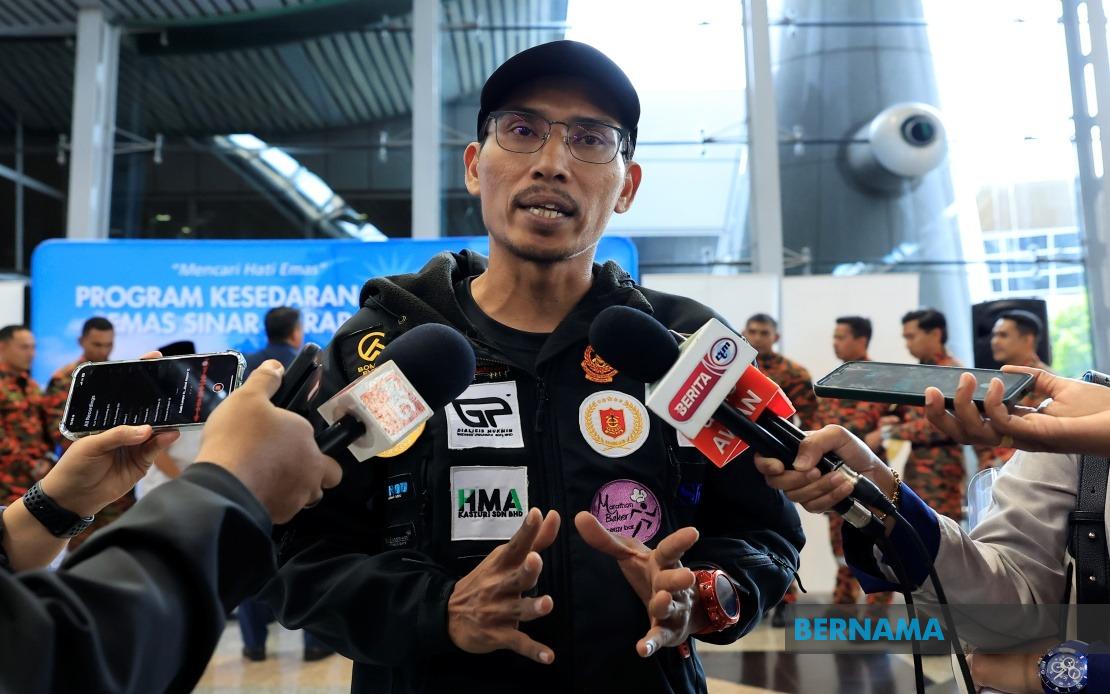
The family of Mohd Fakhrul Munir Mohd Isa, a 44-year-old member of the Malaysian Fire and Rescue Department's elite special forces unit, continues to cling to hope as rescue efforts intensify following devastating flash floods and landslides that swept through the Rasuwa district in Nepal. The experienced climber, known to friends and colleagues as Loe, has been unreachable since the disaster struck the mountainous terrain where he and a larger expedition group were conducting operations. Authorities and family members are treating the situation as a critical missing persons case, though the treacherous conditions and widespread damage in the affected area have severely hampered communication and search capabilities.
Mohd Saiful Munir Mohd Isa, the missing firefighter's 46-year-old brother, addressed anxious media inquiries on August 28 from the family home in Sik, emphasizing that relatives have chosen to maintain a resolute outlook during this challenging period. He acknowledged that the complete communication silence from the region is almost certainly attributable to the massive environmental disaster that devastated the Rasuwa locality, rather than any other explanation. The family's approach reflects a combination of realistic optimism and spiritual practice, with prayers continuing for Loe's safe discovery and that of his companions who were part of the same expedition.
While maintaining this hopeful posture, Mohd Saiful Munir also prepared the family and public for the possibility of less favorable outcomes. He articulated this delicate balance with measured language, noting that loved ones must simultaneously brace themselves for whatever conclusion the search may ultimately reveal. This cautious realism stems from understanding the extreme dangers inherent in high-altitude mountaineering operations conducted in regions vulnerable to sudden meteorological and geological hazards.
The missing firefighter's deep commitment to mountaineering and international climbing expeditions was not viewed by his family as an unusual or reckless pursuit. Mohd Saiful Munir characterized his brother's connection to Nepal as profound and established over many years, describing the Himalayan nation as virtually a second homeland where Loe maintained close ties and regular training opportunities. The frequency of these excursions underscores the extent of Loe's professional dedication to climbing, with visits to the country occurring roughly three to five times annually. Beyond mountaineering, the missing officer also pursued cycling with considerable enthusiasm, suggesting a lifestyle thoroughly centered on outdoor athletic pursuits that demand both technical expertise and physical resilience.
Mohd Saiful Munir, himself an operations officer stationed at the Port Klang Fire and Rescue Station, provided insight into the timeline of events. He recalled that approximately one week prior to Loe's departure for Nepal, the two brothers had maintained regular contact, yet no communication has been possible since the expedition commenced. Based on the planned route the group was following when the disaster occurred, analysis suggests the climbing party likely found themselves in valley terrain at the moment the flash floods and associated landslides materialized. This geographical positioning would have placed the team in an extremely vulnerable location, trapped by rising water and unstable earth movement with limited options for rapid evacuation or signal transmission.
The situation confronting rescue authorities involves a complex coordination challenge across international borders and mountainous terrain. Two Malaysian Fire and Rescue Department personnel remain among the unaccounted Malaysians following the Rasuwa disaster. Beyond Mohd Fakhrul Munir Mohd Isa, the department has identified another officer unable to make contact: Mohd Sani Harul, who serves as deputy director of the Planning and Research Division. These individuals were part of a substantially larger Malaysian expedition comprising ten citizens altogether who had embarked on an ambitious journey targeting Everest Base Camp.
The identification of these missing officers comes from Datuk Seri Nor Hisham Mohammad, the Fire and Rescue Department's director-general, who released information to concerned media outlets seeking details about the fate of Malaysian nationals caught in the disaster zone. The magnitude of the expedition, involving a double-digit contingent of Malaysian climbers and trekkers, demonstrates the considerable popularity of Himalayan mountaineering among adventurous Malaysians despite the inherent risks. The Everest Base Camp trek, while less technically demanding than summiting the mountain itself, still exposes participants to altitude-related challenges, unpredictable weather patterns, and environmental hazards such as the floods and landslides that have now trapped this group.
Mohd Saiful Munir has adopted a measured approach toward receiving information about the rescue operation, indicating that he intends to restrict his understanding solely to official communications distributed through government channels. This decision reflects both a desire to avoid speculation that could distress the family further and an acknowledgment that authoritative sources remain the most reliable basis for assessing the actual situation. With the Malaysian embassy in Nepal likely coordinating response efforts alongside Nepali authorities, the official information pipeline represents the family's primary conduit for updates.
The plight of the missing Malaysians highlights the considerable risks inherent in mountain expeditions, even among experienced professionals such as firefighters with specialized training. The Rasuwa region, while offering stunning mountainous scenery and established trekking routes, remains subject to sudden climate events and geological instability. Climate patterns in the Himalayas during late August can generate intense precipitation capable of triggering flash flooding in valley areas, with landslides representing a secondary hazard that compounds rescue difficulties. For Malaysian families with relatives undertaking such journeys, the challenge combines anxiety during communication blackouts with limited ability to influence outcomes in remote mountain environments.
The broader context of Malaysian participation in extreme sports and adventure activities reflects a growing trend among middle-class Malaysians seeking personal challenge and international climbing experience. This expansion of adventure tourism and mountaineering enthusiasm, while enriching individual lives and building international connections, simultaneously exposes participants to hazards that domestic emergency services cannot rapidly address from thousands of kilometers distant. The current situation underscores both the determination of Malaysian adventurers to pursue their passions and the sobering reality that nature's power remains indifferent to nationality or professional training.
As search and rescue operations continue in Nepal with international coordination, the Malaysian firefighter community and the broader public await news of the missing personnel. The family's measured optimism, grounded in both spiritual conviction and realistic acceptance of uncertainty, reflects the emotional terrain navigated by loved ones during such crises. For Mohd Saiful Munir and his relatives, each passing hour without contact intensifies the emotional weight, yet they maintain the posture that Loe and his companions may yet emerge safely from the disaster zone once communication infrastructure recovers and rescue teams access previously unreachable locations.

