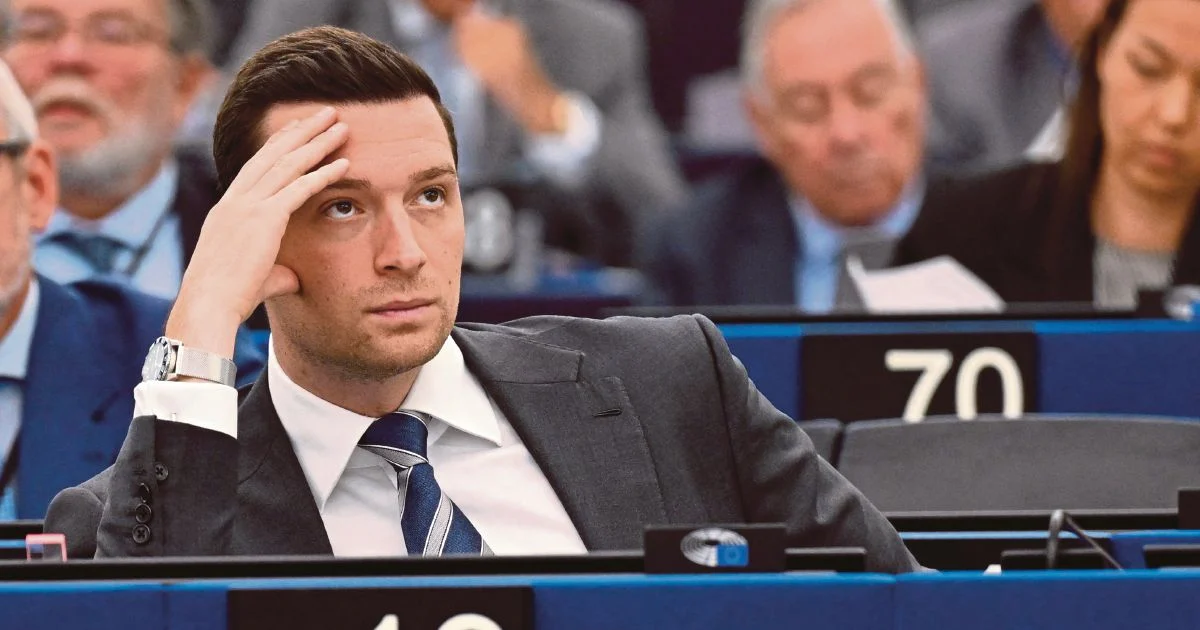
French anti-corruption authorities have initiated a formal inquiry into whether Jordan Bardella, a prominent contender within the far-right National Rally (Rassemblement National), fraudulently held a non-existent assistant position at the European Parliament, a development that threatens to complicate the political trajectory of the party's potential next presidential candidate. The corruption watchdog brought the allegations forward on Tuesday, signalling that serious questions exist about the legitimacy of the role Bardella purportedly occupied during his time as a member of the European institution.
Bardella, who leads the National Rally's parliamentary delegation and has been repeatedly positioned as a future presidential prospect for the party, categorically rejects the claims. His party's leadership has issued blanket denials regarding the assertion that any fraudulent employment arrangement existed. The distinction between holding a nominal position versus conducting substantive work at the European Parliament has long been a point of contention among critics of the institution, who argue that numerous parliament members maintain staff arrangements that deliver minimal tangible benefit to constituents.
The investigation represents the latest controversy to embroil the National Rally, which has sought to rehabilitate its image and present itself as a conventional political force capable of governing France. For a party attempting to distance itself from decades of extremism and build mainstream credibility, allegations of administrative misconduct strike at claims of institutional propriety and honourable conduct. The timing of the inquiry is potentially consequential, as discussions about Bardella's political future and possible involvement in forthcoming elections could be overshadowed by this oversight.
European Parliament positions have proven fertile ground for controversy in recent years, with various national delegations facing questions about how staffing allocations are utilised and whether some appointments serve legitimate legislative purposes. The parliament allocates budgets to political groups, which then determine staffing arrangements and compensation structures. While not inherently improper, the system permits considerable discretion that has periodically attracted scandal across different member states and political affiliations.
Bardella's emergence as a serious political contender reflects broader shifts in French electoral dynamics, where the National Rally has cultivated a constituency extending beyond its traditional working-class base. His relative youth and media-savvy approach have made him an appealing public face for the party, contrasting with associations from earlier eras. However, vulnerabilities regarding administrative or ethical lapses can prove damaging to politicians positioning themselves as viable governing alternatives, particularly when voters seek reassurance about governance standards.
The investigation's scope remains unclear at this stage, though corruption watchdogs typically evaluate whether public funds were misappropriated, whether employment terms reflected actual responsibilities, and whether relevant disclosure requirements were satisfied. French regulatory frameworks governing parliamentary conduct and financial transparency impose specific obligations on elected representatives and their staffing arrangements. Any potential violations could carry procedural, administrative, or legal consequences depending on findings.
The National Rally's response has centred on dismissing the allegations without elaborating substantially on the circumstances surrounding Bardella's European Parliament appointment. This defensive posture risks prolonging media attention rather than providing context that might satisfy public inquiries or press scrutiny. The party leadership faces a decision about whether to cooperate transparently with investigators or maintain a contentious stance that could reinforce perceptions of defensive or evasive conduct.
For Malaysian observers monitoring European political developments, the Bardella situation illustrates how far-right movements navigating mainstream political integration face persistent credibility challenges. Even as parties attempt repositioning, historical baggage and procedural controversies can resurface to undermine claims of institutional respectability. The investigation into European Parliament employment practices also reflects broader accountability mechanisms that distinguish institutional frameworks within the European Union from arrangements in other democratic contexts.
The investigation carries implications for French domestic politics beyond Bardella himself, potentially prompting broader parliamentary ethics inquiries affecting multiple parties. Opposition forces may leverage the situation to question National Rally governance credentials, while the party must determine whether the controversy strengthens or weakens Bardella's positioning within its own hierarchy. Regional stability across Europe, where France maintains significant influence across economic, defence, and diplomatic spheres, depends partly on confidence that institutional governance meets acceptable standards.
The coming weeks will clarify whether the investigation produces substantive findings or represents a preliminary inquiry that dissolves without significant consequences. International media coverage of French political controversies typically intensifies around presidential cycles, suggesting that depending on electoral timelines, this matter could gain additional prominence. The intersection of alleged administrative misconduct with rising political ambitions creates narrative tension that will likely persist throughout the investigation's duration, affecting broader perceptions of the National Rally's suitability for high office.

