The annual pilgrimage to Paris for Couture Week represents fashion's most exclusive gathering, where the world's most celebrated performers, musicians and style icons converge to witness haute couture's finest creations. This season, however, the event unfolded beneath an exceptionally challenging climatic condition—a relentless heatwave that transformed the glamorous week into a test of both sartorial creativity and practical problem-solving. The intense temperatures forced attendees to confront a fundamental tension between the exacting demands of high fashion and the biological imperatives of human comfort, ultimately yielding a masterclass in intelligent dressing that transcended the typical front-row posturing that often dominates couture week commentary.
The meteorological conditions that swept across the French capital represented more than mere inconvenience; they functioned as an unexpected creative constraint that reshaped how established style icons approached their appearance. Immediately preceding couture season, the menswear fashion calendar had already unfolded amid similarly oppressive heat, providing early warning that the coming week would demand creative solutions. Rather than retreating to air-conditioned spaces or defaulting to casual attire, attendees instead engineered sophisticated responses that acknowledged both the weather's demands and the occasion's significance.
Practical innovation emerged as a guiding principle across the week's most compelling looks. Songwriter Ejae demonstrated this principle elegantly by pairing her ensemble with a simple black folding fan—an accessory that functioned simultaneously as functional climate control and subtle style statement. This particular choice highlighted how the most effective responses to environmental stress often lie not in radical wardrobe overhauls but in thoughtful accessorising that respects both tradition and circumstance.
Men navigating the week gravitated toward silhouettes and construction methods specifically suited to heat management. Artists including Bad Bunny and Hudson Williams embraced oversized tailoring that prioritised airflow and movement over the fitted proportions traditionally associated with haute couture menswear. These looser interpretations frequently eliminated the shirt layer entirely, substituting instead lighter colour palettes that reflected rather than absorbed solar radiation. This approach represented a significant departure from the structured formality that has historically defined couture week dressing codes, suggesting that even fashion's most conservative institutions are beginning to accommodate climate realities.
Women's fashion responses demonstrated equally sophisticated climate adaptation strategies. Exposed shoulders emerged not as a deliberate aesthetic choice but as a logical response to temperature, yet the prevalence of this silhouette across numerous attendees underscored how functional decisions can coalesce into coherent seasonal trends. Tan Sri Michelle Yeoh exemplified this principle through a restrained black design that achieved elegance through simplicity rather than elaboration, proving that sophisticated dressing during extreme heat requires subtraction rather than addition.
The sundress category, historically associated with leisure rather than formal occasions, experienced unexpected rehabilitation during couture week. Various iterations of this traditionally casual garment appeared throughout the week, worn by attendees who recognised that the silhouette's inherent breathability and graceful proportions could satisfy both comfort requirements and aesthetic standards. This legitimisation of previously informal categories represents a potential long-term shift in how haute couture accommodates environmental pressures whilst maintaining its exclusivity.
Fabric selection emerged as perhaps the most critical variable distinguishing successful heat-adapted couture looks from less effective choices. Silk and silk-based textiles proved particularly popular among guests navigating the temperature extremes, offering the luxury associations essential to couture week attendance whilst providing superior breathability compared to heavier alternatives. Lightweight constructions throughout the week's presentations demonstrated that fabric innovation and weight management could deliver both climatic functionality and the sumptuous quality that couture patrons expect.
Shorter hemlines appeared with surprising frequency, offering practical benefits in terms of ventilation and movement whilst departing from the floor-length tradition that has long defined couture formality. This hemline reduction, appearing across multiple attendees, suggests that the week's extreme conditions accelerated acceptance of silhouette variations that might otherwise have required longer cultural integration into couture dress codes.
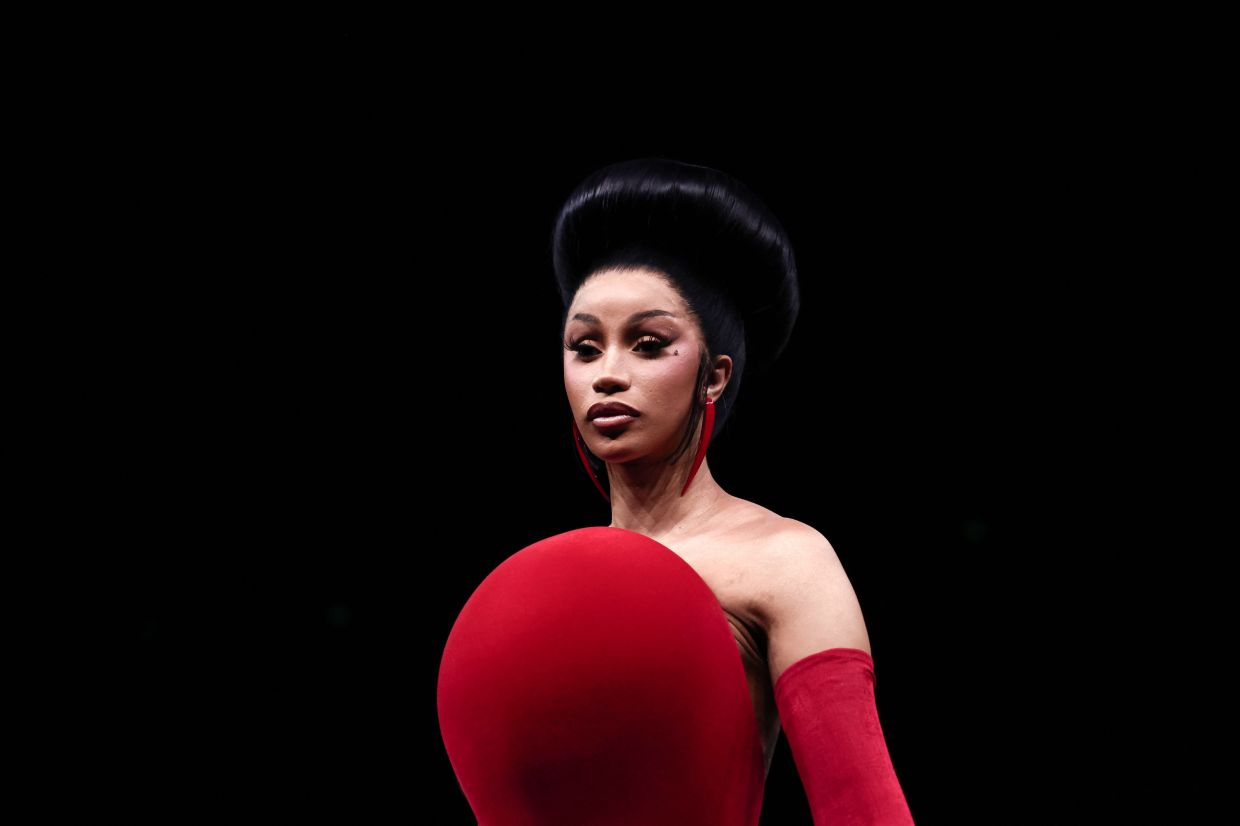
The singular exception to this comfort-forward trend proved instructive in itself. Rapper Cardi B's commitment to an exceptionally fitted, sculptural aesthetic represented a deliberate rejection of heat-accommodating practicality in favour of fashion spectacle. Her avant-garde appearance stood in striking contrast to the week's prevailing sensibility, implicitly asserting that extreme fashion statements and environmental reality can exist in productive tension rather than harmony. Her conspicuous defiance of the week's unspoken consensus regarding heat-appropriate dressing underscored how even Paris Couture Week's most significant moments often emerge from deliberate refusal to conform to emerging norms.
The Paris Couture Week heatwave ultimately revealed fundamental truths about contemporary luxury fashion. Rather than viewing environmental pressures as threats to couture's formal traditions, this week demonstrated how constraints can generate sophisticated solutions that enhance rather than diminish fashion's intellectual content. For Malaysian and Southeast Asian readers accustomed to managing similar climatic conditions throughout the year, the spectacle offered validation that luxury and practicality need not represent opposing values. The week's most compelling moments did not emerge from guests who ignored temperature extremes, but from those who treated environmental reality as a legitimate design parameter worthy of intelligent response.
Looking forward, the strategies deployed during this exceptional week likely presage broader shifts within haute couture itself. As climate patterns increasingly disrupt traditional fashion calendars and challenge conventional codes, the solutions developed in Paris carry implications extending far beyond a single season's front-row appearances. The week demonstrated that fashion's most prestigious institutions, whilst rooted in historical tradition, possess sufficient adaptability to accommodate the environmental realities that increasingly define contemporary life across the globe.

