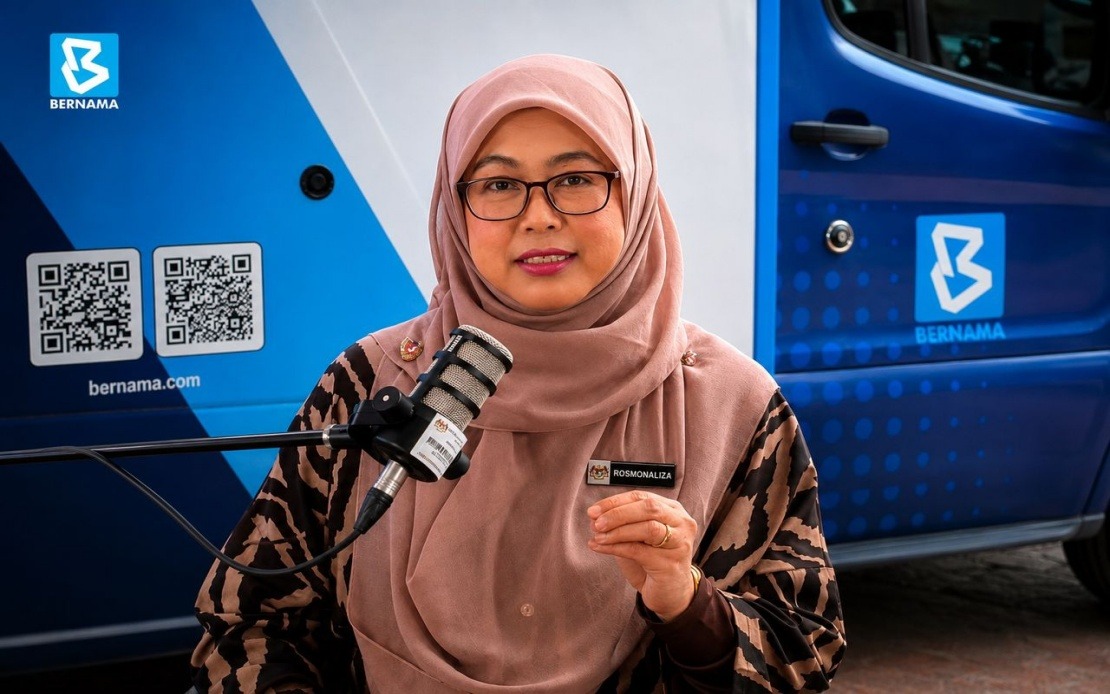
The National Population and Family Development Board (LPPKN) has issued a timely call for Malaysian fathers to expand their involvement in family life, moving beyond the conventional model of being the sole economic provider to become active participants in their children's emotional and educational journeys. According to Rosmonaliza Abdul Ghani, director of LPPKN's Family Well-being Division, contemporary social and lifestyle shifts have fundamentally altered what families need from their fathers, requiring a conscious recalibration of paternal responsibilities to meet twenty-first century demands.
Historically, Malaysian family structures reflected patriarchal patterns where fathers occupied a primarily instrumental position, handling financial matters while mothers managed household operations and child-rearing. This demarcation, once accepted as the natural order, increasingly fails to address the psychological and developmental needs of modern children navigating complex social environments, digital connectivity, and academic pressures unknown to previous generations. The evolving understanding of child development now recognises that paternal engagement—encompassing emotional availability, active listening, and participation in educational processes—profoundly influences outcomes ranging from academic achievement to mental health resilience.
Rosmonaliza emphasised that fathers now serve as agents of change within family ecosystems, roles that demand regular, quality communication rather than episodic involvement. The transformation reflects broader global scholarship demonstrating that children with emotionally engaged fathers develop stronger emotional regulation skills, demonstrate improved academic performance, and exhibit lower rates of behavioural difficulties. For Malaysian fathers specifically, this shift requires unlearning decades of cultural conditioning that positioned emotional expression as incompatible with masculinity, a barrier that LPPKN acknowledges through its targeted support programmes.
Significantly, the board has observed a measurable increase in men seeking professional counselling services, including family sessions involving their children. This trend indicates growing recognition among Malaysian fathers that addressing their own mental health challenges and interpersonal difficulties directly benefits their families. LPPKN responds by providing comprehensive support including counselling, therapeutic interventions, and personality assessments, deliberately framing these services as strength-building rather than remedial, thereby reducing stigma that might otherwise deter men from seeking help.
The pressure-laden environment facing contemporary fathers—spanning financial insecurity, employment uncertainty, and broader societal expectations—demands that families and institutions actively validate paternal struggles rather than compounding them through judgment. Rosmonaliza stressed that LPPKN intentionally cultivates safe spaces where fathers can articulate concerns without shame, recognising that isolation amplifies vulnerability to maladaptive coping mechanisms. This supportive framework proves particularly crucial given evidence that paternal stress, when unaddressed, frequently manifests as family dysfunction affecting spouses and children.
Experiences from frontline practitioners working with marginalised communities underscore the consequences of paternal absence or disengagement. Abbe, drawing on extensive work with urban poor populations and street children, identified missing father figures as a foundational factor in numerous social pathologies, particularly substance abuse and poverty cycles. When household heads struggle with addiction or economic desperation, family structures collapse, pushing vulnerable children toward street involvement and criminality. These observations highlight that fatherhood support represents not merely a family wellness issue but a fundamental social policy concern with direct implications for crime prevention, youth development, and breaking intergenerational poverty.
Interventions targeting fathers grappling with life challenges require calibrated approaches grounded in dignity and compassion rather than punitive frameworks that risk driving vulnerable men further into isolation. Abbe advocates for engagement strategies drawing on religious principles and family-centred values, approaches that resonate within Malaysian cultural contexts while offering practical pathways for men to reclaim purposeful family roles. This culturally-informed methodology recognises that lecturing or shaming fathers proves counterproductive, whereas affirming their essential value and providing practical support enables behavioural change.
The emotional reciprocity between fathers and their families remains underexplored in public discourse yet proves vital for sustainable family wellbeing. Rosmonaliza pointed out that spouses and children bear responsibility for actively acknowledging paternal efforts and providing emotional sustenance to counterbalance life pressures. When families communicate appreciation for sacrifices and demonstrate emotional reciprocity, fathers experience validation that reinforces their commitment to the family unit rather than seeking problematic outlets for stress. This dynamic proves especially important in Malaysian contexts where economic pressures and employment instability create constant baseline stress.
The quality-versus-quantity principle governing paternal engagement directly challenges materialistic definitions of fatherhood prevalent in consumer-oriented societies. Rosmonaliza stressed that children's sense of security and worth derives fundamentally from paternal presence and attention rather than material provision. This message carries particular resonance in Malaysia where rapid urbanisation and consumerism have sometimes distorted family values, with fathers believing that financial provision alone constitutes adequate parenting. Yet developmental psychology consistently demonstrates that children recall and internalise moments of genuine connection far more than consumer goods, indicating a misalignment between paternal effort expenditure and actual child wellbeing outcomes.
For Malaysian society broadly, reconceptualising fatherhood represents an investment in family resilience with multiplier effects across generations. Children who experience engaged, emotionally available fathers develop healthier relationship templates, demonstrating greater empathy, better conflict resolution abilities, and improved interpersonal functioning throughout adulthood. These characteristics, aggregated across the population, strengthen community cohesion and social stability. LPPKN's advocacy therefore extends beyond individual family improvement to encompass national social capital development.
Moving forward, normalising paternal involvement in education, counselling attendance, and emotional labour requires sustained messaging that frames these activities as masculine and respectable rather than aberrations from traditional roles. Malaysian workplaces, educational institutions, and community organisations each bear responsibility for creating structural conditions enabling father participation—flexible arrangements, accessible support services, and cultural validation. When systemic barriers to engaged fatherhood are removed and positive models are visible, transformative shifts become possible.
The LPPKN's advocacy reflects understanding that contemporary Malaysian fathers face unprecedented complexity: economic pressures colliding with evolving parental expectations, cultural traditions intersecting with global values, and personal struggles competing with family responsibilities. By positioning LPPKN support services as resources for navigating this complexity rather than admissions of inadequacy, the board enables Malaysian fathers to evolve their roles authentically. This approach acknowledges reality—that most fathers desire meaningful family engagement but lack models, skills, or confidence—while providing practical pathways toward more complete, healthier fatherhood.

