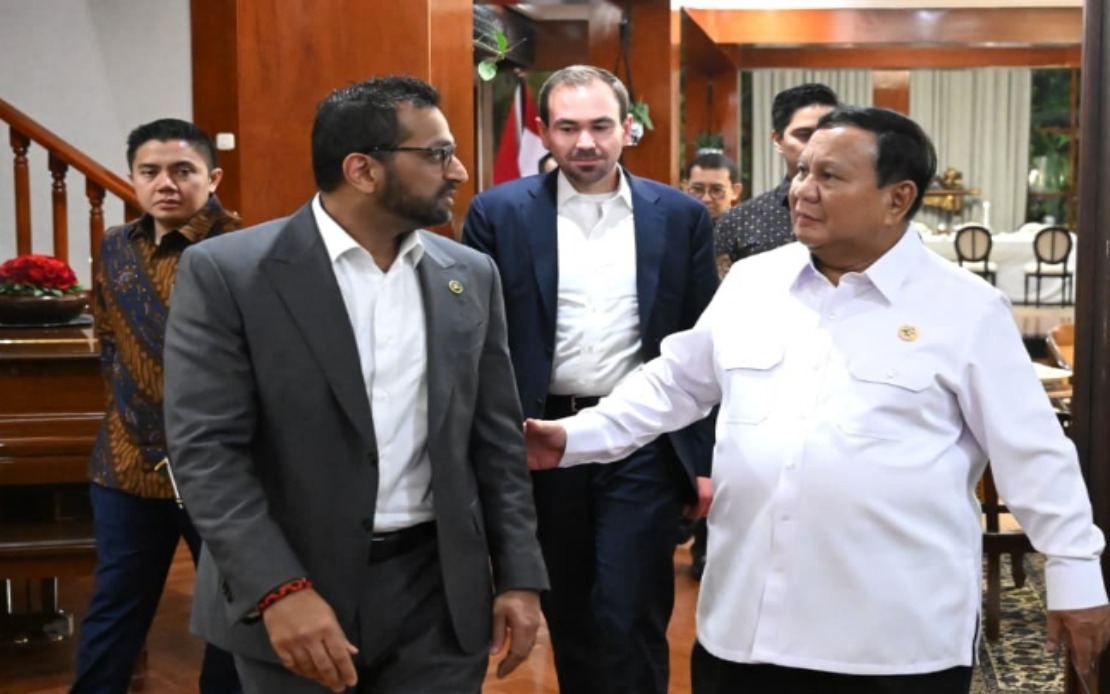
The Federal Bureau of Investigation has repatriated a collection of Indonesian cultural artefacts that were unlawfully taken to the United States, marking another milestone in the two countries' ongoing efforts to recover looted heritage. FBI Director Kash Patel delivered the items directly to President Prabowo Subianto during an official visit to the presidential residence in Kertanegara, Jakarta, on Wednesday, cementing what Indonesian officials view as a model partnership in cultural diplomacy and law enforcement cooperation.
Indonesia's Culture Minister Fadli Zon characterised the handover as evidence of deepening ties between Jakarta and Washington on matters of cultural preservation and national sovereignty. In remarks issued through the Presidential Secretariat, Fadli signalled that Indonesia intends to build on this momentum, leveraging the support of both the State Secretariat and the Ministry of Foreign Affairs to forge an even more robust framework for identifying, recovering, and repatriating stolen cultural objects. The statement reflects Jakarta's broader strategic interest in reclaiming its heritage from Western institutions and private collectors, a priority that resonates across Southeast Asia as nations grapple with colonial-era looting.
The artefacts returned in this latest shipment originate from Papua and carry profound significance for several indigenous communities. Items belonging to the cultural traditions of the Dani and Asmat peoples, as well as communities surrounding Lake Sentani, were among those recovered. These objects embody not merely artistic or historical value but also spiritual and communal meaning for the peoples who created them, making their return a matter of cultural justice as well as archaeological importance. The provenance research that preceded the repatriation established definitively that the pieces had been trafficked illegally into American territory, a finding that strengthens Indonesia's claims and underscores the thoroughness of the investigative process.
The recovery represents a broader shift in how wealthy nations and their law enforcement agencies approach cultural property crimes. Once dismissed as secondary concerns compared to other forms of smuggling, the illicit trade in cultural artefacts has drawn increasing scrutiny from federal authorities. The FBI's commitment to this portfolio, demonstrated through Director Patel's personal involvement in the handover, suggests that Washington views cultural restitution as an integral component of bilateral relations and soft power. For Southeast Asian nations like Indonesia, this represents an opportunity to retrieve heritage dispersed during periods when Western collecting practices operated with minimal legal constraint or ethical oversight.
Fadli indicated that the FBI's assistance to Indonesia extends beyond the current shipment. The agency has previously collaborated with Jakarta to recover stolen bronze statues and other items from archaeological and cultural sites, building a track record of successful investigations and recoveries. This institutional memory and established protocols create a foundation upon which future cooperation can expand. As Western museums increasingly face pressure from activists and source nations to acknowledge and return cultural property acquired under questionable circumstances, partnerships between foreign ministries and law enforcement agencies like the FBI become crucial mechanisms for translating ethical principles into concrete action.
The decision to display the repatriated artefacts at Indonesia's National Museum reflects Jakarta's commitment to public education and cultural accessibility. Rather than restricting the items to academic collections or private institutional holdings, the government intends to make them available for public viewing, enabling Indonesians and international visitors to engage directly with their nation's heritage. This approach contrasts sharply with the removal of such objects to distant Western institutions, where they were often inaccessible to the communities from which they originated. The National Museum exhibition therefore serves a dual purpose: reconnecting Indonesians with their own history whilst also asserting state custodianship over national patrimony.
The timing of the repatriation, coinciding with high-level diplomatic engagement between Washington and Jakarta, underscores how cultural matters have become woven into broader geopolitical strategy. As the United States seeks to strengthen partnerships with key allies in Southeast Asia—particularly those positioned along critical maritime routes and confronted by great power competition—gestures on cultural restitution carry symbolic weight. Indonesia, as the region's largest economy and most populous nation, occupies a pivotal position in these calculations. The FBI's involvement signals that Washington recognises the importance of addressing historical grievances and demonstrating respect for Indonesian sovereignty in all domains, including cultural affairs.
For Malaysia and other Southeast Asian nations, the Indonesian repatriation precedent offers both inspiration and a practical roadmap. Countless artefacts from the region remain housed in European and American institutions, often lacking clear provenance documentation and acquired through colonial-era transactions that would be considered theft by modern standards. The success of the FBI-Indonesia partnership suggests that persistent diplomatic engagement, combined with rigorous provenance research and legal frameworks, can yield results. Malaysian officials and heritage advocates may find leverage in pointing to this cooperation as a model that other countries should emulate, particularly as Southeast Asian governments increasingly assert claims to objects held in Western collections.
The repatriation also highlights the ongoing challenge of combating the illegal antiquities trade, which generates billions of dollars annually and funds organised crime networks. By prosecuting smugglers and recovering stolen items, agencies like the FBI contribute to disrupting supply chains that incentivise looting at source sites. For communities in Papua and across Indonesia, the recovery of cultural objects also means the prevention of further theft. When artefacts are returned and secured in national institutions with proper conservation standards, the incentive for future criminal acquisition diminishes. This protective effect extends beyond individual pieces to entire communities and their ability to maintain cultural continuity across generations.
Looking forward, Indonesia's expressed hope for stronger cooperation with the FBI suggests that further recoveries are anticipated. The collaborative framework established through this and previous repatriations provides the infrastructure for scaling up efforts. As digital provenance databases improve and international coordination mechanisms strengthen, identifying and retrieving stolen cultural property may become more efficient and systematic. Indonesia's proactive engagement with the FBI, rather than passive acceptance of what cannot be recovered, positions the country as a leader in cultural diplomacy within Southeast Asia and offers a template for how source nations can assert agency in reclaiming their heritage.

