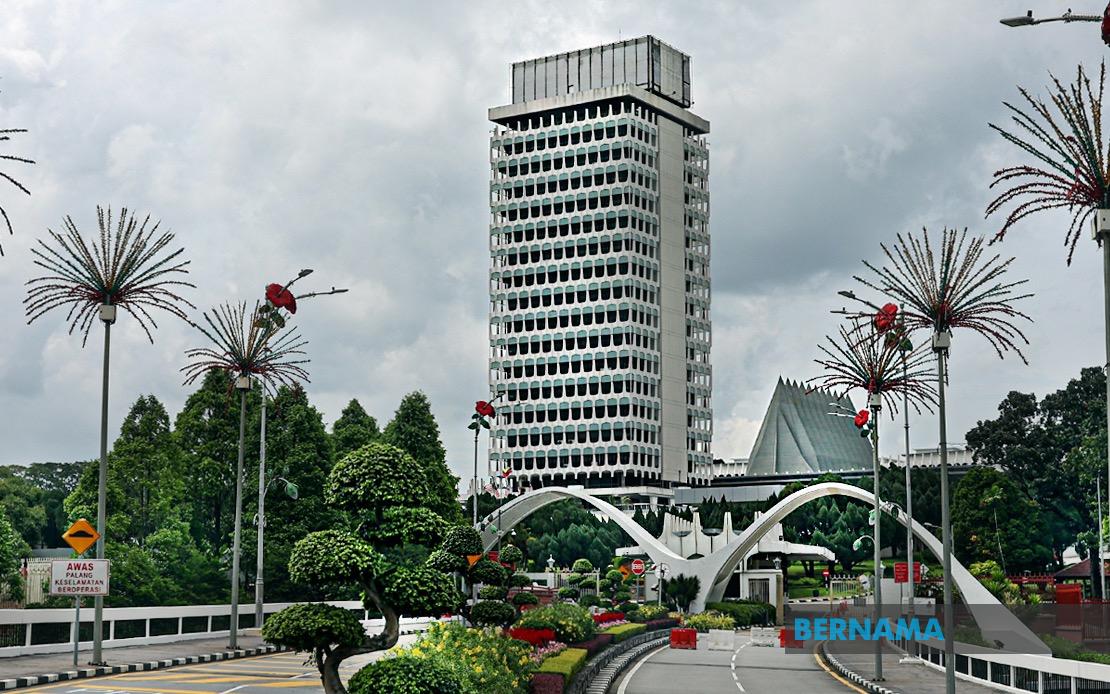
Prime Minister Datuk Seri Anwar Ibrahim used Tuesday's parliamentary session to address longstanding concerns about how federal funding reaches Malaysia's states, clarifying that nearly all states actually receive allocations that exceed the tax revenue they individually generate. The statement came during Ministers' Question Time and directly countered suggestions that certain regions face financial neglect or deliberate marginalisation by Kuala Lumpur. This explanation carries significance for Malaysia's ongoing federal-state relations, a persistent source of political tension that resurfaces whenever regional leaders feel their jurisdictions lack adequate resources for development.
Anwar emphasised that the funding distribution mechanism prioritises development needs and public welfare rather than a strict return-on-contribution formula. This approach reflects the constitutional framework designed to redistribute wealth across the federation, ensuring less developed regions receive support for infrastructure and services. However, the Prime Minister also introduced procedural requirements that could complicate future funding requests, particularly those involving Notice of Change documents for existing projects. State governments seeking additional allocations or loans for revised development initiatives must now renegotiate terms, a process that introduces additional administrative layers and potentially extends timelines for implementation.
The Prime Minister further reinforced electoral rules during the sitting, reminding parliamentarians that new project announcements or policy launches during election periods violate Section 24B of the Election Offences Act 1954. This stipulation aims to prevent political parties from leveraging government resources for campaign advantages, though enforcement has historically proven inconsistent. The reminder suggests heightened scrutiny surrounding election conduct as Malaysia approaches future electoral contests, with parliamentary supervision serving as an additional accountability mechanism.
In legislative developments, the Dewan Rakyat advanced three significant bills that reflect evolving governance priorities. The Sexual Offences Against Children (Amendment) Bill 2026 strengthens protections for minors, addressing a concern that has gained international attention and domestic advocacy attention. The Employment Insurance System (Amendment) Bill 2025 updates worker protection frameworks, while the Cybercrime Bill 2026 introduces provisions tackling digital forgery and deepfakes alongside penalties for distributing manipulated intimate images. These measures respond to technological transformations that outpaced existing legal frameworks, particularly regarding artificial content that can cause significant reputational and psychological harm.
Minister in the Prime Minister's Department (Law and Institutional Reform) Datuk Seri Azalina Othman Said disclosed that the government is simultaneously developing a comprehensive contract law overhaul to recognise third-party rights and modernise agency frameworks, with particular attention to artificial intelligence integration. The Study of Contract Law Reform in Malaysia has reached completion, with the final report including policy recommendations, comparative international analysis, and draft legislation now circulated to Parliament for consideration. This modernisation effort acknowledges that current contractual law structures struggle to accommodate AI-mediated transactions and complex multi-party arrangements increasingly common in digital economies.
Government efforts to stabilise essential goods pricing and supply chains emerged as another parliamentary focus, reflecting public anxieties about cost-of-living pressures. Economy Minister Akmal Nasrullah Mohd Nasir revealed that daily monitoring systems track supply and pricing for essential commodities, with coordinated efforts involving Petroliam Nasional Berhad and industry participants maintaining energy supply stability. This continuous surveillance approach aims to identify supply disruptions and price anomalies swiftly, though effectiveness depends on enforcement capacity and whether coordination mechanisms can overcome market forces and input cost increases beyond government control.
The MADANI Book Voucher programme 2026 represents the government's direct educational investment strategy, with Deputy Education Minister Wong Kah Woh confirming support for over 2.2 million students through RM221.6 million allocated funding. The programme distributes RM100 electronic vouchers per student, with redemptions commencing in late June and continuing through October 31. This initiative directly addresses educational equity by subsidising reading materials across Malaysian schools, though the effectiveness in promoting literacy improvements requires sustained monitoring and curriculum integration beyond simple voucher provision.
Communications Minister Datuk Fahmi Fadzil outlined progress finalising the Online Safety Act 2025's regulatory framework, including supplementary instruments addressing private messaging features and platform obligations regarding harmful content. The Malaysian Communications and Multimedia Commission is exploring artificial intelligence applications for complaint management efficiency and workload reduction, recognising that manual monitoring becomes increasingly impractical as digital platforms proliferate. Concurrently, platforms receive encouragement to deploy AI-powered content detection systems identifying community guideline violations for expedited removal, though questions persist regarding accuracy, cultural sensitivity, and appeal mechanisms for wrongful content suppression.
The convergence of these legislative and administrative initiatives demonstrates Parliament's engagement with contemporary governance challenges spanning financial equity, child protection, contract modernisation, price stability, educational access, and digital safety. The sixteen-day sitting period from June 22 to July 16 has concentrated on substantive policy development rather than merely ceremonial procedures, suggesting legislative momentum on multiple fronts. However, implementation effectiveness ultimately depends on resource allocation, institutional capacity, and bureaucratic coordination—factors that frequently constrain policy realisation despite parliamentary approval.
For Malaysian constituencies and regional observers, these parliamentary developments signal government priorities spanning social protection, economic management, and technological governance. The emphasis on federal funding clarity addresses perennial state-level concerns while contractual law modernisation positions Malaysia's commercial frameworks alongside digital economy peers. Education voucher expansion and cybercrime legislation target distinct demographics, from schoolchildren to vulnerable individuals affected by image-based abuse. Collectively, these measures reflect a comprehensive governance agenda attempting simultaneous progress on multiple policy domains, though success requires sustained parliamentary attention and executive implementation rigour extending well beyond the current sitting.

