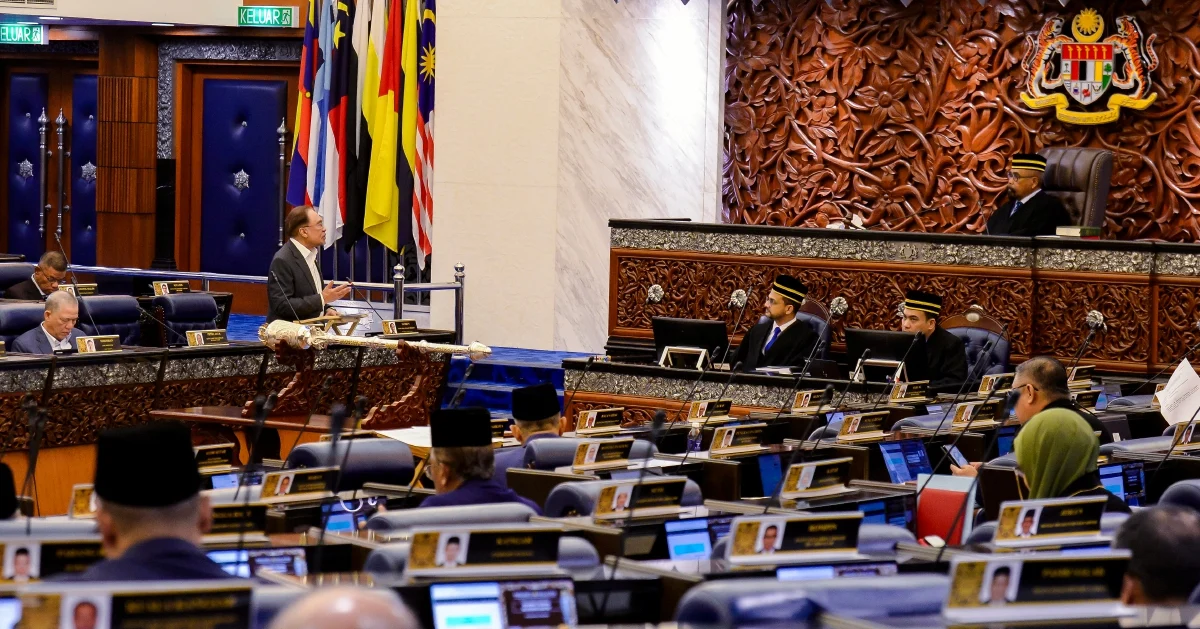
Prime Minister Datuk Seri Anwar Ibrahim has drawn a clear line on fiscal responsibility between Malaysia's federal and state governments, asserting that Putrajaya cannot be expected to automatically cover the costs of decisions originating from state administrations. This pronouncement carries significant implications for the ongoing tension over budgetary autonomy and financial accountability that has long characterised centre-state relations in Malaysia.
Anwar's statement reflects growing concerns at the federal level about the sustainability of current spending patterns and the need for clearer demarcation of financial responsibilities. The position underscores a fundamental principle of fiscal federalism: that government entities at different administrative tiers should bear the consequences of their own policy choices. This approach aims to discourage financially reckless decisions at the state level by ensuring that state governments remain answerable for the budgetary impact of their own initiatives.
The timing of the Prime Minister's remarks appears connected to broader budgetary pressures facing the federal government. Malaysia's fiscal position has been strained by various economic headwinds, rising debt servicing costs, and competing demands from multiple sectors requiring federal investment. By establishing this fiscal boundary, Anwar signals that the federal government intends to prioritise its own priorities and commitments rather than acting as an unlimited financial safety net for state-level spending decisions.
State governments across Malaysia operate with varying degrees of financial independence. While some states generate substantial revenue through their own sources such as land and resource management, others depend heavily on federal transfers and revenue-sharing mechanisms. The Prime Minister's statement suggests a recalibration of expectations about how much cross-subsidy the federal centre should provide when states make costly decisions without prior federal consultation or agreement.
Historically, disputes over cost-sharing have arisen when states have initiated development projects, social programmes, or infrastructure improvements that subsequently required federal support. The lack of clear protocols about shared financial responsibility has sometimes created situations where the federal government faced political pressure to bail out state initiatives, regardless of their original funding arrangements. Anwar's clarification aims to establish predictability and discipline in these interactions.
For Malaysia's state governments, the message is clear: fiscal planning must account for the reality that not every expenditure decision will be subsidised by federal coffers. This compels states to conduct more rigorous financial analysis before committing to major projects or programmes. States will need to ensure that their revenue bases are sufficient to support their chosen policies, or they must accept responsibility for scaling back ambitions to match available resources.
The federal-state fiscal relationship carries particular weight in Malaysia's political landscape. States govern substantial populations and deliver critical services including education, healthcare administration, and local development initiatives. The balance between federal funding mechanisms and state autonomy has long been a source of political negotiation. Anwar's position suggests the federal government is taking a firmer stance on this balance, particularly as pressures on the national budget intensify.
For Malaysian taxpayers and voters, the implications cut in both directions. Greater state fiscal accountability could encourage more efficient spending at the subnational level, reducing wastage and mismanagement. Conversely, states facing genuine revenue shortfalls might be unable to maintain service standards if federal support is withdrawn, potentially affecting the public in less developed or less resourceful states disproportionately. This tension between accountability and equity remains unresolved.
The announcement also reflects broader governance challenges affecting Malaysia. As the country navigates post-pandemic economic recovery and manages inflation and cost-of-living pressures, every ringgit of federal spending assumes heightened scrutiny. Anwar's administration has made fiscal consolidation a stated priority, attempting to reduce the federal deficit while managing public expectations about government services. Capping open-ended liabilities from state decisions represents one mechanism for achieving these targets.
Regionally, Malaysia's approach mirrors trends visible in other Southeast Asian federalised or decentralised systems, where central governments increasingly insist on disciplinary fiscal frameworks. Indonesia, India, and other multi-level governance systems have grappled with similar questions about moral hazard and fiscal responsibility. The Malaysian government appears to be consciously aligning itself with international best practices that emphasise accountability at each governmental level.
Looking forward, this position will likely drive more structured interaction between federal and state authorities on financial matters. States may seek clearer protocols and advance assurances about which costs will be shared. The federal government, for its part, can expect requests for financial assistance on projects already underway or committed by predecessor administrations, testing whether the new framework is applied consistently. Political considerations could complicate the implementation of this seemingly straightforward principle.
The practical effect of Anwar's statement will depend heavily on how consistently it is enforced and how clearly the federal government communicates which specific categories of state spending fall within or outside the federal safety net. Without detailed guidelines, the policy risks becoming a negotiating point in federal-state interactions rather than a firm rule. Nevertheless, the articulation of this principle signals a significant shift in how the federal government intends to approach its financial relationship with states moving forward.

