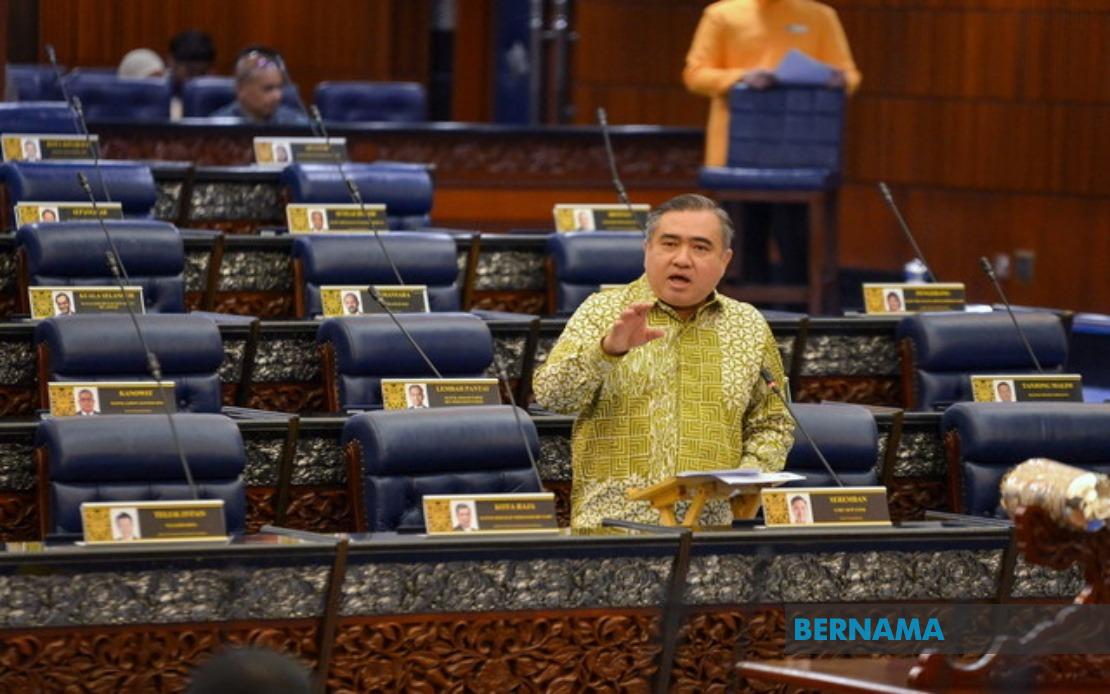
Transport Minister Anthony Loke has confirmed that the federal government will commit public funding to realise the Elevated Autonomous Rapid Transit (E-ART) project in Johor, acknowledging that private sector investment alone cannot sustain this major infrastructure initiative. Speaking during parliamentary question-and-answer proceedings, Loke outlined a financing framework that departs from traditional concession models, signalling a shift towards greater government involvement in transport megaprojects across Southeast Asia's growth corridors.
The minister's announcement addresses longstanding uncertainty about how the ambitious E-ART system, designed to transform mobility in southern Johor, would be financed. Initial project responsibility will rest with the appointed consortium, but detailed financial assessments have proven decisive: without government backing, the venture falls short of commercial viability thresholds that typically justify private infrastructure investment. This conclusion reflects broader global challenges facing autonomous and elevated transit systems, which require enormous capital outlays and generate uncertain revenue streams during early operational phases.
Detailed terms governing the federal contribution—including the precise allocation of funds, repayment schedules across the concession period, and mechanisms for cost recovery—remain under negotiation between relevant ministries and stakeholders. Loke indicated that once these frameworks are finalised, they will be presented to Cabinet for formal approval before the formal Concession Agreement is executed. This phased approach suggests potential complexity in structuring arrangements that satisfy both public accountability requirements and private investor expectations, a familiar tension in regional infrastructure projects.
The E-ART initiative carries strategic importance far beyond Johor's boundaries. The system's four-year construction timeline from formal acceptance represents a critical window for enhancing transport capacity before the Johor Bahru-Singapore Rapid Transit System (RTS) Link launches in January 2027. This sequencing creates interdependencies that could reshape traffic patterns across the southern development corridor. Dr Wee Ka Siong, raising the matter in Parliament, specifically queried congestion projections, recognising that premature RTS operations without complementary E-ART infrastructure might concentrate demand inefficiently across the border region.
To manage anticipated traffic pressures during the interim period, the Transport Ministry has collaborated with Johor's state administration to devise a comprehensive traffic dispersal strategy anchored on expanding existing public transport networks. The BAS.MY service network expansion to 28 routes operating 254 vehicles—including electric buses—represents a tangible near-term intervention. These buses will serve as genuine alternatives rather than token gestures, acknowledging that meaningful modal shift requires reliable, accessible alternatives to private vehicles. Electric buses further align with Malaysia's evolving sustainability commitments, though charging infrastructure and operational logistics remain implementation hurdles rarely discussed in policy announcements.
The Stage Bus Service Transformation (SBST) 2.0 programme introduces targeted capacity along critical JB Sentral and Bukit Chagar corridors, deploying 157 dedicated buses commencing early 2027. This focused deployment strategy reflects lessons learned from previous bus rapid transit initiatives across the region: concentrated service on high-demand routes generates ridership faster than diffuse network expansion. The timing aligns with RTS Link operations, potentially creating a sequenced mobility ecosystem where rapid transit anchors longer-distance commuting while bus networks capture first-mile and last-mile connectivity.
Rail augmentation through the procurement of 12 KTM Komuter Southern train sets addresses another critical bottleneck in Johor's transport network. While awaiting formal approvals, the ministry has already launched the Shuttle Selatan service connecting Kulai-Kempas-Johor Bahru and Kempas-Pasir Gudang routes, providing 14 daily trips with intermediate capacity characteristics. These shuttle services serve as operational pilots, generating real-world data on demand patterns and user preferences that should inform permanent service design. For Malaysian planners assessing similar interventions elsewhere, such intermediate solutions offer valuable flexibility before major capital commitments crystallise.
Fare policy emerges as a secondary but consequential dimension of transport strategy. Loke acknowledged that keeping public transport affordable requires subsidisation when fares remain under government control—a tradeoff that policymakers across Southeast Asia navigate differently. Malaysia's apparent commitment to fare ceilings reflects social priorities around transport accessibility, though this approach necessarily requires ongoing fiscal transfers to operators. By contrast, some regional jurisdictions have experimented with progressive distance-based pricing or congestion-responsive tariffs that balance affordability with cost recovery. The implications for E-ART's financial sustainability merit closer scrutiny, as elevated automated systems typically incur high operating costs that flat or artificially suppressed fares struggle to recoup.
The E-ART project's government funding decision carries implications extending beyond Johor's boundaries. It suggests Malaysian policymakers increasingly recognise that transformative transport infrastructure in high-growth corridors cannot rely exclusively on private financing mechanisms. This reorientation aligns with patterns visible across the region, where governments in Thailand, Vietnam, and Indonesia have become more directly involved in funding mass rapid transit systems. For Malaysia, positioned as an ASEAN economic hub with aspirations to strengthen Singapore integration, such infrastructure investments constitute strategic competitive assets rather than routine public services.
Looking forward, the crystallisation of financing terms and Cabinet approval will signal governmental commitment levels and implementation timelines. Parliamentary oversight, demonstrated through questions from both government and opposition members, suggests sustained political attention to project progress. Success in executing E-ART while simultaneously expanding complementary bus and rail services could establish a replicable model for other Malaysian metropolitan regions grappling with congestion and limited transit alternatives. Conversely, delays or cost overruns would reinforce existing scepticism about megaproject delivery within the region, influencing future infrastructure investment decisions across Malaysia and its neighbours.

