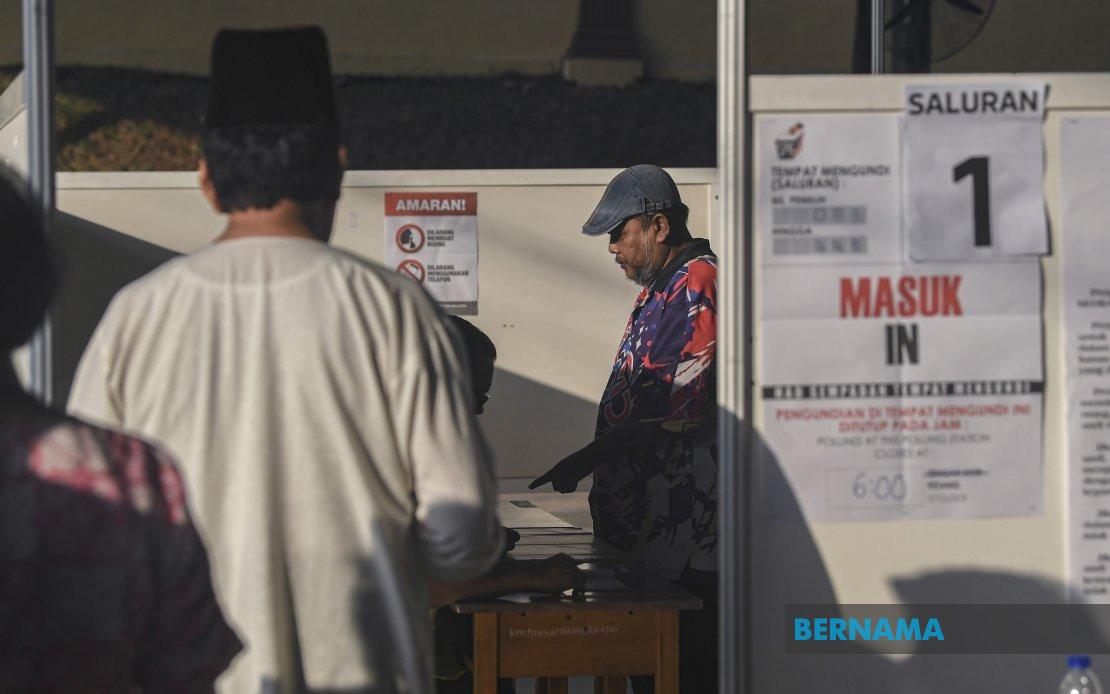
The 16th Johor State Election unfolded across the southern state on July 11 as federal ministers and deputy ministers joined millions of voters in determining the composition of the state legislature. The presence of high-ranking federal officials at polling stations underscored the significance of the poll, which represents a crucial electoral moment for Johor and carries implications for the broader political landscape of Malaysia's most economically developed state.
Datuk Seri Azalina Othman Said, who oversees the Prime Minister's Department portfolio covering law and institutional reform, arrived early at Sekolah Kebangsaan Bandar Penawar in Pengerang to fulfill her civic duty, casting her vote at 8.15 am shortly after polls opened. Her presence among the first voters to participate set the tone for ministerial engagement with the electoral process, sending a symbolic message about the importance of participation regardless of rank or position within government structures.
Defence Minister Datuk Seri Mohamed Khaled Nordin exercised his voting rights at 8.30 am at Sekolah Kebangsaan Rinting 1 in Masai, continuing the pattern of senior officials demonstrating their commitment to democratic participation. The involvement of the defence portfolio holder, in particular, carried additional weight given Malaysia's security considerations and the military establishment's traditional respect for electoral institutions.
Plantation and Commodities Minister Datuk Seri Dr Noraini Ahmad cast her ballot at Sekolah Menengah Kebangsaan Dato' Onn in Batu Pahat at 8.50 am. Her participation highlighted the involvement of the ministry responsible for Malaysia's crucial agricultural and commodities sectors, industries where Johor maintains substantial operations and economic significance.
Deputy Works Minister Datuk Seri Dr Ahmad Maslan voted at Sekolah Kebangsaan Seri Bahagia in Benut at 8.40 am, contributing to the representation of infrastructure-focused government figures in the election. The works portfolio carries particular relevance for Johor given the state's extensive development projects and infrastructure commitments that require state-level coordination.
Deputy Communications Minister Teo Nie Ching participated in the democratic process at Sekolah Jenis Kebangsaan Cina Kulai Besar at 9.30 am, arriving at the centre just ten minutes before casting her ballot. Her involvement reflected the diversity within Malaysia's cabinet structure and the communications ministry's evolving role in the digital age.
The election itself achieved remarkable logistical coordination, with 1,076 polling centres operating simultaneously across Johor at 8 am. These centres deployed 4,889 individual polling streams to manage the flow of voters, demonstrating the scale of organisational effort required to conduct democratic elections across Malaysia's second-most populous state.
Approximately 2.7 million registered voters in Johor wielded their electoral power throughout the day, with voting continuing until 6 pm. This substantial voter population underscores Johor's demographic importance within Malaysia and the state's role as a bellwether for national political sentiment. The participation of such large numbers carries downstream implications for federal-state relations and resource allocation decisions that affect the broader region.
The election concluded a 14-day campaign period that ended at midnight the previous night, allowing candidates and political parties extensive time to mobilise their supporters and articulate their policy positions. For Johor's electorate, the election represented an opportunity to reset the state's political trajectory and determine which coalition or party would guide the state's governance for the next electoral term.
The involvement of federal ministers in voting carried symbolic importance beyond mere civic participation. Their presence at polling stations throughout the state served as a visible endorsement of the electoral process itself and demonstrated that democratic participation transcends hierarchical position within government. Such demonstrations of ministerial engagement with voting procedures can influence public perception of electoral legitimacy and encourage broader voter turnout across different demographic groups.
The outcome of Johor's state election carries implications extending beyond the state boundaries. As Malaysia's most developed southern state and a consistent economic contributor to the federation, Johor's political direction influences interstate dynamics, investment patterns, and regional stability in Southeast Asia's most industrialised zone. The election results would ultimately shape policy approaches to infrastructure development, economic diversification, and governance standards that ripple across the region.

