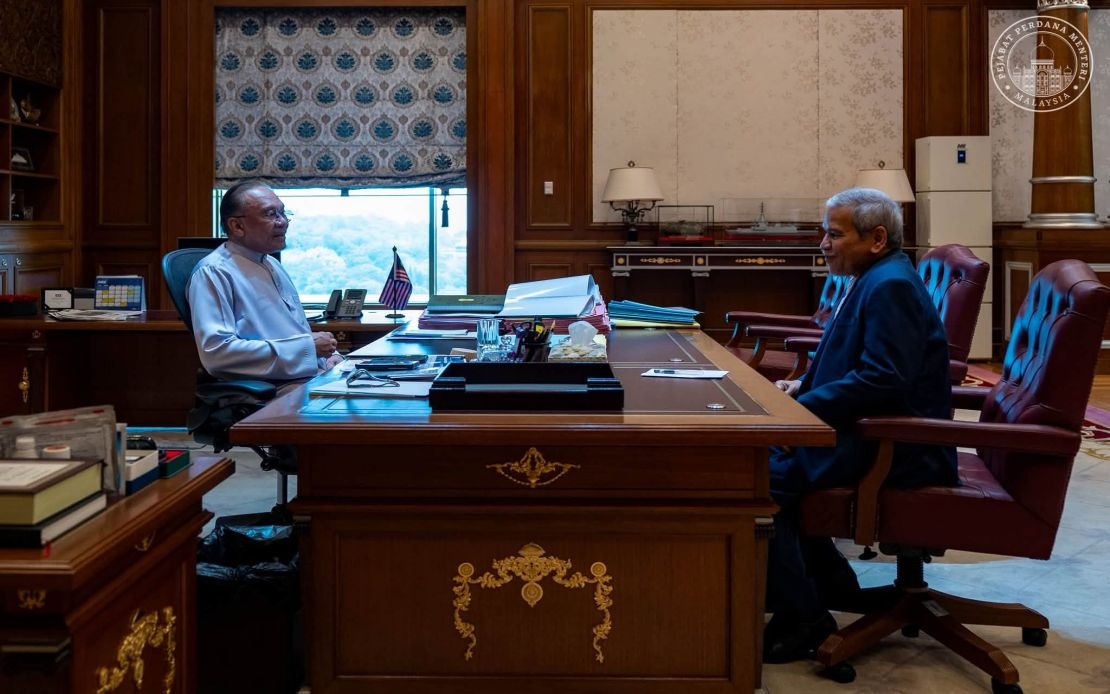
Prime Minister Datuk Seri Anwar Ibrahim has underscored the strategic importance of the Federal Land Development Authority (FELDA) as a cornerstone institution for improving the quality of life of settlers and their families across Malaysia. During a recent courtesy call from newly appointed FELDA chairman Tan Sri Ahmad Badri Mohd Zahir at the Prime Minister's office in Putrajaya, Anwar stressed that continued institutional strengthening remains essential to fulfilling FELDA's foundational mission.
The reinvigoration of FELDA comes at a critical juncture for the 70-year-old organisation, which has historically served as a significant vehicle for rural development and poverty alleviation in Malaysia. Under Ahmad Badri's stewardship, which commenced on July 15, the authority is tasked with navigating contemporary challenges while preserving its core developmental objectives. Ahmad Badri succeeds Datuk Seri Ahmad Shabery Cheek, whose tenure concluded on June 30.
Anwar, who concurrently holds the Finance Ministry portfolio, emphasised that supporting settler welfare must proceed in tandem with efforts to enhance FELDA's economic viability and long-term sustainability. This dual approach reflects a recognition that settler prosperity depends not merely on immediate assistance but on the institution's capacity to generate income and maintain its competitive standing in agricultural and land-based sectors. The government's positioning underscores the complexity of managing a development authority that must balance social obligations with commercial imperatives.
A particular focus of Anwar's remarks centred on the circumstances of younger-generation settlers—an often-overlooked demographic within FELDA's ecosystem. As demographics shift and traditional agricultural employment becomes less attractive to younger populations, FELDA faces mounting pressure to diversify livelihood opportunities and address unique concerns such as skills development, market access, and value-added production. The Prime Minister's explicit mention of this generational challenge signals an intention to modernise FELDA's approach beyond conventional plantation models.
The government's backing extends beyond rhetorical support. Anwar articulated a commitment to provide comprehensive assistance in executing FELDA's reform agenda, framing the institution as a people-serving organisation that must evolve to remain pertinent in coming decades. This pledge carries weight given the Prime Minister's dual role in financial oversight, suggesting that budgetary considerations and policy frameworks under the MADANI Government will be calibrated to facilitate FELDA's institutional renewal.
FELDA settlers have historically represented a crucial political and social constituency in Malaysia, with the organisation managing over 116,000 settler families across multiple schemes nationwide. The institution's performance directly affects rural poverty levels, agricultural productivity, and socioeconomic disparities between urban and rural regions. Any significant deterioration in FELDA's effectiveness would carry broader implications for national development objectives and equity considerations.
The emphasis on economic competitiveness reflects acknowledging that FELDA cannot rely indefinitely on government subsidies or protection from market pressures. Modern agricultural value chains demand efficiency, innovation, and market responsiveness—qualities that require investment in technology, training, and supply chain integration. Ahmad Badri's appointment appears to signal that the government expects fresh thinking on how FELDA schemes can become more self-sustaining while continuing to serve their developmental mandate.
For Malaysian stakeholders, the government's renewed focus on FELDA carries implications beyond the settler community. FELDA schemes operate in diverse regions and ecosystems, from Peninsular Malaysia to Sabah and Sarawak, making the organisation's performance relevant to broader rural development patterns. Strengthening FELDA could contribute to reducing rural-urban migration pressures, supporting agricultural diversification, and maintaining social stability in plantation-dependent communities.
The appointment of Ahmad Badri also reflects considerations of institutional governance and leadership direction. His mandate encompasses not only day-to-day operational management but strategic repositioning of FELDA within Malaysia's evolving economic landscape. Whether through digital agriculture adoption, organic farming transitions, or enhanced value addition, FELDA's future trajectory will largely depend on leadership vision and implementation capacity.
The timing of Anwar's statement, shortly after Ahmad Badri's assumption of office, suggests deliberate signalling to stakeholders—including settlers themselves, commercial partners, and market observers—that FELDA remains a government priority. This messaging may be designed to restore confidence in the institution after any period of uncertainty or criticism regarding its operations or settler outcomes.

