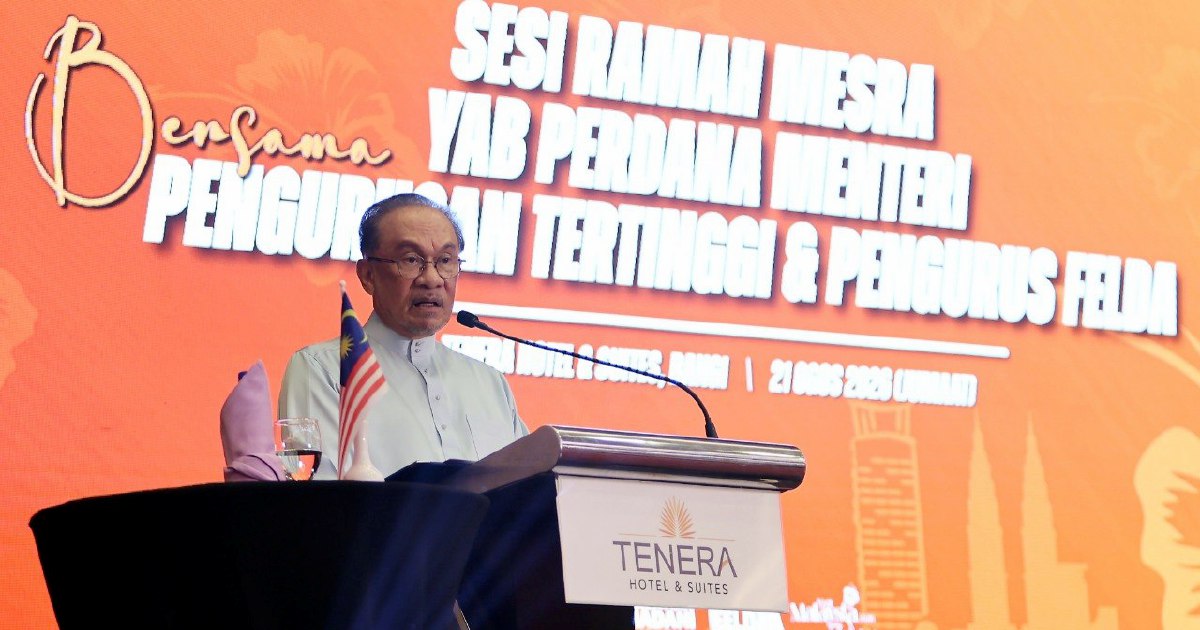
Prime Minister Datuk Seri Anwar Ibrahim has confirmed that a dedicated task force established to examine systemic issues within the Federal Land Development Authority (Felda) has formally commenced its investigative operations. Speaking in Bangi, he indicated that the inquiry process is actively underway and that comprehensive findings will be disclosed once the team concludes its work.
The formation of this specialized task force reflects ongoing government scrutiny of Felda's operations and governance structures. The authority, which manages the interests of smallholder farmers through vast landholding schemes across Malaysia, has been subject to periodic reviews aimed at ensuring efficient administration and protecting the welfare of settler families who depend on its schemes for their livelihoods.
Anwar's statement underscores the administration's commitment to addressing concerns that have accumulated within the institution over recent years. Felda, established decades ago as a cornerstone of Malaysia's agricultural and rural development policy, plays a significant role in the economic lives of tens of thousands of farming families and their descendants. The task force represents an attempt to identify structural weaknesses, financial irregularities, or administrative bottlenecks that may be hindering the organization's effectiveness.
The Prime Minister's approach of establishing an investigative body rather than issuing immediate pronouncements suggests a methodical evaluation process. By deferring the announcement of findings until the inquiry reaches completion, the government signals an intention to ground any subsequent actions or reforms in substantive evidence rather than preliminary observations or political considerations.
For Malaysian stakeholders with interests in agricultural policy and rural development, the progress of this investigation carries considerable weight. Felda settlers and their representative bodies have periodically voiced concerns about land management practices, financial transparency, and the adequacy of support mechanisms. The task force's work may determine whether systemic reforms are necessary to strengthen the institution's operations and better serve its core constituency.
The timing of this announcement reflects broader government emphasis on institutional accountability and transparency. Across multiple sectors, the current administration has prioritized comprehensive reviews of existing agencies and authorities, seeking to eliminate inefficiencies and restore public confidence in governance structures that touch the lives of ordinary Malaysians.
Regionally, Malaysia's experience with Felda—as a large-scale, state-managed rural development program—has attracted attention from neighboring countries contemplating similar initiatives. The findings from this task force investigation may offer valuable insights for policymakers across Southeast Asia examining best practices in agricultural land management and settler support systems.
The investigative process will likely examine diverse dimensions of Felda's functioning, potentially spanning financial management, land allocation procedures, environmental stewardship, technological adoption, and farmer welfare provisions. Each area represents a potential source of inefficiency or vulnerability that could undermine the authority's mandate and the prosperity of its beneficiaries.
Anwar's confirmation that results will be announced upon completion establishes an implicit timeline, though no specific deadline has been publicly stated. This approach allows the task force flexibility to conduct thorough investigations without artificial time constraints that might compromise the quality or comprehensiveness of findings. Stakeholders awaiting the outcome will be monitoring developments closely for indications of the investigation's scope and trajectory.
The existence of the task force and its operational status represent an important signal to both Felda settlers and the broader public regarding government priorities. By explicitly confirming the task force has begun work, Anwar demonstrates active engagement with issues affecting a significant rural constituency whose political and economic support remains central to Malaysia's stability and development.
For investors and businesses operating within or adjacent to Felda schemes, clarity emerging from this investigation could have material implications. Reform recommendations might reshape regulatory frameworks, operational procedures, or commercial arrangements affecting how private entities interact with Felda structures or lease agricultural land under the authority's stewardship.
The Malaysian government's willingness to initiate comprehensive institutional reviews reflects international pressure and domestic expectations for improved governance standards. Felda, as one of Malaysia's largest statutory authorities managing substantial landholdings and financial resources, naturally attracts scrutiny from oversight bodies, media organizations, and civil society groups monitoring public administration standards.

