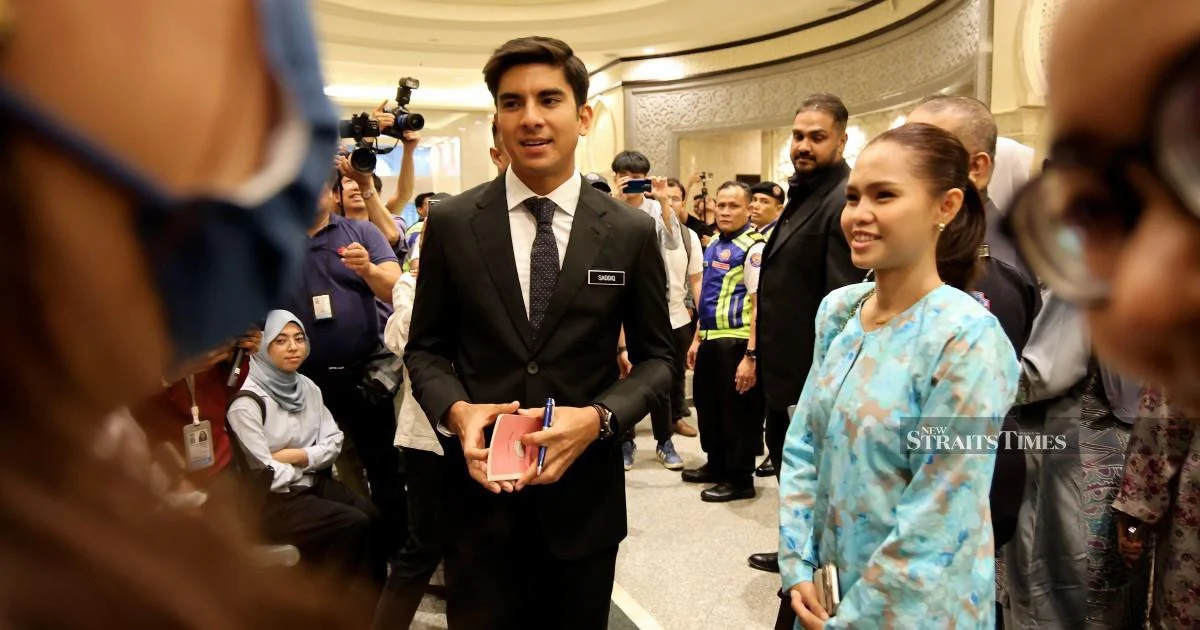
Amid mounting legal uncertainties, singer-actress Bella Astillah made an emotional appeal to supporters gathering outside the Palace of Justice in Putrajaya on Wednesday, asking them to pray for her fiancé Muar member of parliament Syed Saddiq Syed Abdul Rahman as the Federal Court prepared to deliver its verdict on his appeal. The brief but poignant request underscored the personal toll of legal proceedings that have consumed the couple's attention for months, with Astillah's words reflecting the gravity of the moment as the nation's highest court considered the appeal.
The case involving Syed Saddiq has attracted considerable public attention, not merely due to the political prominence of the Muar representative but because it intersects with broader questions of accountability and governance that resonate across Malaysia's political landscape. As a younger generation politician who has served in various ministerial roles, Syed Saddiq's legal challenges have prompted national discourse about expectations placed upon public figures and the functioning of Malaysia's judicial mechanisms. The appeal's outcome carries implications extending beyond the individual defendant, potentially influencing how similar matters are addressed in future cases involving elected officials.
Bella Astillah's public appearance and request for prayers demonstrated a willingness to engage with the media and public sentiment surrounding the case, contrasting with the often-guarded approach adopted by those embroiled in legal disputes. Her presence at the Palace of Justice, Malaysia's highest court building located in the federal administrative capital, signified the magnitude of the proceedings. The Palace of Justice, an architectural landmark completed in 2003, has served as the venue for numerous cases of national importance, and Wednesday's hearing was positioned as another pivotal moment in the nation's legal history.
The Federal Court, as the apex of Malaysia's judicial hierarchy, functions as the final arbiter in constitutional matters and other cases of public significance. When individuals appeal to this level, the stakes are invariably substantial, often determining not only personal consequences for the parties involved but also establishing legal precedents that reverberate through lower courts. The court's composition and approach to interpreting legislation and constitutional provisions shape the trajectory of Malaysian jurisprudence, making each major decision a matter of public record and scholarly analysis.
For residents of Muar and the broader Johor constituency represented by Syed Saddiq, the proceedings held particular resonance. Constituents maintain vested interests in the outcomes affecting their elected representatives, as legal troubles may necessitate changes in parliamentary representation or ministerial positions. The intersection of personal legal matters and public service responsibilities creates complex dynamics that Malaysian voters increasingly scrutinize, reflecting evolving expectations regarding standards of conduct among politicians.
The couple's experience reflects broader patterns observed among public figures navigating Malaysia's legal system. Fiancées, spouses, and family members of politicians under legal scrutiny frequently become unwilling participants in public proceedings, their private anxieties transformed into matters of national discussion through media coverage and public commentary. Astillah's request for prayers represented both a personal expression of concern and a strategic acknowledgment of public awareness, positioning the couple within a narrative that emphasizes vulnerability alongside their public prominence.
Malaysia's legal system has witnessed substantial evolution regarding transparency and public access to court proceedings. The Palace of Justice routinely hosts media representatives covering cases of national interest, ensuring that judicial decisions reach public consciousness relatively promptly. This openness has fostered greater public engagement with legal outcomes, though it simultaneously subjects those involved in high-profile cases to intensified scrutiny that extends beyond courtroom parameters into personal and family dimensions.
The appeal process itself represents a critical juncture where previous court judgments face judicial review at the highest level. Federal Court decisions typically reflect exhaustive legal argumentation, with judges appointed to the bench based on demonstrated expertise and judicial temperament. When politicians appeal to this level, they necessarily confront the possibility that higher courts may uphold, reverse, or modify previous rulings, creating significant uncertainty even as they approach judgment day with organized legal representation and strategic planning.
Syed Saddiq's prominence within Malaysia's political landscape, particularly his representation of younger-generation politicians navigating complex party politics and governance challenges, has maintained public interest in his proceedings. Political observers, legal analysts, and ordinary citizens have followed developments closely, recognizing that outcomes involving prominent political figures often yield broader implications for standards of political conduct and accountability frameworks. The Federal Court's verdict would address not simply questions of individual culpability but broader principles governing how Malaysia's institutions function and what expectations exist for those seeking or holding public office.
As the Federal Court deliberated, the scene at the Palace of Justice captured an essential moment in the nation's legal and political calendar. Astillah's simple request for prayers encapsulated the emotional dimensions often obscured in formal legal discourse, reminding observers that behind court filings, procedural motions, and judicial statements exist real people confronting genuine uncertainty about their futures. The atmosphere surrounding the hearing reflected the intersection of personal consequence and public significance that characterizes major legal proceedings involving prominent Malaysians.

