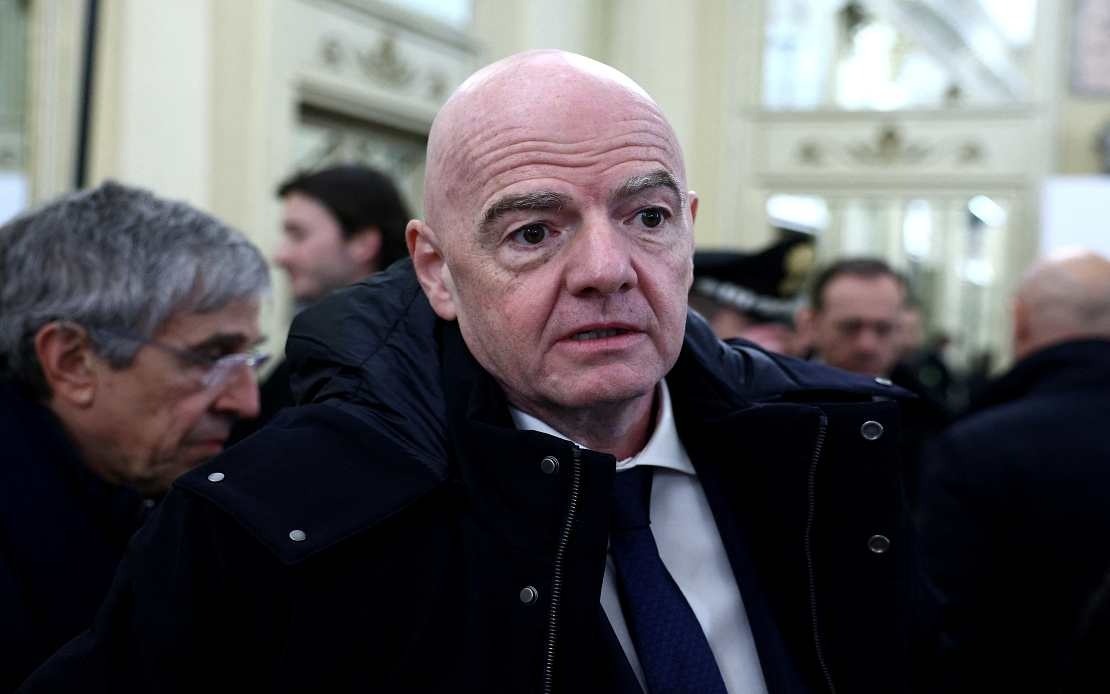
The International Olympic Committee has received formal allegations that FIFA President Gianni Infantino has compromised his obligation to remain politically neutral, a complaint that raises fresh questions about governance standards within international sports leadership. Human rights organisation FairSquare lodged the grievance, contending that the Swiss administrator has contravened the Olympic Charter and the IOC's ethics framework multiple times. The complaint gains particular significance given Infantino's election to IOC membership in 2020, a position that carries specific responsibilities regarding impartiality.
At the heart of the dispute lies the controversial handling of a disciplinary matter involving a prominent American footballer. FairSquare points to the suspension and subsequent reversal of a one-match ban as evidence of political interference affecting FIFA's supposedly independent decision-making apparatus. The player in question was subsequently cleared to participate in a high-stakes World Cup knockout fixture against Belgium, a development that followed direct communication between the United States President and the FIFA chief. The timing and sequence of events have fuelled suggestions that external political pressure may have influenced what should have been a purely sports-based determination.
FIFA's official position maintains absolute separation between its political leadership and disciplinary matters, with Infantino's representatives insisting that the organisation's committees operate without external interference. However, the federation has declined to offer detailed public justification for reversing the disciplinary suspension, a reticence that has invited speculation and criticism. The absence of transparent explanation has become a central grievance, as stakeholders have questioned whether FIFA's governance structures genuinely insulate decision-making from inappropriate pressure.
FairSquare's formal submission to the IOC identifies five explicit breaches of Olympic neutrality regulations, while additionally presenting evidence suggesting two further serious violations may have occurred. The complaint represents an escalation of previous attempts to address these concerns through FIFA's own institutional mechanisms. In December, the same organisation filed a parallel complaint directly with FIFA's ethics committee, seeking internal review of whether political considerations had influenced football decisions.
The complaint has attracted support from multiple quarters within European political and sporting institutions. Norway's national football federation formally wrote to FIFA's ethics committee, explicitly requesting consideration of FairSquare's allegations. More significantly, fifty members of the European Parliament jointly submitted correspondence to the same FIFA ethics body on 29 June, collectively urging action on the complaint. This convergence of institutional pressure from both sporting and legislative bodies suggests the concerns extend beyond single-issue advocacy.
For Southeast Asian sports administrators and governing bodies, this episode underscores persistent tensions between political realities and institutional independence. The region has witnessed similar challenges where the line between governmental interest and sporting autonomy becomes blurred, particularly in high-profile international competitions. Malaysia and other ASEAN nations, which maintain significant sporting profiles and aspirations, must consider what standards should apply when political leaders engage with international sports administrators regarding disciplinary or competitive matters.
The complaint raises fundamental questions about accountability mechanisms within the global sports architecture. The IOC's capacity and willingness to enforce its own ethical standards when violations allegedly involve senior officials will significantly influence confidence in international sports governance. If the complaint proceeds, the investigation's findings could establish precedents affecting how similar situations are handled in future cases involving prominent sporting figures and political actors.
Infantino's position as FIFA president grants him substantial influence over global football administration, making questions about his adherence to neutrality standards particularly consequential. The complaint suggests that IOC membership should entail specific obligations regarding political impartiality, obligations that apparently may not have been uniformly respected. This raises broader implications for how international sporting bodies define and enforce ethical requirements for their affiliated leaders.
The sequence of events—the disciplinary decision, the presidential phone call, the reversal of the ban—creates a narrative that demands explanation regardless of actual causation. Whether or not political pressure genuinely influenced the decision, the appearance of impropriety has damaged institutional credibility. For an organisation like FIFA, which has faced sustained criticism over corruption and governance failings, such perceptions prove particularly damaging to efforts at rehabilitation and reform.
The coming months will determine whether the IOC treats this complaint as a serious governance matter warranting investigation, or dismisses it as having insufficient substantive foundation. Either response carries implications for the Olympic movement's broader commitment to ethical leadership. Southeast Asian observers will be watching closely, as their own nations navigate relationships with international sporting bodies where similar tensions between political engagement and institutional independence increasingly emerge.

