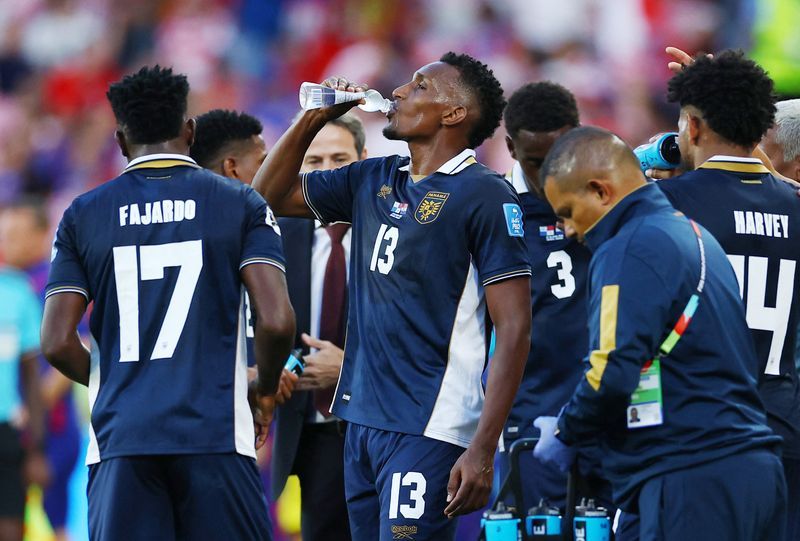
FIFA president Gianni Infantino has moved to quash concerns that mandatory hydration breaks introduced at the World Cup are commercially motivated, characterizing them instead as a necessary sporting measure to protect player welfare in challenging conditions. The three-minute stoppages, implemented at the 22nd and 67th minutes of every match, have generated considerable controversy since matches began, with detractors questioning whether the breaks serve the game or serve broadcasters' advertising interests.
The introduction of these mandatory pauses was ostensibly designed to enable players to manage the physical demands imposed by high temperatures across the North American venues hosting the tournament. However, the timing and structure of the breaks have created additional commercial windows for broadcasters, allowing them to insert advertising content during what would otherwise be continuous play. This development has proven contentious among viewers, many of whom have expressed frustration at the intrusion of commercials during live matches, sparking broader debate about the balance between player safety and the integrity of the sport.
Infantino directly addressed these commercial concerns in a statement, asserting that FIFA derives no additional financial benefit from the hydration breaks since all broadcasting and sponsorship agreements were negotiated and finalized well before the tournament commenced. According to the FIFA president, the innovation represents a purely medical and logistical consideration rather than a revenue-generating initiative. This clarification attempts to separate the breaks from the commercial realities that have become apparent to television audiences worldwide.
Yet the practical implementation of the breaks has revealed secondary effects that extend beyond hydration. Coaching staff have seized upon these mandatory pauses to deliver in-game tactical instructions and adjustments to their teams, effectively converting what is technically a rest period into an additional strategic opportunity. This development has troubled multiple high-profile voices in football, who argue that the breaks fundamentally alter how matches are contested and how the sport itself functions as a spectacle.
England manager Thomas Tuchel has been particularly vocal in his criticism, describing the hydration breaks as disrupting the essential character and rhythm of football. He contends that the interruptions alter the flow and identity of the match itself. Similarly, Uruguay's Marcelo Bielsa has articulated concerns that dividing matches into shorter, segmented periods strips away one of football's defining characteristics—the continuous, evolving nature of play that demands players maintain tactical discipline and physical exertion across an uninterrupted duration.
Interestingly, not all managers and players have opposed the measure outright. Spain coach Luis de la Fuente and Netherlands captain Virgil van Dijk have acknowledged the legitimate safety considerations underlying the rule, particularly regarding extreme heat. However, they have questioned whether the breaks are universally necessary, especially in cooler climates or at venues equipped with climate control systems such as domed or covered stadiums. This nuanced position suggests that while the principle of protecting players in dangerous conditions has merit, the blanket application of the rule may be excessive.
Infantino has further justified the breaks by emphasizing the unique demands of a World Cup tournament stretched across 39 days, during which competing teams must potentially play eight matches within that compressed timeframe. From this perspective, the mandatory rest intervals serve not merely as cooling mechanisms but as essential recovery opportunities integrated into match structure itself. This framing shifts the conversation from one purely about immediate hydration to one about managing cumulative fatigue across a grueling tournament schedule.
The FIFA president has also highlighted what he considers a fairness dimension to the breaks. He argues that without standardized hydration stoppages, teams playing in hotter conditions would enjoy greater coaching opportunities through informal timeouts and water breaks, while teams in cooler environments would not have equivalent moments to implement tactical adjustments. By making the breaks mandatory and uniform across all matches, Infantino contends that FIFA ensures competitive equity, preventing weather or venue conditions from inadvertently conferring tactical advantages on certain teams.
Additionally, Infantino has suggested that the breaks have not demonstrably diminished the intensity or quality of football displayed throughout matches. According to his assessment, players have maintained high performance levels despite the stoppages, implying that the concerns about disrupted momentum may be overstated. This claim, however, remains contested by critics who point to observable changes in how matches unfold and the artificial nature of the rhythm imposed by structured breaks.
The hydration break debate reflects broader tensions in modern football between medical and safety innovations, commercial interests, and traditionalist perspectives on how the game should be played. For Southeast Asian observers, including Malaysian readers, this controversy carries particular relevance, as regional climates often involve the same high temperatures that prompted the World Cup measure. The debate about whether such breaks are necessary, beneficial, or excessive speaks directly to challenges that domestic and regional football competitions face when organizing matches in tropical and subtropical conditions.
As the World Cup progresses, the practical effects of these breaks will continue to accumulate data on their actual impact—whether they substantively improve player performance and reduce injury risk, or whether they constitute an unnecessary alteration of football's fundamental character. FIFA's commitment to the measure appears firm, but the ongoing criticism from elite managers and players suggests the discussion is far from settled within professional football circles.