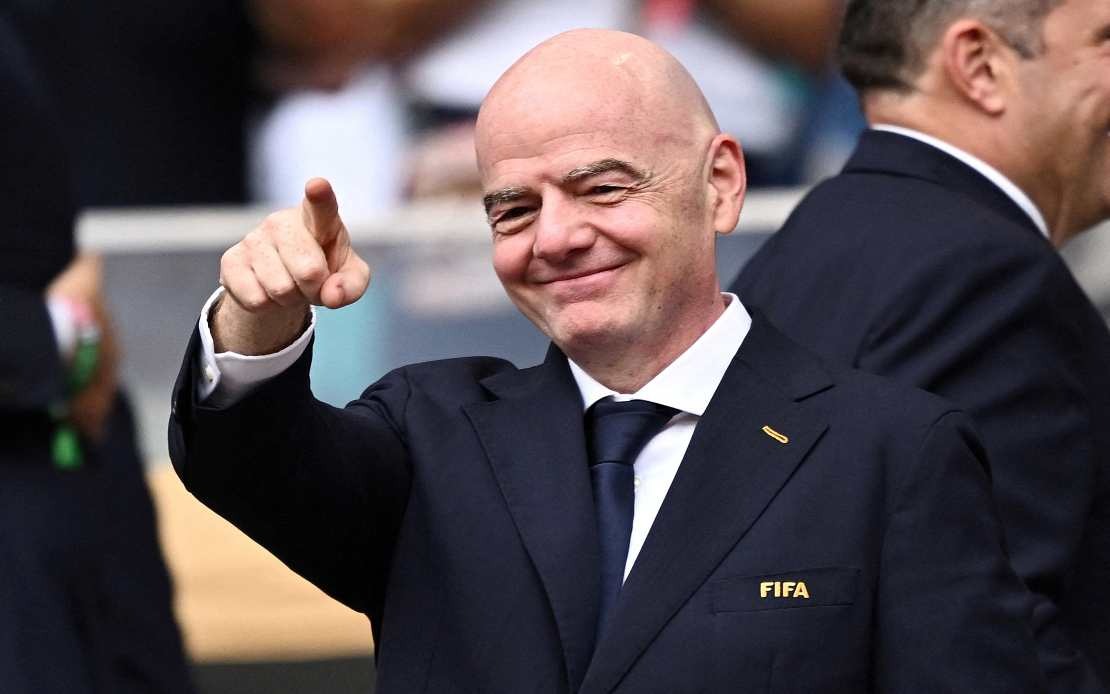
FIFA has come under renewed scrutiny after distributing templated letters that praised President Gianni Infantino to national football associations ahead of his upcoming re-election campaign, according to multiple reports. The communications, which highlighted Infantino's record on sports infrastructure development and women's football advancement during his tenure, were circulated to associations before the tournament scheduled for the United States, Mexico and Canada. The correspondence raised eyebrows for containing pre-filled names and signatures of association presidents, though notably, not every federation received the identical letters, suggesting a selective distribution strategy.
The timing of these communications underscores mounting pressure surrounding Infantino's leadership and FIFA's strategic direction. The controversy arrives amid a broader financial initiative announced in July when FIFA revealed plans to monetise its future through the sale of approximately 20 per cent equity in a newly created entity designed to control the organisation's media and commercial revenues, including all World Cup-related broadcasting and sponsorship rights. This move would generate an estimated US$4.2 billion in capital for the world football governing body, fundamentally reshaping its financial architecture and operational independence.
The proposed stake sale has attracted significant interest from prominent investment circles, with reports indicating that a fund managed by Joshua Kushner—brother of Jared Kushner, who serves as son-in-law to United States President Donald Trump—is considering acquisition of this holding. Such involvement from American financial interests in global football governance raises complex questions about foreign influence over the sport's international decision-making structures, particularly concerning matters affecting leagues and associations worldwide, including Southeast Asian football bodies.
The financial restructuring proposal has proven deeply divisive within international football's traditional power structures. The Union of European Football Associations responded with decisive action, announcing that all member associations across the European continent would systematically boycott FIFA-sanctioned tournaments unless the media rights monetisation scheme is comprehensively shelved. This unprecedented united stance from UEFA—representing some of world football's most influential and financially robust associations—signals serious fractures emerging within FIFA's governance coalition and suggests that Infantino's leadership faces substantial resistance from established football authorities.
The pre-written endorsement letters, viewed in this context, appear designed to shore up support for Infantino among associations that might otherwise be swayed by European pressure or independent reservations about his strategic direction. The selective nature of their distribution implies that FIFA strategically targeted associations it believed would be receptive, while potentially avoiding those already critical of the administration. This calculated approach to building re-election support suggests concerns within FIFA's inner circle about the strength of Infantino's standing among the global football community.
For Malaysian football stakeholders, including the Football Association of Malaysia and domestic league operators, these developments carry meaningful implications. Any fundamental restructuring of FIFA's governance or financial model could affect how international competition revenues are distributed, standards for domestic league operations, and Malaysia's voice within global football decision-making forums. The proposed foreign investment into FIFA's media rights also raises questions about how international football broadcasting decisions might be influenced by American financial interests, potentially affecting Malaysian broadcasters' access to premium football content and transmission rights.
Reports emerging from football circles suggest that Infantino himself may be contemplating resignation as pressure mounts from multiple continental confederations and major associations. The convergence of the UEFA boycott threat, European and other associations' skepticism regarding the financial restructuring, and the apparent need for manufactured support through pre-written letters all point toward a presidency facing unprecedented internal challenge. Should Infantino step down, FIFA would face a succession contest that could fundamentally reorient the organisation's priorities, governance standards, and financial model.
The episode also illuminates broader questions about FIFA's institutional practices and democratic legitimacy. The circulation of pre-written letters with pre-filled signatures deviates substantially from conventional governance norms, even within sports administration. It suggests potential concerns that straightforward appeals for re-election support might prove insufficient, necessitating more carefully orchestrated messaging strategies. For associations contemplating their own governance reforms or those concerned about accountability within football administration, FIFA's approach offers cautionary lessons about how even international sporting institutions can resort to questionable tactics when facing institutional pressure.
Southeast Asian football associations, while individually less influential than their European counterparts, collectively represent substantial voting power within FIFA's assembly. Malaysia and neighbouring nations should carefully evaluate how the unfolding leadership crisis and proposed financial restructuring might affect their long-term interests in international football, from competition scheduling and revenue distribution to standard-setting for domestic league operations and player development programmes. The current instability within FIFA leadership presents both risks and potential opportunities for regional associations to meaningfully influence the organisation's future direction during its inevitable institutional reorganisation.

