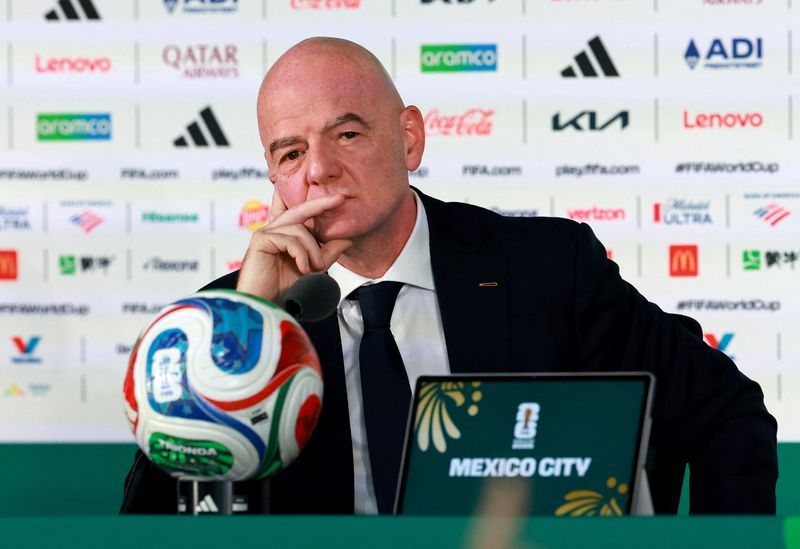
FIFA's attempt to move beyond Gianni Infantino's most serious internal turmoil is unlikely to resolve deeper concerns about how world football's governing body makes strategic decisions, even as its leadership publicly rallied behind the embattled president in Rabat this week. The hastily abandoned proposal to monetise future World Cup commercial rights triggered an unprecedented backlash from national federations, confederations and influential stakeholder bodies, exposing fractures in FIFA's decision-making apparatus that will take far longer to repair than a single reassuring statement can address.
In the immediate aftermath of Wednesday's leadership gathering, FIFA issued a formal apology to its 211 member associations, acknowledging that the controversial commercial proposal "should have been handled differently" and conceding that the organisation failed to adequately include the FIFA Council and national associations in the development process. The governing body pledged to conduct a comprehensive review of the procedures that allowed such a significant initiative to advance without proper consultation, with findings to be presented at the next Council meeting. This mea culpa represented a sharp reversal from FIFA's initial defensive posture, when officials insisted all actions complied with existing regulations.
Yet the apology and promised review mask a more fundamental issue that extends well beyond the bungled commercial rights initiative. European Leagues, which represents over 1,300 clubs across the continent, has highlighted troubling patterns in how FIFA approaches major decisions. The body specifically criticised the governing authority for imposing an unrealistically compressed four-week timeline for assessment of a separate proposal to expand the 2030 World Cup from 48 to 64 teams. This complaint echoes a wider sentiment among stakeholders that FIFA increasingly presents decisions to key constituencies rather than genuinely consulting them, creating a top-down governance model that breeds resentment and erodes confidence.
The tensions point to a structural problem within FIFA's decision-making hierarchy. While the organisation insists its actions technically complied with existing governance rules, officials now concede that mistakes occurred in process and communication. This distinction matters little to frustrated stakeholders who argue that formal compliance with internal regulations is not equivalent to sound governance when those regulations themselves may be outdated or inadequately protective of stakeholder interests. The recognition that communication failures contributed to the crisis suggests that FIFA's governance framework may need more than cosmetic adjustments to restore faith among national associations, continental confederations and commercial partners.
Infantino has moved swiftly to contain the immediate political damage ahead of Morocco's March presidential election, where he intends to secure a fourth term extending his mandate through 2031. The Rabat gathering achieved its primary objective, with FIFA's management board and Secretary General Mattias Grafstrom publicly endorsing the president's continued leadership. Grafstrom's earlier internal memo, which lamented a "sad and reproachable series of events" without naming Infantino directly, suggested simmering discontent within the bureaucracy, yet the official public stance presented a united front. A carefully choreographed moment showing both men smiling and giving thumbs-up at a women's Africa Cup of Nations match further reinforced the message that internal tensions had been resolved.
Yet this apparent reconciliation masks persistent questions about Infantino's leadership style and vision for FIFA's future governance. UEFA, European soccer's governing body, has not shied away from directly questioning his approach, while confederations in other regions including CONCACAF and the Asian Football Confederation have also expressed concerns. These are not marginal voices—they represent some of FIFA's most influential members and some of the sport's most developed football markets. Their doubts about Infantino's judgment and his willingness to consult stakeholders before advancing major initiatives will not disappear because of a single summit meeting or reassuring statements about future transparency.
Infantino's political position remains comparatively secure, however, because no credible challenger has emerged ahead of the presidential election. This absence of viable opposition gives him significant latitude to weather the current storm and potentially reshape the narrative around his leadership. His strength derives partly from continued support among smaller and developing national associations, particularly in Africa and Asia, where FIFA development funding remains essential to sustaining national football programmes. For many of these nations, loyalty to FIFA's incumbent leadership translates into sustained investment in grassroots infrastructure and administrative capacity-building that might otherwise be unavailable.
The global distribution of FIFA's development spending has created a complex political geography that protects Infantino even as influential European and North American voices question his stewardship. This dynamic underscores how FIFA governance operates along fault lines that often align with economic disparities between developed and developing football nations. Wealthier confederations can absorb governance crises and demand accountability more easily, while organisations dependent on FIFA's financial support face pressure to maintain constructive relationships with the institution's leadership. This structural imbalance may allow Infantino to survive the current controversy while governance questions fester unresolved.
Looking forward, any future FIFA proposals involving commercial strategy, tournament expansion or substantive governance reforms will encounter a dramatically higher threshold for stakeholder acceptance. The failed commercial rights initiative has educated member associations about the risks of allowing FIFA's decision-making processes to proceed without meaningful external input. Confederations and national associations will almost certainly demand extended timelines for assessment, more transparent consultation mechanisms and explicit acknowledgment of stakeholder concerns before advancing major strategic initiatives. FIFA may find that promises of reform, while initially mollifying critics, create expectations that the organisation will struggle to meet consistently.
The durability of this shift toward demanding greater accountability may ultimately depend on whether FIFA implements structural changes that truly distribute decision-making power more equitably among stakeholders. A review process and revised communication procedures may satisfy observers seeking short-term reassurance, but deeper governance reform would require FIFA to fundamentally reconfigure how major decisions move from conception to implementation. Without such changes, the current controversy risks establishing a repeating pattern: mounting internal pressure, crisis management meetings, apologies and promises, followed by renewed conflicts when FIFA again moves forward with significant decisions through insufficiently inclusive processes.
The Moroccan truce represents a tactical victory for Infantino and FIFA's leadership, providing breathing room to manage the immediate political fallout and advance toward the March election without the distraction of overwhelming internal dissent. However, the underlying governance questions that sparked the commercial rights controversy are unlikely to fade simply because leadership has publicly reaffirmed support for the president. Regional confederations, national associations and commercial stakeholders will continue scrutinising FIFA's decision-making processes with far greater intensity than before the crisis. This elevated vigilance may constrain Infantino's freedom of action in proposing ambitious strategic initiatives during his final term, regardless of whether his reelection proceeds smoothly.

