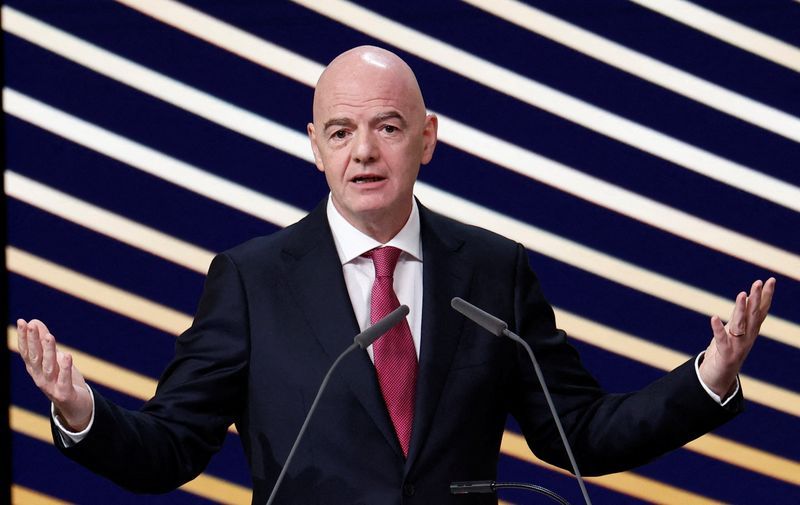
FIFA President Gianni Infantino confronts a significantly weakened re-election campaign following the collapse of an ambitious scheme to sell a stake in the World Cup to private investors. The proposal triggered widespread backlash from major continental football bodies, with Serbia, Sweden and Wales among nations withdrawing their backing for Infantino's third term, which would run from 2027 through 2031. The FIFA Council is scheduled to hold elections on March 18 in Morocco, setting the stage for what could become the most contested presidential ballot in recent football governance history.
The timing of this internal crisis proves particularly significant for Asian and Southeast Asian football developments. The AFC, representing 47 member associations across the region, has emerged as a crucial swing bloc in the unfolding succession debate. The continental confederation's criticism of Infantino extends beyond the private equity debacle, touching on broader concerns about FIFA's institutional decision-making frameworks and the opacity surrounding major tournament restructuring proposals.
VICtor Montagliani, the CONCACAF president and seasoned Canadian businessman, represents the North American football establishment's potential challenge to the incumbent. His position carries particular weight given that CONCACAF rejected Infantino's private equity proposal whilst stopping short of the explicit boycott that UEFA implemented. The 2026 World Cup will be staged in North America, marking the first time since 1994 that the tournament returns to CONCACAF territory, positioning Montagliani as a figure intimately connected to the region's football renaissance and commercial interests.
Aleksander Ceferin, the Slovenian UEFA president, emerged as Infantino's most vocal antagonist following a series of escalating disputes between European and global football governance. Ceferin's decision to boycott the World Cup final last month symbolised the depth of fracture between UEFA and FIFA, with the European confederation voicing sustained criticism of Infantino across multiple policy fronts. Should Ceferin opt to contest the presidency, he would bring the substantial diplomatic and financial resources of European football's 55 member associations to the campaign.
Sheikh Salman bin Ibrahim Al Khalifa of Bahrain commands considerable influence as a senior FIFA Council vice president and AFC leader. His opposition to the World Cup expansion to 64 teams demonstrates a willingness to challenge Infantino on signature initiatives. The AFC's statement lambasting the private equity proposal as exposing "fundamental weaknesses in FIFA's consultation and decision-making processes" signals that Asian football federations increasingly view this moment as an opportunity to reshape global governance frameworks in ways more receptive to regional interests and concerns.
Nasser Al-Khelaifi, the Paris St Germain president and Qatari sports executive, has attracted notable backing from European football officials seeking a heavyweight candidate outside the incumbent-versus-rival binary. According to recent reporting, Al-Khelaifi has begun positioning himself as an alternative capable of uniting fractious continental confederations. His background in Middle Eastern sports infrastructure and his standing within European elite club circles create a unique coalition-building opportunity.
Lise Klaveness of the Norwegian Football Federation represents perhaps the most symbolically significant potential challenger, embodying the pushback against Infantino from women's football advocates and progressive governance reformers. Klaveness achieved international prominence through her vocal opposition to Infantino's World Cup privatisation scheme and previously initiated ethics complaints regarding FIFA's handling of disciplinary matters. Her candidacy, should she formally declare, would force a conversation about FIFA governance modernisation and gender representation at institutional leadership levels.
The broader context shaping this succession contest extends beyond personality conflicts or policy disagreements. Infantino's tenure has been marked by accelerating controversy regarding the politicisation of FIFA decision-making, exemplified by the Folarin Balogun suspension reversal following intervention by U.S. President Donald Trump. Such incidents have amplified concerns among federation leaders that FIFA operates without sufficient institutional checks on executive authority. Southeast Asian federations have observed these dynamics with particular concern, knowing that major continental confederations' internal cohesion directly affects resource allocation and tournament hosting opportunities available to smaller member associations.
The March 18 vote in Morocco will determine not merely FIFA's leadership but the direction of global football governance for a consequential four-year cycle encompassing the 2028 Olympics, inaugural Club World Cup expansion, and continued World Cup format experimentation. Malaysian football stakeholders and other Southeast Asian federations must monitor how rival candidates position themselves regarding continental representation, governance transparency, and equitable revenue distribution from global competitions. The AFC's collective stance will likely prove decisive in determining whether the election represents continuity with Infantino's centralised approach or a return to more consultative federation-based governance.
For regional observers, the most compelling question concerns whether any successor would fundamentally restructure FIFA's relationship with smaller confederations and national associations. Infantino's presidency has been characterised by top-down decision-making and initiative announcement before consultation. A reformed governance model prioritising AFC input on tournament formats, financial arrangements, and strategic planning could materially benefit Southeast Asian football development. The coming months will clarify whether the emerging candidates view such institutional reform as central to their platform or merely tactical positioning in the struggle for votes.

