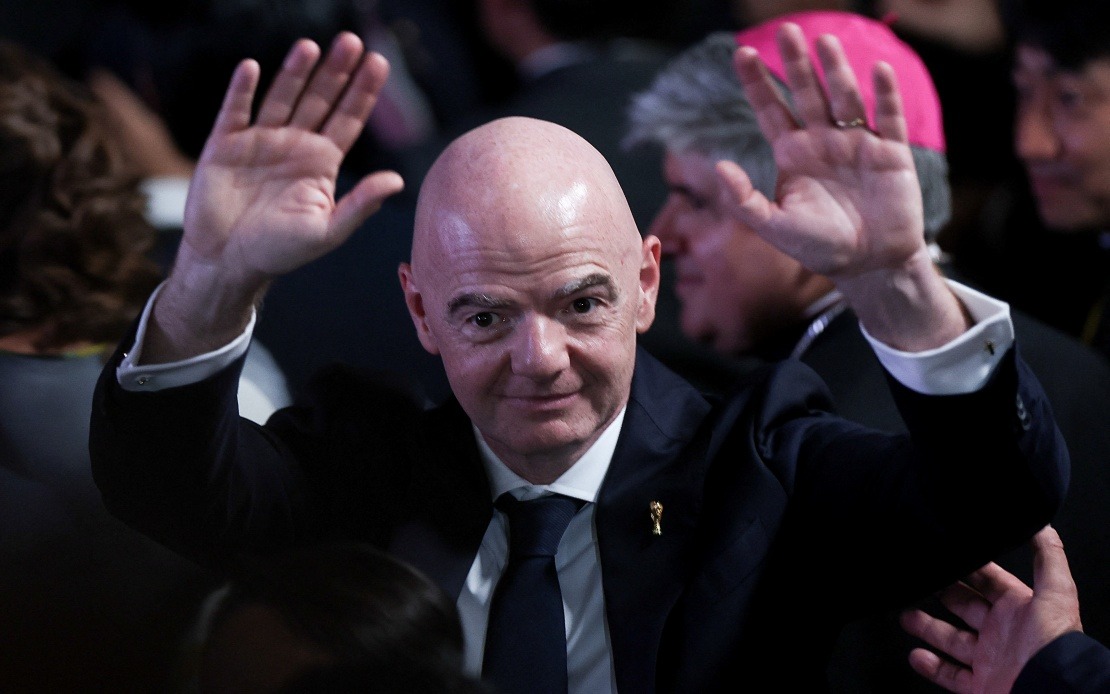
Football's governing body has mounted a spirited defence of President Gianni Infantino, issuing a statement from Istanbul that rejects any attempt to contest his leadership through irregular channels. The move reflects deepening tensions within FIFA as the Swiss-Italian administrator pursues a fourth consecutive term, with the organisation now directly engaging in the political battle surrounding his future. The statement represents a significant escalation in tone from FIFA's official apparatus, signalling that leadership divisions within the football world have reached a critical threshold that demands public intervention.
FIFA made clear it would reject any presidential election process that strays from its established constitutional framework and governance procedures. The organisation framed this position as a defence of democratic legitimacy, arguing that Infantino maintains a valid mandate granted by member associations. This constitutional defence carries particular weight given that FIFA reformed its governance structure in recent years, theoretically subjecting the presidency to greater democratic oversight. By emphasising procedural propriety, FIFA attempts to portray challenges to Infantino as illegitimate power grabs rather than legitimate institutional questions.
The statement explicitly references backing from major continental confederations, particularly CONMEBOL and CAF, whose support represents crucial votes in any FIFA electoral contest. This coalition-building reflects the political complexity of football administration, where regional blocs exercise enormous influence over the organisation's direction. For Malaysian and Southeast Asian readers, this alignment matters considerably, as the Asian Football Confederation's position will ultimately prove decisive in determining Infantino's fate. CONMEBOL's explicit support underscores growing alignment between South American and African football interests with FIFA's current leadership.
FIFA has adopted an aggressive posture toward unnamed critics, characterising opposition as a "concerted and ongoing effort" to undermine both the organisation and its president. This language suggests FIFA views the challenge not as constructive debate but as a coordinated campaign orchestrated by powerful interests determined to seize control through extant procedures they cannot navigate. The implicit accusation that critics resort to "allegations, insinuations or misinformation" reframes the entire dispute as a matter of factual accuracy rather than legitimate policy disagreement, a rhetorical strategy that shifts focus from substantive questions about leadership direction.
Central to FIFA's defence is a sweeping vindication of Infantino's record over three decades in European and world football. The organisation credits him with expanding access, resources, and opportunities throughout the sport, framing his tenure as one of progressive advancement rather than controversial stewardship. This recitation of achievements serves as both a counter-narrative to criticism and a reminder to member associations of tangible benefits they have received under his leadership. However, such broad assertions regarding his contributions remain contested within football's global community, with significant constituencies questioning whether resource distribution has truly served developing footballing nations equitably.
The statement's assertion that FIFA welcomes "legitimate scrutiny" while simultaneously dismissing reporting as containing "unsubstantiated assertions" and "demonstrably false claims" reveals the tension at the heart of FIFA's position. The organisation claims to embrace accountability while simultaneously portraying critical examination as factually baseless. This rhetorical stance creates a paradox wherein any serious questioning of Infantino's leadership automatically becomes, by definition, illegitimate. For observers evaluating FIFA's governance trajectory, this defensive posture raises questions about whether the organisation genuinely welcomes independent scrutiny or merely tolerates criticism that reaffirms its existing direction.
The statement's insistence that "repetition does not make an allegation true" carries a pointed subtext, suggesting that persistent questioning of FIFA's practices represents disinformation rather than persistent accountability journalism. This framing effectively dismisses long-standing concerns about FIFA's transparency, financial practices, and decision-making processes that have accumulated across multiple administrations. By characterising such concerns as mere repetition of debunked claims, FIFA attempts to reset the conversation entirely, positioning critics as engaged in circular argumentation rather than raising evolving questions about institutional conduct.
For Southeast Asian football stakeholders, this internal FIFA conflict carries practical implications regarding investment priorities, tournament hosting decisions, and the distribution of development resources across confederations. Infantino's faction has championed expanded global participation in FIFA's flagship tournaments and increased financial support for emerging footballing nations. Any transition in leadership could signal a shift in these priorities, potentially affecting Malaysia's pathway to greater competitive prominence or its opportunities to host international competitions. The AFC's ultimate alignment decision will therefore shape the sport's direction across the region for years to come.
The dispute reflects broader questions about FIFA's evolution beyond the corruption scandals that precipitated governance reforms a decade ago. While formal constitutional procedures have been tightened, questions persist about whether the organisation's fundamental operations have genuinely transformed or whether new structures simply accommodate established power networks. Infantino's defenders argue his tenure has normalised FIFA's operations after years of institutional crisis, while critics contend that genuine reform remains incomplete. This fundamental disagreement about the organisation's trajectory underpins the current leadership struggle.
The statement's final assertion that FIFA's responsibility extends to "211 Member Associations and to football around the world" represents both a recognition of the organisation's global constituency and a warning to fractious members about maintaining unity. This appeal to collective institutional interest serves as a brake on divisive internal conflict, reminding member associations that whatever their leadership preferences, FIFA's broader mission requires cohesion. However, such calls for unity often reflect the interests of those currently wielding institutional power, raising questions about whether centripetal institutional loyalty should supersede questioning of leadership direction.
As the presidential election approaches, FIFA's defensive statement signals that Infantino's reelection, while likely given his continental backing, will not proceed unopposed. The intensity of the statement itself demonstrates that internal divisions run deeper than routine electoral competition, touching fundamental questions about the organisation's governance philosophy and strategic priorities. The coming months will reveal whether FIFA can contain these tensions or whether leadership succession will precipitate broader institutional reconfiguration.

