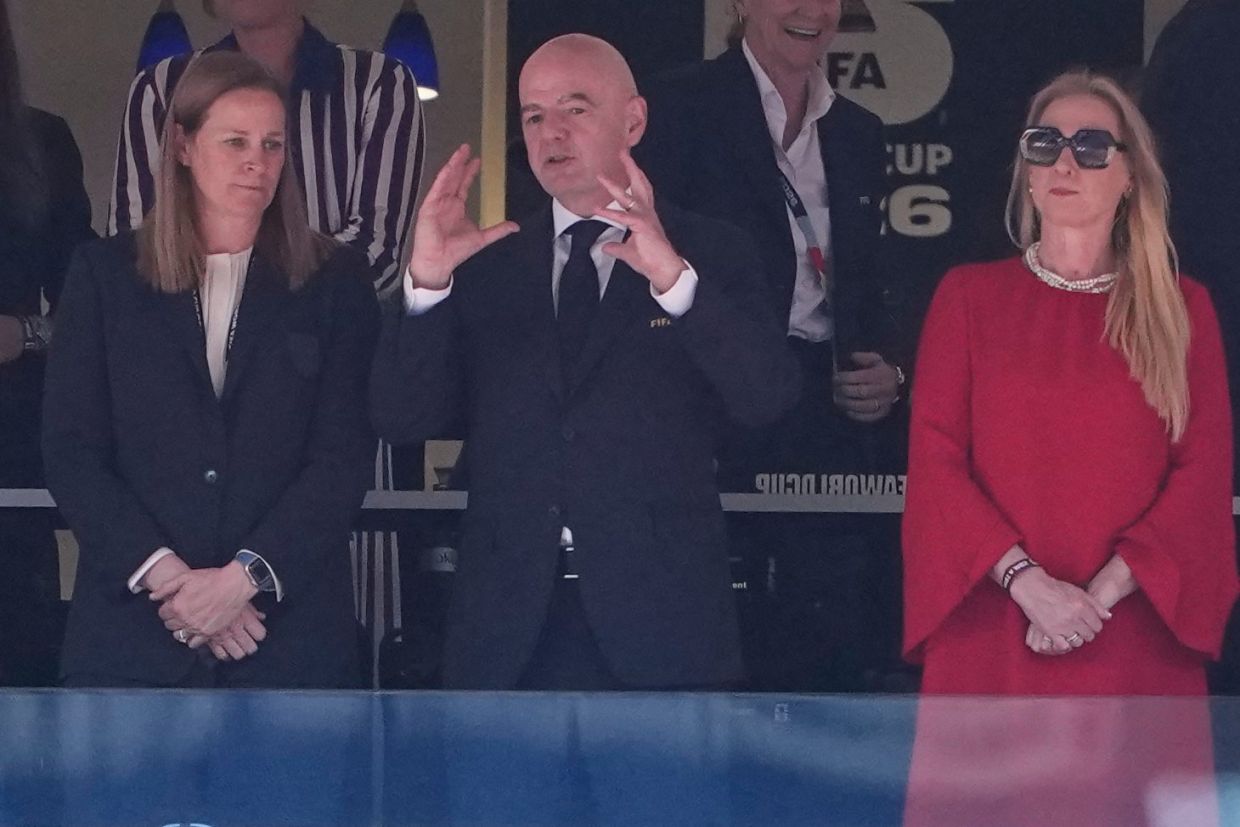
Gianni Infantino has weathered yet another storm. As the dust settles on the 2026 World Cup, marked by row after row of controversy spanning ticket prices, diplomatic tensions, and allegations of political pressure from the highest levels, the FIFA president stands more firmly entrenched than ever. The controversies that might have toppled lesser administrators have instead become background noise to what the organization presents as an unqualified financial triumph—and for Infantino's political survival, that distinction matters enormously.
The tournament has faced relentless criticism from nearly every stakeholder in the sport. Fans complained bitterly about ticket costs that kept ordinary supporters locked out of matches. The treatment of Iran's national squad drew accusations of political exclusion. A Somali referee was barred from participation, raising questions about FIFA's diversity commitments. Most provocatively, the organization awarded its inaugural peace prize to President Donald Trump, a gesture widely viewed as politically calculated rather than sporting in nature. Yet perhaps the most damaging moment came when FIFA allowed a suspended American player to return to the field following intervention by Trump himself, triggering condemnation from footballing authorities globally.
Nick De Marco, a sports lawyer based in the UK, articulated the deeper concern underlying these individual incidents. The question, he argued, had transcended whether any single disciplinary decision was correct. Instead, it touched the fundamental legitimacy of FIFA as football's global regulator—whether the organization could be trusted to enforce its own rules consistently or whether political pressure could bend institutional authority to serve elite interests. For a governing body that had spent over a decade attempting to rebuild credibility following a massive corruption scandal, such questioning represented existential risk.
Yet within days of the controversy peak—after Belgium's emphatic 4-1 victory over the United States—public outrage evaporated as rapidly as it had ignited. This pattern of intense, fleeting outcry followed by collective amnesia has become familiar in football governance. The controversy surrounding the American player's reinstatement dissipated almost entirely once the match concluded and the tournament momentum shifted forward. Infantino, meanwhile, had remained steadfastly focused on his primary objective: maximizing revenue generation from what many regard as sport's most valuable property.
The financial windfall tells the real story of 2026. FIFA expects to collect approximately $9 billion directly from this World Cup, a stunning $2 billion increase compared to the 2022 edition in Qatar. This extraordinary sum reflects the expanded tournament format—growing from 32 to 48 teams—and represents the financial apotheosis of Infantino's tenure. The 56-year-old administrator has transformed FIFA from a scandal-plagued organization into a money-printing apparatus. This mercenary focus has created an obvious tension: a governing body responsible for protecting sport's integrity now operates according to commercial imperatives that sometimes conflict with that mandate.
The money flowing from this World Cup has distributed itself across the entire ecosystem. Food and beverage concessionaires operating within stadiums have recorded extraordinary margins, with some venues reporting per-capita spending approaching $100—nearly double the average American football game. Advertisers benefited from the introduction of mandatory hydration breaks, effectively converting the traditional two-half structure into an American-style four-quarter format designed to maximize advertising windows. Even host cities, which had expressed anxiety about tournament costs beforehand, have witnessed remarkable spending surges. Bank of America data from mid-June showed credit and debit card spending in World Cup host cities rising 6.3 percent year-on-year, with non-local spending jumping 16.7 percent—demonstrating the tournament's ability to generate economic activity regardless of attendee sentiment.
The structural expansion to 48 teams has produced unprecedented wealth distribution. The total prize purse has doubled to $871 million, a figure that would have seemed inconceivable a decade ago. Every participating nation receives a minimum guarantee of $12.5 million simply for participation—a floor that ensures even the earliest eliminations prove financially valuable. Cape Verde's historic tournament run generated over $21 million in FIFA payments, an amount representing approximately 0.75 percent of that tiny nation's entire annual GDP. For football associations across Africa, South America, and Asia, FIFA's financial largesse represents the margin between organizational viability and collapse. This reality has created powerful structural incentives for federation leaders to support Infantino regardless of governance controversies.
Infantino faces re-election in early 2027 at the 77th FIFA Congress in Rabat, Morocco—itself a World Cup 2026 host nation. The 211 member federations each possess one vote in what has become a thoroughly ritualistic process. Infantino runs unopposed, a position he has consolidated through a combination of financial incentives and strategic coalition-building. Federations representing Asia, South America, and Africa have already pledged support. Sheikh Salman, president of the Asian Football Confederation, captured the prevailing sentiment among power brokers: FIFA, he declared, occupies its strongest institutional position ever. The organization faces no meaningful electoral threat.
The tournament itself, viewed purely as sporting spectacle, has delivered genuine success beyond the governance controversies. Despite widespread complaints about ticket accessibility, stadiums have remained full. The world's elite footballers have performed brilliantly, delivering the high-quality matches that sustain global interest. The expansion to 48 teams, often criticized beforehand as diluting quality, instead produced a welcome geographic expansion of competitiveness—nine African nations reached the knockout stage, a historically significant achievement representing broader global representation in elite football. Host nations have provided exceptional hospitality, creating positive fan experiences that contrast favorably with the sterile atmospheres of recent tournaments in Russia and Qatar.
Political figures and sporting legends have articulated deep concerns about the Trump intervention episode. UK politicians and Belgian officials have called for Infantino's resignation. Jürgen Klopp, the legendary Liverpool FC manager, posed the question starkly: if the American president and FIFA's chief truly negotiated a suspension reversal between themselves, what did that say about institutional independence? "This is our sport, not theirs," Klopp declared, identifying a constitutional principle many believe Infantino has violated. Yet these voices, however prominent in European media and political discourse, carry no decisive weight among FIFA's actual power structure.
The federation leaders who collectively determine Infantino's fate remain unmoved by such objections. The Royal Moroccan Football Federation issued a statement celebrating Infantino's stewardship, particularly his commitment to African football development. Kuwait and South Africa have offered explicit support. The geopolitics of FIFA's governance structure actually favors Infantino's position: member associations from regions that have historically experienced marginalization within global football governance now perceive his presidency as advancing their interests through expanded tournament participation and guaranteed revenue streams. European complaints about integrity appear, from their perspective, as attempts by historically dominant football powers to maintain restrictive governance models that limited their own opportunities for participation and profit.
The paradox of modern FIFA is that Infantino has successfully transformed the organization's greatest vulnerability into institutional strength. A decade ago, corruption scandals threatened the organization's fundamental legitimacy. Today, a different kind of critique—that the organization allows political pressure to influence sporting decisions—emerges not from FIFA's formal structures but from external actors suddenly sidelined by the organization's expanded commercialism. Meanwhile, the federations and nations now benefiting from FIFA's financial generosity have become invested stakeholders in Infantino's continued leadership. His upcoming re-election will likely prove unanimous or near-unanimous, a mandate that will embolden him to continue prioritizing commercial expansion over regulatory stringency.
As the 2026 World Cup enters its final stages, the competing narratives about FIFA's future have largely resolved themselves. For those who prioritize financial metrics and democratic representation among federation leaders, FIFA has never been healthier. For those concerned about the organization's regulatory independence and ability to resist political pressure, the tournament has demonstrated troubling institutional vulnerabilities. Yet the structure of FIFA's governance ensures that the latter group lacks meaningful power to influence outcomes. Infantino's grip on the sport remains unchallenged, strengthened paradoxically by the very controversies intended to weaken it.

