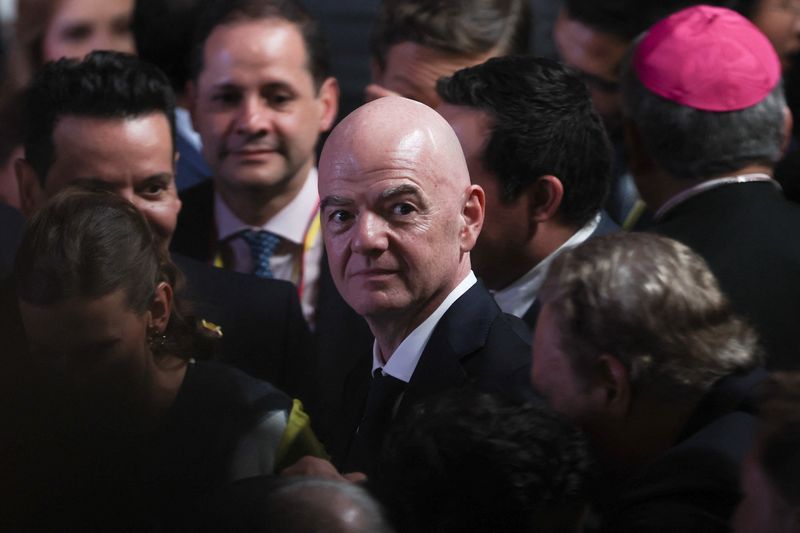
Three of world football's most influential regional bodies—UEFA representing Europe, the AFC covering Asia, and CONCACAF spanning North and Central America plus the Caribbean—are actively exploring whether to initiate a formal no-confidence vote against FIFA President Gianni Infantino. The discussions, confirmed by senior officials with knowledge of the deliberations, represent an extraordinary escalation in the governance crisis engulfing world football's governing body following the spectacular collapse of Infantino's plan to privatize a portion of World Cup commercial rights. No such vote has occurred in FIFA's 122-year institutional history, underscoring both the severity of the current impasse and the unprecedented nature of the challenge facing the embattled president.
The catalyst for this potential constitutional action centres on Infantino's handling of a proposal to sell a minority stake in a new FIFA commercial entity to private investors, which would have controlled the lucrative commercial rights to the World Cup. The scheme foundered amid fierce opposition from the three confederations, each citing fundamental failures in transparency, governance consultation, and basic due diligence. The fallout has only intensified following the recent departure of FIFA Chief Operating Officer Kevin Lamour, who openly criticised the investment proposal and alleged that FIFA staff had been systematically misled about what he characterized as a project driven by individual ambition rather than institutional prudence.
Infantino's position has deteriorated markedly following Lamour's exit and the subsequent withdrawal of support from FIFA Vice President Sandor Csanyi, who declared that Lamour's departure represented the "final straw" in a series of governance breakdowns. Yet the embattled president retains formidable advantages in any electoral contest. He has publicly committed to seeking reelection at the scheduled FIFA Congress in March 2027, and maintains substantial backing among FIFA's membership, particularly from Africa's confederation (CAF). CAF President Patrice Motsepe confirmed last week that the African confederation continues to support Infantino, framing his electoral future as a matter for FIFA's full membership to decide through democratic processes.
The mechanics of a potential no-confidence challenge reveal both the reformers' leverage and their tactical constraints. Under FIFA's constitutional framework, the FIFA Council possesses authority to convene an Extraordinary Congress at any moment, while the governing body must schedule such a congress if at least one-fifth of FIFA's 211 member associations submit a formal written request specifying agenda items. Once convened, an Extraordinary Congress would need to be held within three months, with each member association casting a single vote regardless of size or status. Notably, FIFA's statutes contain no explicit procedural guidance governing a no-confidence vote against the president, creating potential ambiguity around how such a vote would be structured and what threshold would constitute success.
Senior figures engaged in these discussions acknowledge profound strategic concerns about the risks of miscalculation. One insider captured the binary choice facing Infantino bluntly: "Either he goes the peaceful way and decides not to stand in March or he goes the hard way," a reference to the likelihood of facing a formal no-confidence motion. However, strategists opposed to Infantino worry that launching an unsuccessful challenge could paradoxically strengthen his political position by demonstrating the breadth of his continuing electoral support among member associations and validating his argument that opponents lack the coalition-building capacity to remove him. This calculation reflects deeper anxiety that a failed vote could entrench Infantino's authority and provide ammunition for his supporters ahead of the scheduled 2027 presidential election.
Infantino's supporters have moved to reinforce his position through calculated public endorsements. Last week, six Arab football associations, including Qatar and Morocco (co-host of the 2030 World Cup), publicly backed the FIFA president. FIFA's leadership tier reaffirmed unanimous support for Infantino following a crisis meeting in Morocco earlier this month. These manoeuvres suggest that despite the confederation opposition, Infantino retains substantial grassroots support among smaller member associations, many of whom benefited from FIFA's expanded revenue distribution schemes. The abandoned investment proposal itself included provisions allowing member associations access to as much as $20 million in one-off capital for infrastructure development, coaching programmes, national teams, competitions, grassroots initiatives, and women's football—sweeteners that may have generated gratitude among football associations from developing nations.
Malawi Football Association President Fleetwood Haiya articulated the perspective of smaller confederations, challenging Infantino's opponents to present an affirmative vision rather than merely opposing the incumbent. Haiya urged reform advocates to "come out into the open" and explain what alternative vision they would offer to nations like Malawi, emphasizing that opposition alone provides insufficient basis for shifting allegiance. This sentiment suggests that while the three confederations command institutional authority and represent football's established power centres, they face organisational challenges in constructing a majority coalition among member associations unless they can articulate a compelling alternative programme.
Pressure on FIFA extends beyond associations with formal voting power. The European Football Clubs (EFC), chaired by Paris St-Germain president Nasser Al-Khelaifi and representing more than 800 professional clubs across Europe, has aligned itself with UEFA and other reform advocates. Critically, the EFC has warned FIFA that member clubs could boycott future editions of both the men's and women's Club World Cups unless FIFA addresses their concerns regarding governance structures and the foundational relationship between clubs and the international federation. While clubs possess no direct FIFA voting rights, they wield substantial sporting and commercial leverage that FIFA leadership cannot ignore without threatening the financial viability of flagship competitions.
The reputational and commercial dimensions of this crisis warrant consideration for Malaysian and Southeast Asian stakeholders. FIFA's commercial revenue for the 2023-2026 cycle is projected to exceed $15 billion, with the bulk generated in the 2026 World Cup year when tournament revenues peak. The governance crisis threatens the smooth commercial exploitation of this championship, particularly given that the proposal involved attracting private capital. Michael Payne, the former International Olympic Committee marketing executive, captured the central irony confronting FIFA: the organisation achieved a commercially triumphant World Cup in 2022 but subsequently engaged in self-inflicted reputational damage through mishandled governance processes. Payne warned that even if Infantino secured reelection with a narrow 51 percent majority predominantly from smaller nations, governing an organisation when football's genuine superpowers remained implacably opposed would prove fundamentally dysfunctional.
Notably, no FIFA sponsor has publicly criticised Infantino during the unfolding crisis, though Payne suggested that major commercial partners privately question how FIFA could transition from operational triumph to institutional self-sabotage with such speed. This sponsor silence likely reflects uncertainty about where the crisis will settle and reluctance to alienate a president who may well survive the challenge. However, sustained governance dysfunction could eventually prompt sponsors to demand accountability measures or threaten commercial withdrawal.
The path forward remains deeply uncertain. No credible challenger has publicly emerged ahead of the November 18 nomination deadline for FIFA's presidential election. The confederations face genuine dilemmas: attempting a no-confidence vote risks strengthening Infantino if it fails, yet declining to act may be interpreted as surrender by reform-minded member associations. Malaysian and regional football bodies should monitor developments carefully, as the FIFA governance crisis may influence how future World Cup hosting rights and continental competition arrangements are negotiated and implemented. The outcome will signal whether FIFA's institutional structures can effectively restrain executive overreach or whether the organisation faces persistent governance instability regardless of electoral outcomes.

