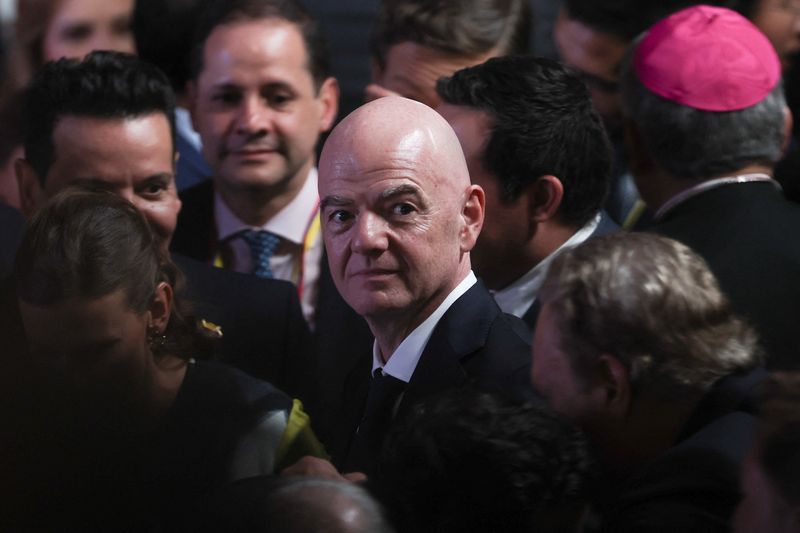
The Confederation of African Football (CAF) has thrown its weight behind a democratic resolution of FIFA's mounting internal crisis, with president Patrice Motsepe insisting that the global football body's 211 member associations—not individual confederations—should determine the future of embattled FIFA president Gianni Infantino at next year's election in Rabat, Morocco.
Infantino's leadership has come under unprecedented strain following a coordinated assault from three major continental confederations: UEFA, AFC, and CONCACAF have openly called for his resignation after his ill-fated attempt to introduce private investment arrangements into FIFA competitions, a proposal that would have fundamentally altered the governance and financial structure of world football. The backlash represents a rare moment of unity among Europe, Asia, and the Americas in opposition to the FIFA president's vision for the sport's future.
Motsepe's intervention carries particular weight given CAF's traditionally strong alliance with Infantino and the substantial influence wielded by African nations within FIFA's voting structures. His public stance frames the escalating dispute not as a crisis demanding immediate intervention, but as a matter best resolved through established constitutional procedures. In an interview with Sky News, Motsepe articulated a vision of institutional stability and orderly succession planning rather than the destabilizing confrontation that the rebellious confederations appear to be pursuing. This measured approach reflects broader concerns within African football leadership about setting precedents for circumventing the formal electoral process, which could invite similar interventions in future disputes.
The CAF president's core argument rests on a principle of organizational legitimacy: that FIFA's 211 member associations, each representing sovereign football nations, possess the democratic mandate to evaluate their leadership through scheduled electoral mechanisms. Rather than allowing a handful of continental bodies to effectively veto a sitting president, Motsepe advocates for the inclusive process that the FIFA Congress represents. This position implicitly challenges the authority and methods of UEFA, AFC, and CONCACAF in attempting to force Infantino from office outside formal election procedures, a strategy that Motsepe views as undermining institutional integrity.
Motsepe acknowledged the legitimacy of leadership scrutiny while simultaneously defending the existing institutional frameworks designed to address grievances and misconduct. He emphasized that FIFA maintains established processes for handling complaints and that presidents must remain accountable to governance standards. His language—invoking concepts of due process, legality, and fair treatment—suggests that while wrongdoing merits investigation and response, such accountability should operate through FIFA's internal mechanisms rather than through confederation-led revolts. This framing positions him as a defender of institutional stability against what might be characterized as extra-constitutional pressure from competing power centers.
Crucially, Motsepe stated explicitly that CAF continues to support Infantino, emphasizing the FIFA president's historical loyalty to African football development. This backing holds material significance: African nations collectively represent a substantial voting bloc within FIFA's Congress, and their continued support substantially diminishes the likelihood of Infantino's removal through electoral means. The tacit message is that despite criticism from Europe and parts of Asia, the coalition necessary to unseat the incumbent president simply does not currently exist.
The CAF president's public statements on leadership accountability deserve particular scrutiny within the Southeast Asian context. Malaysia and other regional nations participating in FIFA maintain significant interests in how the organization manages its governance during turbulent periods. The tension between maintaining institutional legitimacy and ensuring that leaders face genuine consequences for problematic decisions remains unresolved. Motsepe's emphasis on following processes rather than expediting outcomes reflects a conservative institutional perspective that may frustrate those who view Infantino's proposed investment framework as fundamentally detrimental to football's traditional structures.
The March 2027 Congress in Rabat assumes heightened importance given this positioning. Rather than an anticipated coronation of an incumbent backed by African and likely South American votes, the gathering will potentially become a contested election if credible alternative candidates emerge. Motsepe's invitation for opposition candidates to present themselves suggests openness to legitimate electoral competition, even while implicitly defending Infantino's candidacy. This creates an unusual political landscape where the CAF president advocates for democratic process while simultaneously supporting the status quo.
For Southeast Asian football administrators and observers, this dispute illuminates deeper questions about FIFA's governance structure and the distribution of power among continental confederations. The AFC's alliance with UEFA and CONCACAF in opposing Infantino suggests that Asian football interests may diverge from African priorities regarding FIFA's strategic direction. The private investment proposals that triggered this conflict carry implications for how Asian nations might access resources for football development and infrastructure—concerns that may not have been adequately represented in the confederation-level negotiations that preceded the public confrontation.
Motsepe's vision of unity and cooperation transcending these divisions reflects an idealistic view of football governance that may prove difficult to realize. The underlying conflicts about FIFA's future financial model, investment structures, and governance philosophies have not been resolved through his appeal to institutional processes. Rather, these tensions will resurface during the campaign leading toward the March 2027 vote, shaping how member associations ultimately evaluate Infantino's fitness to continue leading world football into a new era of competition and revenue generation.

