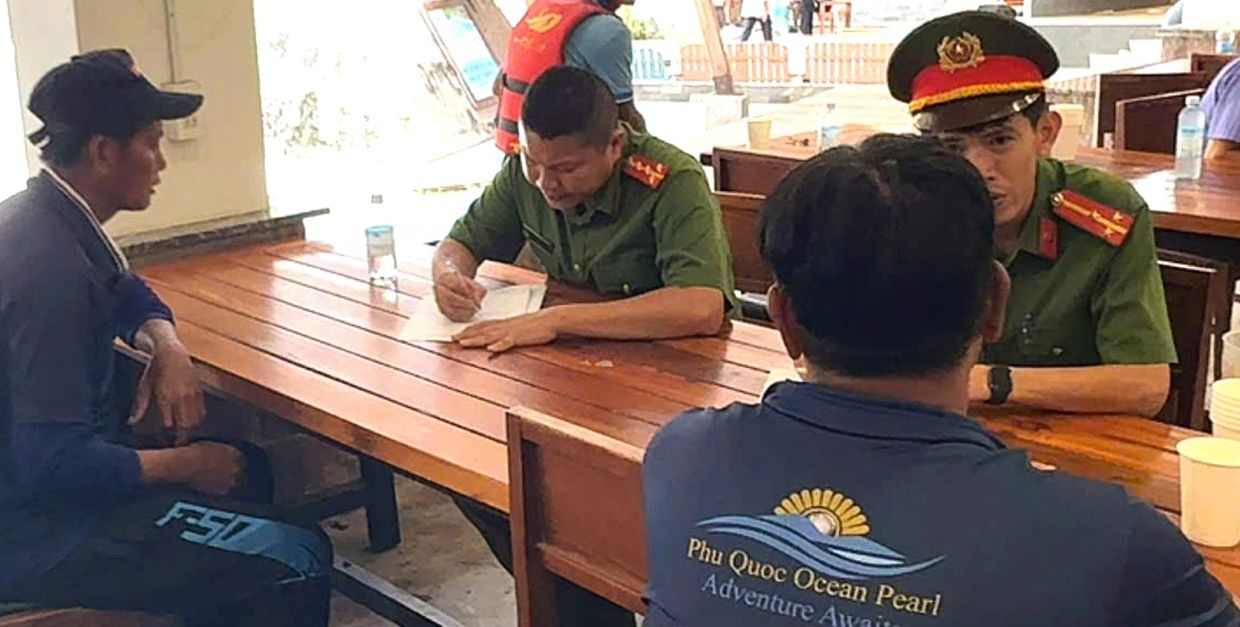
A devastating maritime accident off Vietnam's coast has claimed the lives of 15 Indian tourists, with the repatriation of their remains to India now underway. The speedboat carrying 32 Indian visitors and four Vietnamese crew members capsized near Hon May Rut Ngoai island, situated close to Phu Quoc, Vietnam's largest island, on Saturday afternoon. The aircraft transporting the deceased departed Ho Chi Minh City on Monday, arriving in Mumbai late that same day, according to confirmation from the Indian Embassy via social media channels.
The group comprised employees, distributors, and retail partners of Lava International, a Uttar Pradesh-based manufacturer of smartphones and consumer electronics, who had embarked on a company excursion. The distribution of the deceased across Indian states reveals the breadth of the tragedy: ten victims originated from Tamil Nadu, three from Andhra Pradesh, and two from Kerala. The embassy indicated that individual home states have been tasked with coordinating the final leg of the journey for the returned remains.
Boat captain Nguyen Hong Hai, aged 57, has been placed under investigation by Vietnamese authorities for alleged breaches of waterway transport safety regulations, according to state media reports. The incident has prompted scrutiny into operational practices and safety protocols governing commercial maritime activities in the region, an area increasingly critical given Vietnam's expanding tourism sector. India ranks among Vietnam's fastest-growing source markets for international visitors, making such incidents particularly significant for both nations' tourism and diplomatic relations.
One survivor, businessman Nirmal Kumar, 44, provided a harrowing account of the final moments before disaster struck. What had begun as a relaxing holiday evolved into chaos within minutes as inclement weather descended upon the vessel. A powerful wave struck the boat with considerable force, immediately causing panic to ripple through the passenger cabin. The vessel subsequently rocked violently in turbulent waters, becoming progressively difficult for the crew to maintain control, according to Kumar's recollection.
The situation deteriorated rapidly as passengers began moving erratically across the deck in response to the unstable conditions. Desperation mounted as occupants started jumping into the sea, with Kumar himself abandoning the sinking vessel. Fortunately, rescue teams arrived within five minutes of the emergency, extracting survivors from the water with urgency. Despite the swift response, the psychological toll on survivors has been severe, with Kumar describing himself as deeply traumatised by the experience and the loss of a childhood friend who had joined the trip in anticipation of memorable experiences.
The emotional devastation extends beyond the immediate loss of life. Kumar struggled to comprehend the permanence of his friend's death, reflecting on expectations that had been shattered by tragedy. His testimony underscores the human cost of maritime accidents and the lasting psychological impact on those who survive such incidents. The survival rate, while indicating that rescue efforts proved effective in retrieving numerous passengers from the water, still represents an insufficient outcome given the scale of lives lost.
Among the 16 survivors who were initially hospitalised, one individual remained in critical condition as of Monday, requiring transfer to Cho Ray Hospital in Ho Chi Minh City for intensive specialist care. The 49-year-old patient sustained severe pulmonary damage from near-drowning, complicated by traumatic shock, multiple injuries, and cerebral bleeding. Medical staff, including Dr Tran Thanh Linh, head of the hospital's intensive care unit, reported modest improvements in the patient's vital signs, with blood pressure and blood oxygen levels showing positive trends following intervention.
The geographical context of the disaster carries particular relevance for the region's tourism industry. Phu Quoc, renowned for its white sandy beaches and transparent waters, attracts millions of domestic and international visitors annually. The incident site, approximately 10 kilometres south of the island, represents a location that ordinarily provides tourists with picturesque natural attractions. The contrast between the area's reputation for leisure and relaxation and the tragedy that unfolded there amplifies the shock and tragedy of the event.
The accident raises critical questions about maritime safety standards and enforcement mechanisms governing tourist vessels throughout Southeast Asia. Vietnam's tourism infrastructure has expanded rapidly to accommodate growing visitor numbers, yet questions persist regarding whether safety protocols have evolved proportionately with this expansion. The investigation into Captain Nguyen Hong Hai's conduct will likely examine factors including vessel maintenance, weather forecasting, passenger safety briefings, and crew training—elements fundamental to preventing future incidents.
For Malaysia and other Southeast Asian nations with substantial maritime tourism sectors, this tragedy serves as a sobering reminder of the importance of rigorous safety oversight. Regional governments have been increasingly focused on enhancing tourism revenues, but this incident underscores the imperative that such expansion must never come at the expense of passenger safety. The cooperation between Indian and Vietnamese authorities in managing the aftermath, from repatriation to investigation, demonstrates the significance of bilateral engagement in addressing transnational incidents.
India's role as a rapidly expanding source of tourists to Vietnam reflects broader patterns of intra-regional travel growth across Asia, driven by rising middle-class purchasing power and increasing leisure time. This expansion benefits local economies significantly, yet it also amplifies the consequences when safety failures occur. The incident will likely influence both tourism operators and regulatory bodies to reassess current practices, with potential implications for how maritime tours are conducted throughout Vietnam and the broader region.
The repatriation of remains and provision of specialist medical care for survivors represent immediate humanitarian responses, yet the longer-term challenge involves addressing systemic factors that permitted this disaster to occur. Families of the deceased will grapple with loss and unanswered questions about accountability, whilst survivors will contend with trauma and survivor's guilt. For the tourism industry, the incident serves as a catalyst for broader conversations about balancing growth with safety, a tension that will likely shape policy discussions across Southeast Asia in the months ahead.

