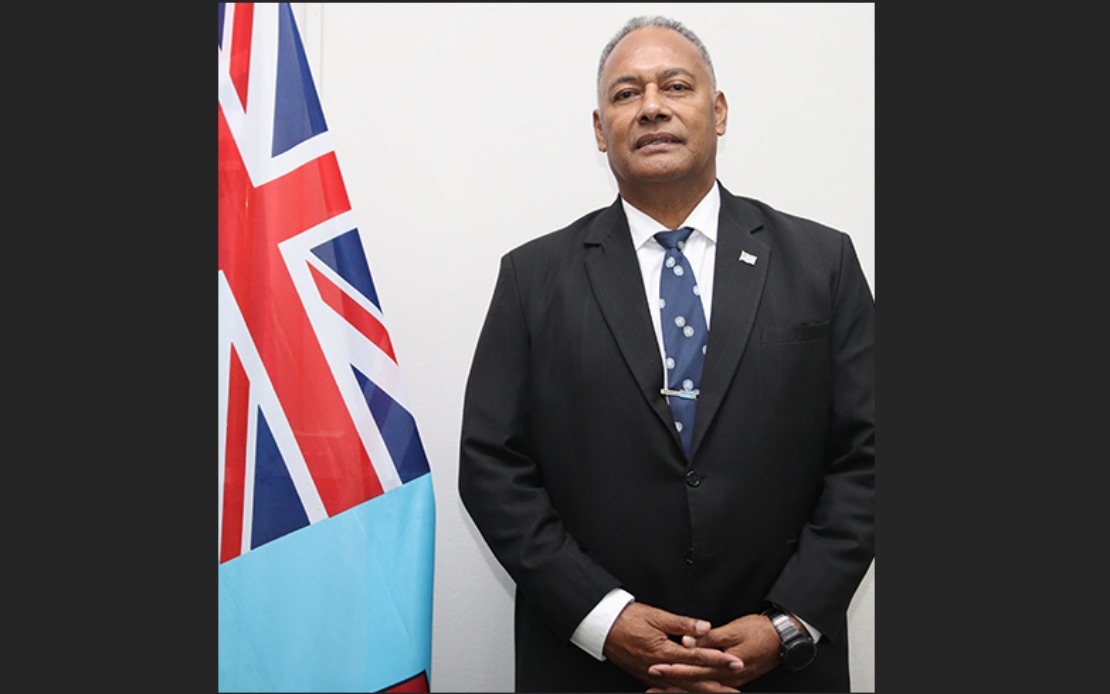
Fijian Foreign and External Trade Minister Sakiasi Raisevu Ditoka is undertaking a significant working visit to Malaysia from Sunday through Wednesday, marking a concerted push by both nations to deepen their engagement across multiple sectors. The visit represents a strategic moment for the two countries to expand cooperation beyond traditional ties and explore emerging opportunities that could benefit their respective economies and regional standing.
During his time in Kuala Lumpur, Ditoka will hold substantive discussions with Malaysia's Foreign Minister Datuk Seri Mohamad Hasan, according to a statement from Malaysia's Foreign Ministry. These talks will focus on broadening bilateral cooperation, with particular emphasis on trade and investment relationships that have historically formed the bedrock of Malaysia-Fiji engagement. Beyond commerce, the discussions will encompass capacity building initiatives, forestry development, renewable energy projects, and cultural exchanges—reflecting a comprehensive approach to bilateral relations that extends well beyond economic metrics.
The meeting between the two foreign ministers will also serve as a platform for exchanging perspectives on regional and international matters of mutual concern. This dimension of the visit is particularly significant given the evolving geopolitical landscape in the Indo-Pacific region, where both Malaysia and Pacific island nations face common challenges related to climate change, maritime security, and sustainable development. Such dialogue allows smaller trading partners to coordinate positions on global issues and strengthen their collective influence within international forums.
Beyond his engagements with the foreign ministry, Ditoka is scheduled to meet with Malaysia's Investment, Trade, and Industry Minister Datuk Seri Johari Abdul Ghani to explore fresh avenues for economic collaboration. This separate engagement underscores the multifaceted nature of the bilateral relationship and the desire of both countries to identify untapped commercial potential. The focus on new economic opportunities suggests both nations recognize that traditional trade relationships alone may be insufficient to achieve long-term prosperity and mutual development.
A particularly notable element of this visit is the reopening of Fiji's High Commission in Kuala Lumpur, which carries symbolic weight beyond its diplomatic function. The restoration of this diplomatic presence demonstrates Fiji's renewed commitment to its relationship with Malaysia and signals to the broader international community that the two nations are serious about maintaining high-level engagement. The reopening follows periods of reduced diplomatic activity and represents a deliberate recalibration of priorities for the Pacific island nation.
Complementing the diplomatic initiatives is the establishment of the Malaysia-Fiji Business Council during the minister's visit. This institutional framework is designed to provide structured channels for business communities in both countries to interact, identify synergies, and pursue joint ventures. Business councils of this nature often serve as catalysts for sustained commercial engagement, helping to translate high-level political goodwill into tangible economic benefits for private sector actors.
Current trade data provides important context for understanding the dynamics of this bilateral relationship. In 2025, total bilateral trade between Malaysia and Fiji reached RM880.01 million, equivalent to approximately US$206.2 million. This figure reflects Malaysia's significant trade surplus, with Malaysian exports valued at RM867.92 million compared to imports from Fiji of merely RM12.09 million. The substantial imbalance suggests considerable room for rebalancing through increased investment in Fijian export capacity and exploration of complementary sectors where the Pacific nation possesses competitive advantages.
The trade composition reveals important patterns about the relationship. Malaysia's exports to Fiji likely comprise manufactured goods, processed agricultural products, and industrial inputs, while Fiji's limited exports to Malaysia may be constrained by geographical distance, transportation costs, and the nature of its productive base. Addressing these structural constraints could unlock significant mutual benefits. Enhanced renewable energy cooperation, for instance, could position Malaysia as a supplier of solar technology and expertise while allowing Fiji to reduce energy costs and environmental impact.
Forestry represents another area where cooperation holds promise. Malaysia's advanced forestry management practices and sustainable timber certification systems could be adapted to Fijian contexts, potentially enhancing the value of Fijian forest resources while supporting environmental preservation. Capacity building in this domain would strengthen Fiji's ability to manage its natural resources more effectively while generating higher returns for local communities.
The renewable energy dimension of the bilateral agenda reflects both countries' commitments to climate action and sustainable development goals. Fiji, as a Pacific island nation, faces existential threats from rising sea levels and changing climate patterns. Malaysia, as a rapidly developing economy with significant energy demands, has committed to reducing carbon emissions. Collaborative projects in solar, wind, or wave energy could demonstrate how larger developed economies can support smaller island nations in their energy transitions while creating new commercial opportunities.
Cultural exchanges outlined in the bilateral discussion agenda serve important soft power functions beyond their intrinsic value. Such exchanges foster people-to-people connections, enhance mutual understanding, and create goodwill that supports broader diplomatic and economic objectives. Educational partnerships and cultural festivals can generate tourism revenue while strengthening the human dimension of bilateral relations.
From Malaysia's perspective, this visit aligns with the nation's broader strategy of engaging Pacific island countries as part of its Indo-Pacific outlook. As Malaysia seeks to expand its influence and economic reach in emerging markets, strengthening ties with Fiji—a relatively large Pacific island economy with connections throughout the region—provides strategic benefits. For Fiji, deepening engagement with Malaysia offers access to capital, technology, and expertise that can support its development priorities.
The convergence of diplomatic, trade, investment, and institutional initiatives during this visit demonstrates a comprehensive approach to bilateral relations that goes beyond ceremonial exchanges. By combining high-level political engagement with concrete institutional arrangements and targeted sectoral cooperation, both nations are creating multiple channels through which their relationship can deepen and evolve. This multi-track approach increases the likelihood that momentum generated during the visit will translate into sustained collaboration that benefits both countries.

