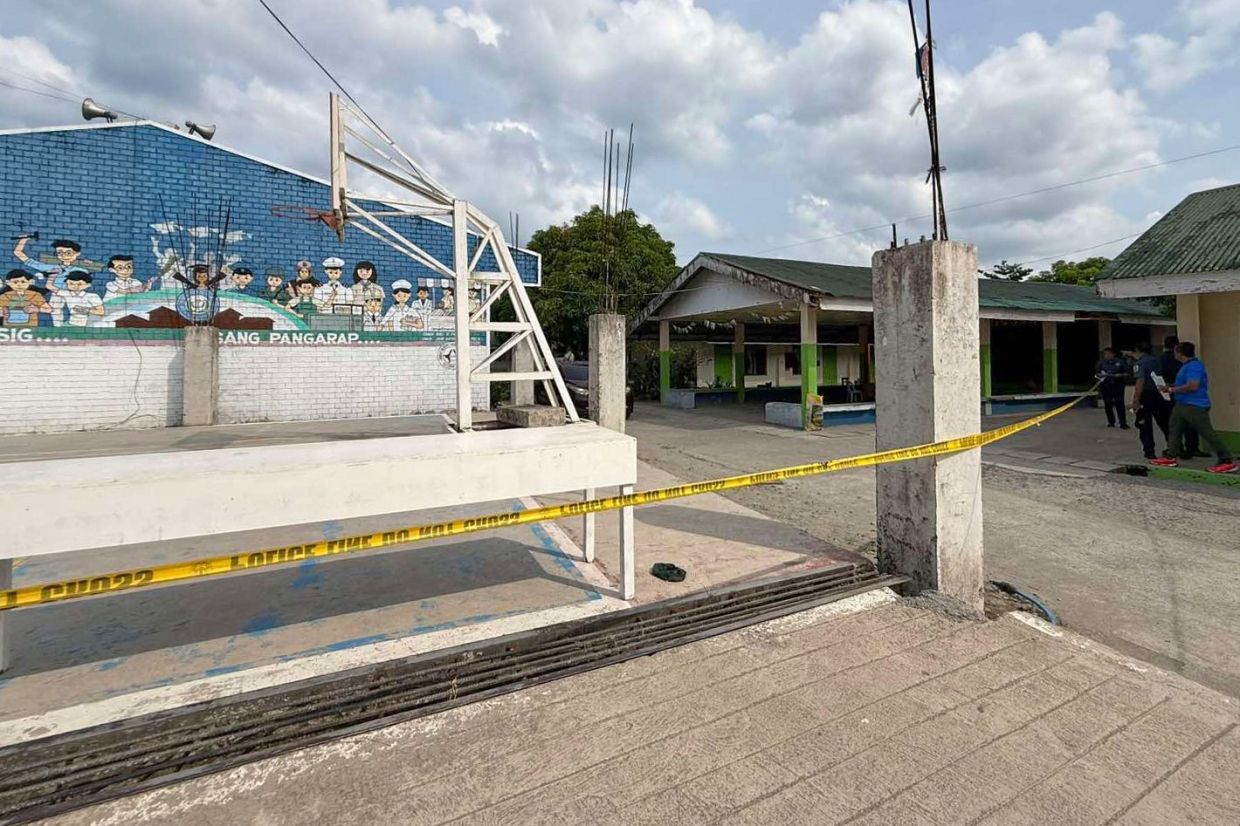
A 14-year-old student attending Tolosa National High School in Leyte was taken into police custody this week after publishing threatening messages on social media targeting her own school community. Interior Secretary Jonvic Remulla disclosed the arrest during a press conference at Camp Crame on Thursday, revealing that operatives from the Philippine National Police's Criminal Investigation and Detection Group apprehended the Grade 10 student based on intelligence provided by Senator Bam Aquino, who had flagged the alarming social media activity posted the previous evening.
The threatening posts, which the student distributed across multiple Facebook accounts she had created for this purpose, contained explicit language warning of imminent violence. In her messages, she claimed to be from Tolosa and instructed her schoolmates to "prepare yourselves," specifically addressing someone she believed owed her something. The subsequent portion of the threat escalated significantly, stating that she would "disrupt the school" and adding menacingly that her identity would eventually become known, though the timing of her actions remained deliberately vague. She concluded with a chilling message: "Be prepared for whoever gets shot or stabbed. We don't care. Good luck to you at Tolosa National High School."
Authorities immediately launched an investigation following the tip-off, utilising social media analysis techniques to trace the threatening messages back to their source. Police investigators determined that the suspect had created multiple accounts to amplify the reach of her threats and obscure her identity. Despite initial resistance from the student and her family—her parents reportedly declined to cooperate with the Tolosa Municipal Police Station when approached—law enforcement personnel successfully confirmed her identity through digital forensics and corroborating information gathered from concerned community members who had reported the posts.
The timing of this incident is particularly significant given the broader context of youth violence gripping the Philippines. The Tolosa threat emerged just days after a devastating school shooting at San Jose National High School in Tacloban City, Leyte, on Monday. That incident involved two teenage shooters, aged 14 and 15, and resulted in three students being killed with at least 20 others wounded. The proximity of these two events—separated geographically only by their shared location on Leyte island—has intensified concerns about a potential contagion effect, whereby one violent incident inspires copycat threats or actual violence in nearby communities.
Once apprehended, the 14-year-old was transferred to the custody of the Department of Social Welfare and Development, which subsequently released her. Interior Secretary Remulla explained that prosecution proved impossible under Republic Act No. 9344, the Juvenile Justice and Welfare Act, which offers special protections to minors engaged in criminal conduct. This legal framework, while designed to rehabilitate rather than punish young offenders, has drawn scrutiny in contexts involving serious threats or violence. The release of the student without formal charges has fuelled debate about how the Philippine justice system balances child protection principles with public safety concerns.
Investigators discovered that the student had rapidly deleted all of her threatening accounts and posts once authorities made contact with her, suggesting awareness that her actions constituted a serious violation. Police noted her reluctance and unwillingness to cooperate fully with questioning, attributing this partly to her fear of consequences. Her family's initial refusal to assist investigators further complicated the early stages of the inquiry, though Remulla indicated that subsequent family engagement helped authorities understand the circumstances surrounding the threat.
Remulla attributed the student's behaviour to "personal and family issues," suggesting that underlying emotional or domestic problems may have motivated her to compose and distribute the violent threats. However, he also identified a potentially more systemic factor: the student's evident familiarity with and apparent enthusiasm for GoreBox, a video game featuring graphic violence that has become a focal point in discussions about youth aggression in the Philippines. Both the teenage suspects in the San Jose National High School shooting and this Tolosa student were described by authorities as "avid fans" of the game, prompting the Cybercrime Investigation and Coordinating Centre to temporarily ban the title following the Monday shooting.
The investigation yielded reassuring findings in certain respects. Authorities uncovered no evidence of an organised plan involving multiple conspirators or premeditation extending beyond the social media posts themselves. Neither the student nor her family members had access to firearms or other weapons that might have enabled her to translate her threats into actual violence. These details suggest that the threat, while serious and warranting investigation, appeared to represent an isolated incident rather than part of a coordinated campaign or the manifestation of concrete preparatory steps.
Following engagement with the student's family, Remulla indicated that the threat had been "neutralised and inactive," implying that the situation no longer posed an immediate danger to Tolosa National High School or its community. Nevertheless, the incident underscores broader anxieties about school safety, youth mental health, and the potential role of violent media in shaping adolescent behaviour. For Malaysian observers, the Philippine experience offers sobering lessons about the rapid escalation of youth violence and the limited effectiveness of legal frameworks designed primarily for rehabilitation rather than deterrence.
The convergence of these events—a deadly school shooting followed within days by an explicit threatening post from another teenage student—reflects a troubling pattern that authorities throughout Southeast Asia are monitoring closely. While each incident remains distinct, their proximity in time and geography suggests an emerging challenge for Philippine law enforcement and educational officials seeking to protect students while navigating the complexities of juvenile justice. The temporary banning of GoreBox represents one policy response, though questions persist about whether restricting access to violent media addresses the deeper social, psychological, and familial factors that appear to underlie such threats and acts.

