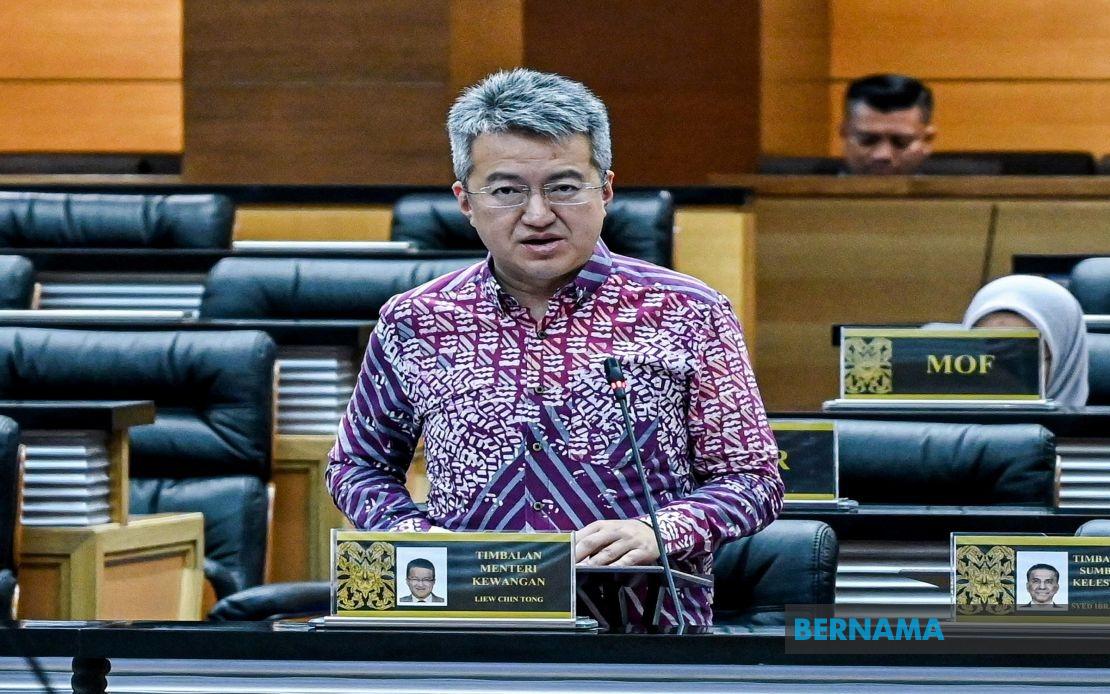
Malaysia's Finance Ministry is investigating the feasibility of removing the Sales and Service Tax from elderly care facilities, responding to growing pressure over the financial strain the eight per cent levy has imposed on families managing aging relatives' care costs. Deputy Finance Minister Liew Chin Tong disclosed that his ministry, working alongside the Ministry of Women, Family and Community Development, is conducting a comprehensive review of the matter in parliament this week, signalling government recognition of the issue's urgency and political sensitivity.
The proposal emerged after parliamentarian Lee Chuan How raised concerns in the Dewan Rakyat about the cumulative impact of SST on care services, particularly for elderly Malaysians relying on facilities registered with the Social Welfare Department. With monthly fees at regulated centres averaging around RM2,500, the addition of an eight per cent service tax represents a substantial monthly burden—equivalent to roughly RM200 per month—that strains household budgets already stretched thin by inflationary pressures affecting food, transport, and housing costs.
Liew's acknowledgment that the ministry will examine different categories of care provision demonstrates official awareness of the sector's complexity. Elderly care facilities in Malaysia operate across a spectrum, from basic hostels offering minimal amenities to premium establishments providing specialised medical supervision and rehabilitation services. The proposed exemption would require careful calibration to determine which facilities qualify and whether exemptions should vary based on service levels or pricing structures, a technical challenge that explains why the review remains ongoing rather than resulting in immediate implementation.
The financial pressure on families seeking elderly care reflects broader demographic and economic trends reshaping Malaysian society. As the population ages and traditional multi-generational household arrangements become less common due to urbanisation and employment demands, more families depend on formal care facilities. The eight per cent SST, introduced as part of the broader tax restructuring that replaced the Goods and Services Tax, was not specifically designed to target vulnerable service sectors, creating unintended consequences for those managing elder care responsibilities.
Liew's commitment to conduct site visits with ministry officers and representatives from the Women, Family and Community Development portfolio underscores a shift towards consultative policy-making. Such visits would enable officials to understand operational challenges facing care centre proprietors, who themselves face rising labour costs, utility expenses, and regulatory compliance burdens. The engagement sessions referenced by the Deputy Finance Minister suggest a recognition that effective tax policy requires input from those directly affected by implementation, rather than purely technical fiscal considerations.
The timing of this review carries political significance within the context of Malaysia's ongoing cost-of-living discussions. The government has faced sustained criticism regarding inflation and household affordability since SST's implementation, with particular scrutiny over whether essential or vulnerable services should bear the same tax burden as luxury goods and discretionary spending. Elderly care represents an especially sensitive area because it affects not only vulnerable seniors themselves but also their adult children, many of whom constitute the middle-income demographic most concerned about erosion of household purchasing power.
Exempting care centres entirely would represent one approach, but other options merit consideration and likely formed part of the ministry's preliminary analysis. These might include tiered taxation based on facility classifications, means-tested exemptions for low-income families, or targeted relief for centres serving predominantly disadvantaged populations. The ministry's emphasis on studying existing service tax categorisations suggests officials are exploring whether current SST structures already contain provisions that could be reinterpreted or expanded to provide relief.
The Special Chamber session itself reflected parliament's engagement with constituency-level concerns, with 63 motions tabled over 16 days addressing issues affecting various voter groups. This broader parliamentary context suggests that concerns about elderly care costs resonate across multiple constituencies and political divisions, explaining why members from different political parties have raised related issues and why the government appears disposed toward finding a resolution.
Implementing any exemption would require careful coordination between the Finance Ministry, which administers tax policy and revenue projections, and the Social Welfare Department, which registers and oversees care facilities. Clear definitions would be essential to prevent exemption abuse and to ensure that only genuinely regulated, legitimately operating care centres benefit from relief, rather than unregistered or informal providers who might otherwise claim exemption status.
For Malaysian families currently evaluating elderly care options, this review introduces uncertainty about future costs but suggests potential relief may eventually materialise. The decision ultimately reflects a tension between maintaining tax revenue and acknowledging that certain essential services warrant different fiscal treatment. How the ministry resolves this question will signal broader government priorities regarding social safety nets and support for households managing the practical and emotional challenges of elder care within an increasingly complex modern Malaysian society.

