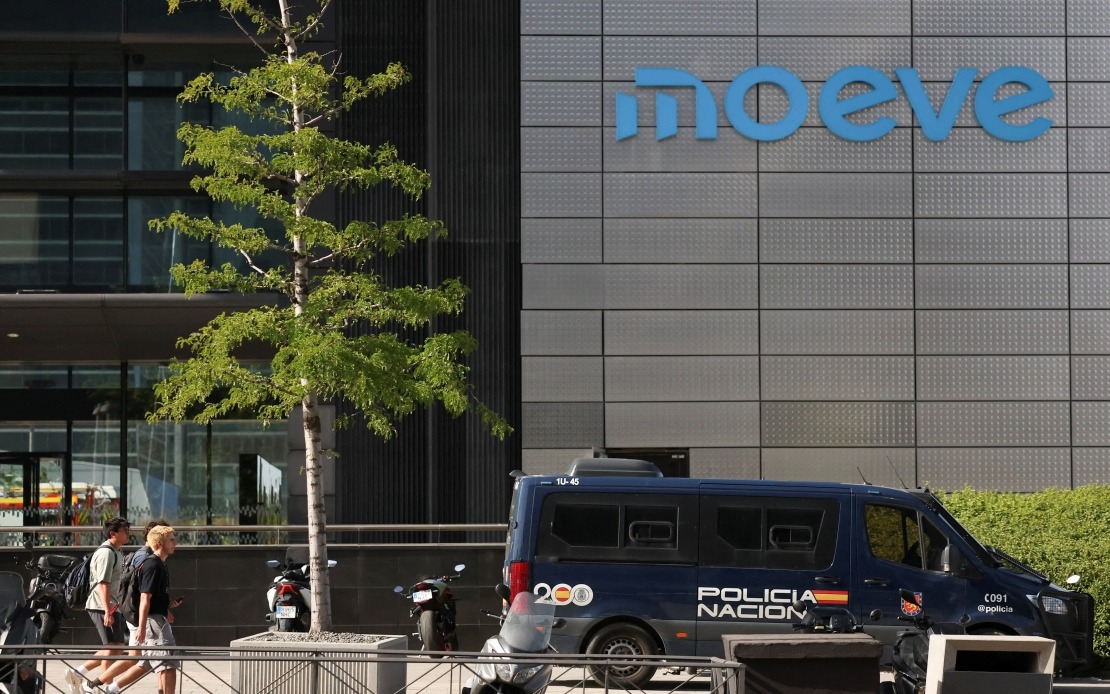
A significant fire incident unfolded at Torre Moeve in the Spanish capital on Tuesday afternoon, with the high-rise structure—Spain's second-tallest skyscraper—rapidly engulfed in flames that cast a visible haze across Madrid's skyline. The emergency began with an explosion inside the building at approximately 5.00 pm local time, according to reports from Spain's National Police cited by national broadcaster RTVE. The incident triggered an immediate evacuation of the entire structure as a precautionary measure, with emergency responders mobilizing across the city to contain the situation.
Investigations by the Spanish government delegation in Madrid determined that the fire had ignited on the 25th floor, which functions as a technical area housing essential building systems and equipment. This location suggests the blaze may have originated from electrical or mechanical systems rather than from occupant activities, a distinction that could influence how safety protocols are reviewed. The precise cause of the initial explosion, however, remained under investigation as authorities worked through the aftermath of the incident.
Madrid's fire service units responded with considerable speed, and by the time officials released public statements, firefighters had already declared the fire extinguished and were conducting thorough inspections of the building's interior. These post-incident examinations are crucial for determining structural integrity and ensuring no residual hazards remain before any reoccupancy is permitted. The efficiency of the response, combined with the building's evacuation procedures, appears to have prevented loss of life or serious injuries.
Casualties proved remarkably limited given the scale and visibility of the incident. Local media reported that two workers sustained mild smoke inhalation, while a passer-by experienced an anxiety attack triggered by witnessing the emergency. All three individuals received medical attention at the scene and were released without requiring hospital admission, indicating that health impacts were contained to minor physiological stress responses rather than substantial trauma.
Torre Moeve, as Spain's second-highest building, represents a significant commercial and structural landmark in Madrid's developed downtown landscape. The incident highlights the importance of robust fire safety systems and evacuation procedures in ultra-tall structures, where the vertical dimension creates both unique vulnerabilities and opportunities for systematic response. The building's technical floor location provides some reassurance that the incident did not originate from areas with high human occupancy, which could have resulted in far greater casualties.
For Southeast Asian readers, this incident offers relevant perspective on high-rise safety standards in developed European markets. Madrid's response—swift evacuation, rapid firefighting, and minimal human cost—reflects infrastructure investment and regulatory frameworks that many Asia-Pacific cities now emulate as their skylines expand. Spain's building codes and emergency protocols have become benchmarks for international construction standards, influencing how developers in Malaysia, Singapore, and other regional hubs design and outfit their own supertall structures.
The explosion that preceded the fire raises questions about maintenance protocols for technical systems in premium office buildings. Building automation, electrical distribution, and HVAC systems installed on dedicated technical floors must be regularly inspected and serviced to prevent failures that could ignite. In the European Union context, regulations governing such systems are stringent, yet this incident demonstrates that risks persist even in heavily regulated environments. This carries implications for regional regulators considering how to strengthen oversight of similar facilities.
Madrid's emergency services coordination also merits attention from a municipal planning perspective. The visible smoke plume that alarmed residents across the city served as a de facto alert system, yet authorities managed communications effectively to prevent panic. Regional emergency management agencies across Southeast Asia increasingly study how European and North American cities handle large-scale incidents in densely populated urban centers, and the Torre Moeve response provides a contemporary case study in crisis containment.
As investigations continue into the root cause of the explosion and fire, insurance underwriters and building engineers will likely scrutinize the incident closely. High-rise office buildings represent substantial capital assets, and insurers monitor emergency response effectiveness as one metric for assessing risk in premium commercial properties. The quick resolution without structural damage should support the building's continued operation, though the psychological and reputational impact of visible urban fires often extends beyond physical harm.
The incident underscores how even modern, well-maintained structures in developed nations remain subject to unexpected emergencies. For Malaysian property developers and facility managers who increasingly look to international best practices, the Torre Moeve fire reinforces that investment in preventive maintenance, staff training, and emergency preparedness systems yields demonstrable returns. The contrast between what could have been—a catastrophic loss of life in an evacuated office tower—and what actually occurred—a controlled emergency with no fatalities—reflects the value of institutional readiness and regulatory oversight that Spain's urban infrastructure has cultivated over decades.