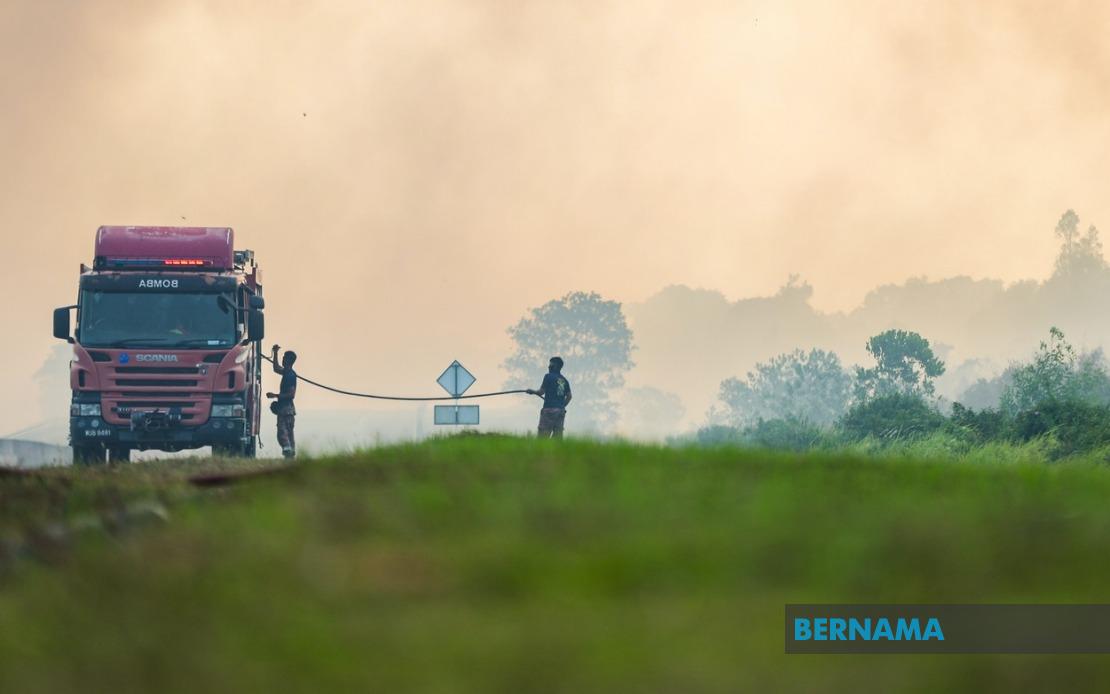
A significant peatland fire near Kota Tinggi in Johor has seen substantial progress in containment efforts, with firefighters extinguishing more than 29 hectares of the 51.4-hectare affected area as of Monday afternoon. The blaze at Jalan Bypass Punggai-Sebana Cove in Pengerang has mobilised an unprecedented interagency response since igniting on Monday, demonstrating the scale of the environmental threat posed by peat fires in Malaysia's sensitive wetland zones.
Fire Superintendent II Baharuddin Idris, who heads operations at Sungai Rengit Fire and Rescue Station, confirmed that crews are maintaining round-the-clock firefighting operations across two distinct sectors to prevent any re-ignition or lateral spread. The bifurcated approach reflects the geographical challenge of battling fires across peatlands, where subsurface combustion can persist for weeks or months if not properly monitored and suppressed. Baharuddin emphasised that continuous surveillance forms an integral part of the strategy, acknowledging that peat fires demand vigilant oversight well beyond initial flame extinguishment.
Sector A remains the primary focus, with more than 21 hectares still requiring active firefighting and firebreak construction to create defensive barriers against potential reignition. Meanwhile, Sector B has been brought nearly under control, suggesting that differentiated response intensities are being applied based on fire behaviour and ground conditions. This tactical flexibility indicates lessons learned from previous peatland fire incidents, where uniform approaches have proven less effective than site-specific interventions.
A pivotal development emerged when aerial support was deployed at 2.30 pm following approval from the Air Operations Control Centre (PGOU). Aircraft assistance represents a critical escalation, allowing firefighting operations to reach zones difficult or impossible to access on foot, whilst also providing comprehensive visibility of fire extent and smoke patterns. For Malaysian peatland fires, which often burn beneath the surface and resist traditional ground-based suppression, aerial operations can accelerate containment by delivering water or fire retardant to otherwise inaccessible hotspots.
The operation reflects a substantial mobilisation of resources across multiple agencies and organisations. A total of 36 firefighters from the primary emergency response apparatus work alongside nine Malaysian Civil Defence Force personnel, providing additional personnel capacity and specialist support. Ranhill SAJ contributed 14 staff members, leveraging expertise from the water management sector, whilst the Department of Environment deployed two specialists to assess ecological impact and guide restoration priorities. The Pengerang Municipal Council added three representatives to coordinate local logistics and community notifications.
This multi-stakeholder framework is characteristic of how Malaysia's federal and state authorities now approach major environmental disasters, reflecting growing recognition that peatland fires pose risks extending beyond firefighting into public health, environmental restoration, and long-term landscape management. The involvement of civil defence forces distinguishes peatland fire operations from routine structural fire incidents, underlining the capacity demands such events place on national emergency infrastructure.
Peatland fires carry particular significance for Malaysia's environmental and climate commitments. Peat soils contain accumulated organic material spanning centuries, storing substantial carbon stocks. When ignited, whether through deliberate clearing or accidental ignition, peat fires release disproportionately large volumes of greenhouse gases relative to their area, whilst generating thick smoke affecting regional air quality across Johor and neighbouring states. The Punggai-Sebana incident thus carries implications beyond immediate suppression, touching on Malaysia's broader climate resilience and air quality management frameworks.
The Kota Tinggi area and surrounding Pengerang district have experienced recurring peatland fire incidents, suggesting underlying vulnerabilities in landscape management or prevention strategies. Understanding why this particular zone remains prone to ignition requires examination of land-use patterns, drainage regimes, and human activity clustering in peripheral areas. The 51.4-hectare extent of Monday's fire sits at the mid-range for Johor peatland incidents, yet the deployment scale indicates authorities consider this event significant enough to warrant exceptional resource commitment.
Ongoing operations will determine whether aerial assistance and expanded ground crews can suppress the remaining 22 hectares without further escalation. Weather conditions, particularly precipitation and wind patterns, will substantially influence suppression timelines. Tropical monsoon systems affecting Peninsular Malaysia during this season introduce unpredictability into firefighting operations, potentially either hastening suppression through rainfall or complicating efforts through erratic smoke dispersion and visibility loss.
The Sungai Rengit Fire and Rescue Station's commitment to 24-hour monitoring and continuous operations positions this response as a major undertaking within Johor's emergency management calendar. Success in rapidly containing this fire, coupled with preventing rekindling during the post-suppression surveillance phase, will establish operational benchmarks for similar incidents. Conversely, any expansion of the fire footprint or extended containment periods would signal capacity constraints or methodological challenges requiring strategic reassessment within Malaysia's peatland fire preparedness frameworks.

