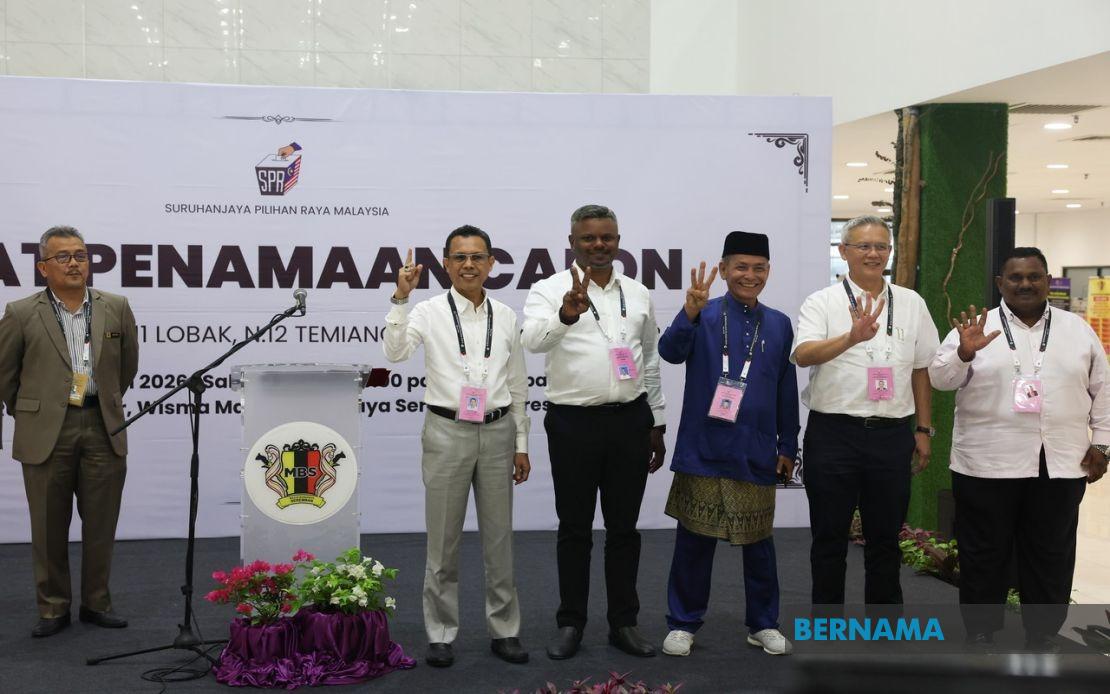
The upcoming 16th Negeri Sembilan state election is shaping up as a fiercely contested affair, with the nomination deadline having closed to reveal sprawling candidate fields across multiple constituencies. The race in Nilai, one of the state's key seats, exemplifies the fractured political landscape facing voters, as DAP National vice chairman and incumbent assemblyman J. Arul Kumar confronts an unusually crowded field of challengers representing five different political interests competing for the single seat.
Arul Kumar's Pakatan Harapan faces pressure from four separate opponents in Nilai, a scenario that typically disadvantages an incumbent by splitting the anti-government vote across multiple camps. His challengers include Zamani Ibrahim representing Berjasa, Datuk Lai Chien Kong contesting for Barisan Nasional, Datuk V. Saravana Kumar flying the Bersatu banner, and independent candidate Omar Mohd Isa. The emergence of five distinct candidates reflects the deep fragmentation characterising Malaysian electoral politics at the state level, where parties outside the traditional BN-PH binary increasingly contest seats with significant local support bases. For PH, managing such contests requires not merely superior campaign organisation but also strategic clarity about coalition positioning across the state.
The nomination process, administered by returning officer Datuk Masri Baharuddin at Wisma Bandaraya Seremban, concluded shortly after the 10 am deadline on nomination day, fixing the final candidate lists across the state assembly's 36 seats. While Nilai drew maximum attention due to its five-way nature, other constituencies tell similarly complex stories about the current state of Negeri Sembilan politics. The crowded fields contrast sharply with earlier assumptions that the election might follow cleaner two-way or three-way patterns typically seen in recent Malaysian state polls.
In Sikamat, another battleground seat, Pakatan Harapan has fielded Nor Azman Mohamad, who currently serves as political secretary to the Menteri Besar, in what will initially appear as a three-cornered contest. His opponents include Datuk Razali Abu Samah representing Perikatan Nasional and Datuk Tun Faisal Ismail Aziz from Bersatu. However, the final candidate list benefited from a last-minute withdrawal when independent contender Bujang Abu decided to pull out of the race, thereby reducing what could have been a four-way scramble to the three-way format ultimately announced. Such withdrawals, while strategically logical for independent candidates with limited resources, sometimes reflect behind-the-scenes negotiations or recognition of weak polling prospects.
The Lenggeng seat presents a different dynamic, where PH's Zarinna Abu Zarin will attempt to unseat incumbent Datuk Mohd Asna Amin, who represents Barisan Nasional. Bersatu's Zool Amali Hussin enters as the third contender, creating a three-way contest with significance for understanding whether PH can recapture ground from BN in rural assemblies. The Lobak constituency, by contrast, has evolved into a straight contest between incumbent Chew Seh Yong of Pakatan Harapan and Dr P. Kumar representing Perikatan Nasional. Two-way battles of this type, while rare in this election cycle, typically intensify candidate campaigns and heighten voter engagement.
Temiang and Ampangan both feature three-cornered dynamics reflecting the broader pattern evident across the state. In Temiang, Ho Weng Wah, who serves as political secretary to the Transport Minister, carries Pakatan Harapan's colours against Datuk Leaw Kok Chan of Barisan Nasional and Fazly Hamid representing Bersatu. Ampangan showcases similar complexity, with Muhammad Nazri Kassim, director of Yayasan Negeri Sembilan and a PH candidate, opposing Datuk Dr Mohamad Rafie Malek from Perikatan Nasional and Noor'azah Harun from Bersatu. The prevalence of three-way contests across these constituencies suggests that Bersatu has successfully positioned itself as a viable alternative to both the traditional BN coalition and Pakatan Harapan.
The fragmentation visible across Negeri Sembilan's 36-seat state assembly reflects broader trends in Malaysian politics following the 2023 general election and subsequent defections. Bersatu's emergence as a competitive force in state-level contests, particularly in constituencies with Malay-Muslim plurality demographics, has complicated the straightforward BN-versus-PH narratives that dominated earlier election cycles. Independent candidates, while rarely winning state assembly seats, continue to contest where local personalities or specific grievances generate sufficient support. This diffusion of political forces makes seat-by-seat analysis critical for understanding likely outcomes.
For Pakatan Harapan, the fragmented landscape presents mixed prospects. While PH controls the state government through the Menteri Besar, the crowding of opposition candidates in constituencies like Nilai and the emergence of Bersatu as a significant competitor could potentially fragment anti-government votes in ways that paradoxically benefit the incumbent coalition. Conversely, if Perikatan Nasional and Bersatu coordinate effectively or if voter sentiment swings decisively against the current administration, multiple three-way contests could accelerate PH's losses. The presence of political secretaries and government-aligned candidates throughout the PH slate suggests the incumbent coalition intends to campaign heavily on development records and administrative competence.
Barisan Nasional's strategy appears focused on contesting seats it previously held while avoiding overextension into constituencies where PH enjoys strong community support. The positioning of established figures like Datuk Lai Chien Kong and Datuk Leaw Kok Chan suggests BN will concentrate resources on competitive seats rather than attempting a comprehensive state-wide recovery. For Malaysian voters in Negeri Sembilan, the complex electoral landscape means that individual seat dynamics will matter significantly more than broader national trends in determining final outcomes.
The election timeline, with early voting scheduled for July 28 and polling day set for August 1, compresses the campaign period and may advantage incumbents with established machinery and resources. The state assembly's 36-seat configuration means that a party or coalition requires 19 seats for a majority, a threshold that appears genuinely competitive given the current fragmentation. How voters ultimately distribute their preferences across the competing slates will determine whether Pakatan Harapan retains control or whether a realignment favouring either Barisan Nasional or a Perikatan Nasional-led coalition emerges.

