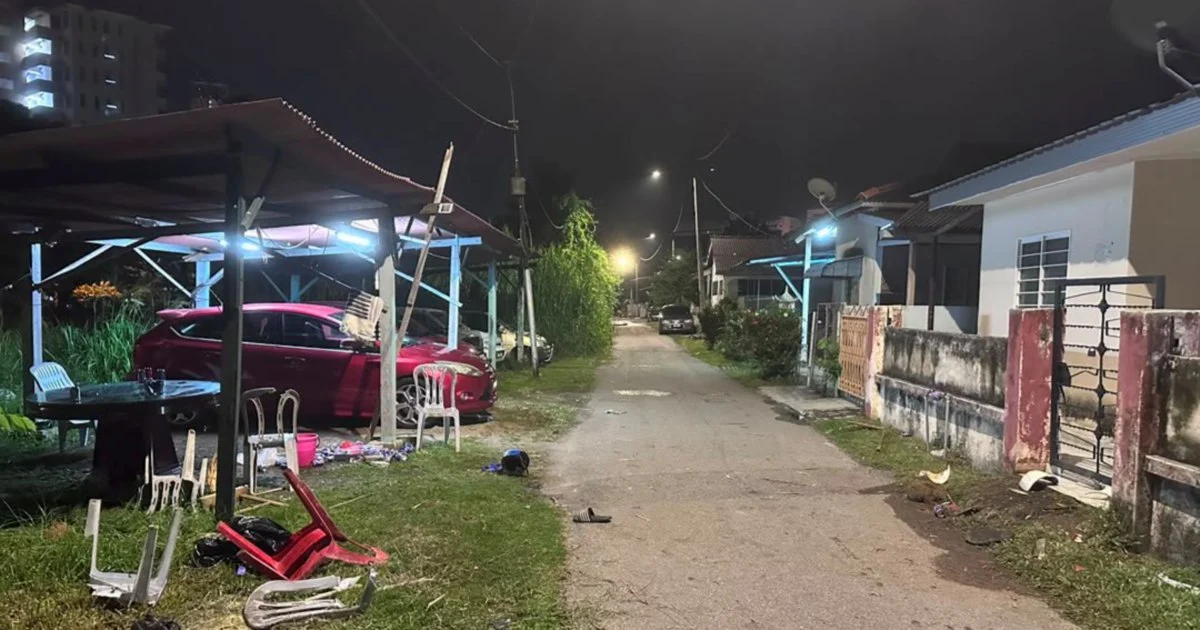
A violent street assault in Melaka's Kampung Pengkalan Rama Pantai early today has ended with five arrests, as authorities intensify their crackdown on gang violence in the state. The incident unfolded when two men ventured to retrieve a motorcycle parked near a temple on Jalan Pengkalan, only to find themselves ambushed by a group of assailants. The unprovoked attack left one victim in critical condition with injuries including a fractured skull, while his companion sustained additional injuries that required emergency medical intervention.
The early morning timing of the assault raises concerns about the brazen nature of contemporary gang violence in residential areas, particularly in localities proximate to places of worship. Kampung Pengkalan Rama Pantai, situated in the densely populated Melaka region, has historically been a mixed residential and commercial zone. The selection of a temple vicinity as the attack location suggests either deliberate targeting or a troubling disregard for community sensitivities. Such incidents in Melaka, which has experienced elevated youth gang activity in recent years, send ripples of anxiety through neighbourhoods where residents expect relative safety during routine activities.
The rapid police response in apprehending five suspects demonstrates an escalation in law enforcement operations targeting organised street violence. The precise timing of arrests following the incident indicates either swift community cooperation or successful surveillance systems deployed in the area. Melaka has implemented increased police patrols and neighbourhood watch programmes in response to recurring gang confrontations, and this arrest appears consistent with those enforcement efforts. The identification and detention of five individuals suggests authorities have substantial evidence linking these suspects to the assault.
The nature of the injuries sustained by the primary victim carries significant implications for both the criminal investigation and the wider gang violence narrative. A fractured skull typically indicates an assault of severe intensity, potentially involving blunt force weapons or coordinated beating by multiple perpetrators. Such injuries frequently result in extended hospitalisation, neurological complications, and long-term rehabilitation requirements. The critical condition classification means the victim faced life-threatening circumstances that necessitated intensive medical care, elevating the severity classification from straightforward assault to grievous injury.
The secondary victim's injuries, though less immediately perilous, underscore the coordinated nature of the attack. Gang violence characteristically involves multiple assailants overwhelming outnumbered targets, and the pattern here—two victims from what appears to be a single motorcyclist retrieval incident—suggests organised group participation rather than spontaneous conflict. This distinction matters significantly for prosecutorial strategy, as Malaysian law distinguishes between individual assault and gang participation, with substantially harsher penalties for the latter classification.
The context of retrieving a motorcycle introduces an intriguing investigative dimension. Whether the victims were the vehicle's legitimate owners or had alternative involvement remains unclear. Gang violence in Malaysia sometimes emerges from disputes over vehicular ownership, theft, or related territorial claims. Conversely, the motorcycle retrieval could have been entirely incidental, with the victims targeted for reasons unrelated to the vehicle itself. Investigators will need to determine whether the assault represented premeditated targeting or opportunistic violence against vulnerable individuals.
Temples as assault locations warrant particular examination within Melaka's multicultural landscape. These sacred spaces typically serve as community gathering points, and violence in their vicinity carries cultural reverberations extending beyond the immediate criminal incident. In a state with significant Hindu and Buddhist populations, such incidents risk inflaming communal tensions if perceived through a sectarian lens. Authorities will likely emphasise the non-sectarian nature of investigations to prevent potential community friction stemming from the temple location.
Melaka's gang violence trajectory has tracked upward over the preceding decade, reflecting broader patterns visible across Malaysian urban centres. The state has implemented community policing initiatives, youth rehabilitation programmes, and enhanced intelligence operations targeting organised groups. However, early morning assaults like today's incident suggest persistent challenges in preventing determined gang activity. The question of whether gang members perceive law enforcement presence as sufficiently credible deterrent remains open, particularly given willingness to execute violent attacks in recognisable locations during hours when community activity might be initiated.
The arrest of five suspects positions this incident as a major police success, yet it simultaneously highlights the recurring challenge of street violence in Malaysian society. Prosecution will proceed through the criminal justice system, with charges likely encompassing grievous hurt under the Penal Code. Bail considerations, remand decisions, and subsequent trial proceedings will unfold over months. Meanwhile, the injured victims face recovery journeys that may span years, and their community observes a stark reminder that routine activities can deteriorate rapidly into life-threatening situations.
Looking forward, this incident will likely catalyse enhanced policing strategies in Kampung Pengkalan Rama Pantai and surrounding localities. Police may establish temporary checkpoints, increase visible patrols, and intensify intelligence gathering on suspected gang activities. Community leaders in Melaka will probably engage with temple authorities and residents to rebuild confidence in neighbourhood safety. For Malaysian society more broadly, the assault exemplifies persistent gang violence that continues affecting ordinary citizens attempting normal activities, reinforcing debates about youth engagement, rehabilitation alternatives, and community prevention strategies that remain central to national security discourse.

