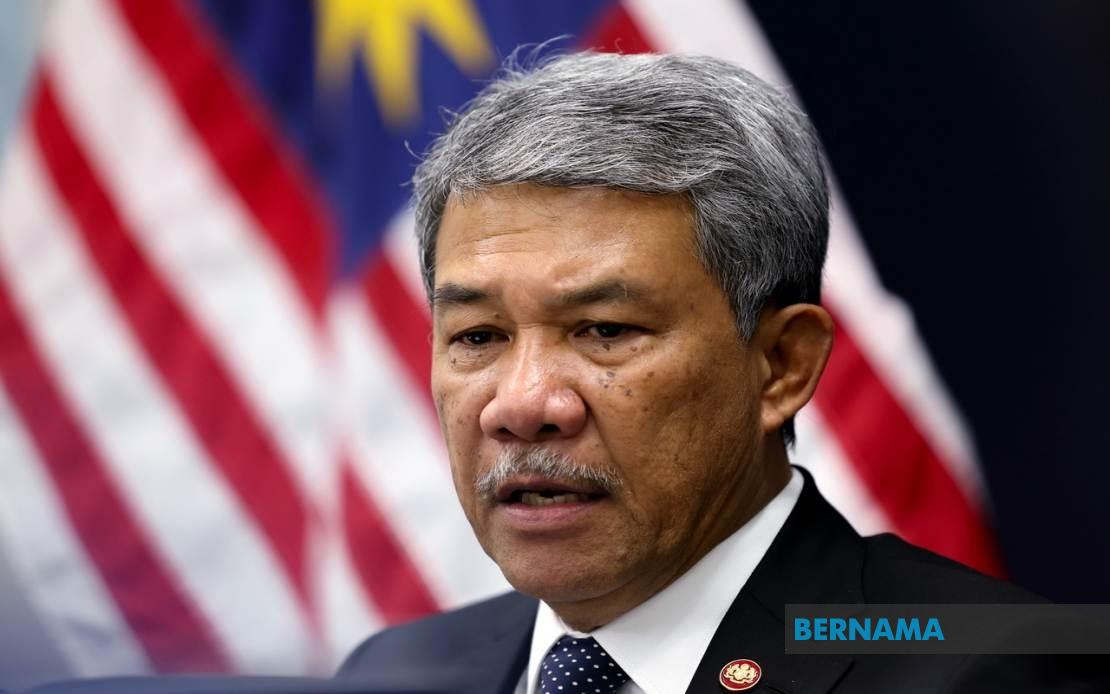
Foreign Minister Datuk Seri Mohamad Hasan touched down in Manila on Sunday afternoon to head Malaysia's participation in the 59th ASEAN Foreign Ministers' Meeting and related forums, a significant gathering that will shape regional diplomatic priorities in the coming months. The minister landed at Ninoy Aquino International Airport at 4.15 pm local time, where Philippine officials received him formally, signalling the importance both nations attach to these multilateral engagements. Malaysian Ambassador to the Philippines Datuk Abdul Malik Melvin Castelino Anthony was among those greeting the delegation, underscoring the bilateral dimension that often accompanies such official visits.
The meetings, running through Thursday under the Philippines' 2026 ASEAN Chairmanship with the theme "Navigating Our Future, Together," represent a critical moment for Southeast Asian diplomacy as the region confronts mounting pressures from global and internal crises. The choice of Manila as the host city reflects the Philippines' prominent role in steering ASEAN's agenda during its tenure, and the gathering brings together foreign ministers from all ten member states alongside representatives from major dialogue partners including China, the United States, India, Japan, and the European Union. For Malaysia, which held the ASEAN chair just two years ago, this meeting provides an opportunity to reinforce its influence on key regional issues while advancing its own foreign policy objectives.
The Myanmar situation looms as perhaps the most pressing concern facing the assembled ministers. Malaysia, like other ASEAN member states, remains deeply invested in the implementation of the Five-Point Consensus on Myanmar, a diplomatic framework established to address the ongoing political and humanitarian catastrophe that has unfolded since the military coup in February 2021. The extended informal consultation on the 5PC implementation will likely reveal persistent disagreements among ASEAN members about how to pressure the junta while maintaining the principle of non-interference that remains central to the bloc's operating philosophy. The recommendations from the previous ASEAN Leaders' Review underscore the complexity of the Myanmar challenge, where incremental progress coexists with the grim reality of escalating conflict and displacement.
West Asian developments, particularly the Israeli-Palestinian conflict and broader regional tensions, are anticipated to dominate discussions and reflect ASEAN's growing concern about global polarization. The fact that this volatile issue will command significant ministerial attention demonstrates how interconnected regional security has become, with events in the Middle East increasingly affecting trade, investment, and diplomatic alignments across Southeast Asia. For Malaysia, a nation with substantial Arab ties and a substantial Muslim population, the West Asia situation touches on both strategic interests and domestic political sensitivities. The presence of the Conference on Cooperation among East Asian Countries for Palestinian Development on Mohamad's itinerary indicates Malaysia's commitment to maintaining its humanitarian and political stance on this issue within regional forums.
Moderate power diplomacy will characterize much of the proceedings, with Malaysia's role as the country coordinator for ASEAN-China Dialogue Relations for the 2024-2027 period putting it in a position of particular responsibility. On Wednesday, Mohamad will co-chair the Post Ministerial Conference with China with his counterpart Wang Yi, an arrangement that highlights the delicate balancing act ASEAN maintains between its major dialogue partners. This coordination role requires Malaysia to facilitate dialogue while ensuring ASEAN's unity and centrality in regional affairs—a task made more challenging by rising Sino-American competition and divergent member state interests within the bloc. The chair responsibilities also encompass the bilateral relationship itself, where both countries share significant economic interests but remain cautious about security dimensions of their engagement.
The broader architecture of regional dialogue takes centre stage through a series of interlocking forums that collectively define Southeast Asian security architecture. The ASEAN Regional Forum, now in its 33rd iteration, remains the primary vehicle for dialogue between ASEAN and major powers, though its effectiveness has been questioned given the competing interests among participants. The East Asia Summit Foreign Ministers' Meeting and the ASEAN Plus Three forum represent different configurations of Asian multilateralism, each serving distinct diplomatic purposes and reflecting the region's preference for overlapping institutional arrangements rather than hierarchical structures. Malaysia's participation across these various platforms allows it to shape conversations on human rights, nuclear non-proliferation, and security cooperation while maintaining flexibility in its engagement with different groupings.
The Southeast Asia Nuclear Weapon-Free Zone Commission meeting reflects ASEAN's long-standing commitment to regional non-proliferation, a principle enshrined in the Bangkok Treaty and consistently reaffirmed by member states. This agenda item gains particular relevance in light of rising nuclear tensions elsewhere in Asia, with developments on the Korean Peninsula and renewed great power competition creating pressures that directly affect ASEAN's strategic environment. Malaysia's participation underscores the country's commitment to maintaining Southeast Asia as a zone of peace and cooperation, principles articulated consistently by Malaysian leaders across different administrations. The interface with the ASEAN Intergovernmental Commission on Human Rights, meanwhile, reflects ongoing efforts to embed human rights discussions within mainstream ASEAN diplomacy, though member states continue to exhibit different levels of commitment to such agenda items.
Beyond the formal meeting schedule, the bilateral engagements on the sidelines often generate outcomes of equal or greater significance than the plenary sessions. These one-on-one discussions between Mohamad and his counterparts provide opportunities to address bilateral irritants, coordinate positions on contentious issues, and build personal relationships that facilitate future cooperation. For a country like Malaysia that maintains diverse and sometimes competing interests across the region, such bilateral space proves essential for managing relationships with both established partners and rising powers. The quality of these informal interactions frequently determines whether multilateral meetings produce genuine consensus or merely paper resolutions.
The Philippines' ASEAN chairmanship for 2026 represents a particular moment for the organization, as it navigates a period of significant international volatility and internal member state disagreements on numerous fronts. Manila faces the challenge of maintaining ASEAN's reputation for consensus-building and non-interference while addressing the reality that some regional conflicts directly implicate ASEAN's most powerful member states. Malaysia's presence at these meetings, bringing experience from its own recent stewardship of ASEAN's chair, provides valuable institutional continuity and allows for behind-the-scenes coordination that helps facilitate smoother outcomes. The visitor and host relationship between Malaysian and Philippine officials reflects the deeper bonds of solidarity that persist within ASEAN even when member states diverge on specific issues.

