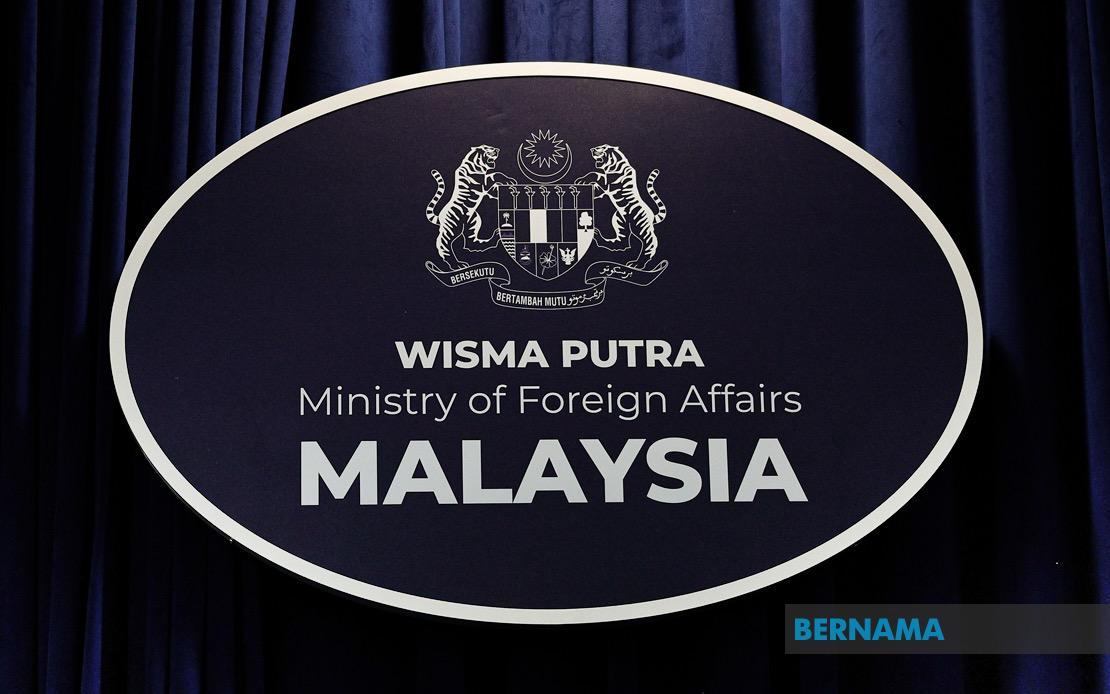
Malaysia's Foreign Ministry has taken a significant step toward reinforcing procurement integrity by formalising a strategic partnership with the Malaysia Competition Commission (MyCC). The two organisations signed a Letter of Understanding on July 3 to jointly tackle bid-rigging and anti-competitive practices that have historically compromised the fairness and efficiency of government contracting. This collaborative framework represents a deliberate move to safeguard public resources from being diverted through corrupt tendering practices, a persistent challenge across the region.
The agreement was formalised during a ceremony held at the Foreign Ministry's headquarters, preceded by a courtesy visit from MyCC chairman Tan Sri Idrus Harun to the ministry's secretary-general Tan Sri Amran Mohamed Zin. The structure of the engagement underscores the importance both institutions place on the initiative, signalling that combating procurement fraud is now embedded within the ministry's governance priorities. For Malaysia, where government spending represents a substantial portion of the annual budget, ensuring competitive and transparent procurement has direct implications for public value and economic efficiency.
At its core, the partnership commits MyCC to providing technical guidance that will help the Foreign Ministry identify early warning signs of collusive behaviour among bidders. Rather than reacting only after cartels have inflated contract prices, the proactive approach allows procurement officers to scrutinise tender processes in real time. This preventative methodology aligns with global best practices in competition enforcement, where detecting suspicious patterns during the bidding stage proves far more cost-effective than pursuing remedies after contracts have been awarded and executed.
The capacity-building component of the accord deserves particular attention for Malaysian policymakers. MyCC will conduct regular training sessions for procurement personnel at the Foreign Ministry, equipping them with practical skills to recognise cartel indicators and manipulation tactics. Such training is essential because frontline procurement staff often lack the specialist knowledge to identify sophisticated bid-rigging schemes, which can range from obvious price-fixing to more subtle coordination like designated winners and cover bids. By elevating staff competency across government, the initiative creates a broader defensive perimeter against corrupt practices.
Compliance with the Competition Act 2010 underpins this engagement, providing the legal foundation for MyCC's advisory role. The partnership explicitly anchors itself within Malaysia's competition regime, meaning recommendations arising from the collaboration carry statutory weight. This legal clarity is crucial because it transforms partnership activities from advisory suggestions into governance imperatives, creating accountability mechanisms that apply pressure on both the ministry and bidding entities to operate within competitive bounds.
The timing of this agreement reflects growing recognition across Southeast Asia that government procurement remains vulnerable to systemic corruption. Countries including Thailand, the Philippines, and Indonesia have similarly launched initiatives to strengthen tendering integrity, driven by World Bank assessments showing that anti-competitive practices in public contracting inflate costs by 10 to 30 percent. For Malaysia, translating such international evidence into domestic action through concrete partnerships between enforcement agencies and procurement bodies demonstrates institutional maturity.
From an economic perspective, reducing bid-rigging has multiplier effects beyond individual contract savings. When businesses know that government tenders genuinely reward competitive pricing and capability rather than pre-arranged outcomes, more firms enter bidding processes, innovation increases, and prices decline across multiple sectors. The Foreign Ministry's engagement with MyCC therefore carries implications extending well beyond diplomatic and consular procurement into broader signals about how Malaysia intends to manage public expenditure integrity.
The statement issued by the Foreign Ministry emphasised its commitment to nurturing a culture of fair competition in public procurement. This language matters because it reframes procurement integrity from a compliance burden into a positive institutional aspiration. Rather than presenting anti-cartel efforts as punitive exercises, the ministry positions transparency and competitiveness as values consistent with effective government administration. Such framing can influence how procurement officers and bid evaluators conceptualise their roles, encouraging proactive vigilance rather than passive rule-following.
For regional observers, the Foreign Ministry-MyCC collaboration also serves as a model for how sector-specific agencies can engage with competition authorities. Unlike centralised procurement oversight systems that may struggle with specialised knowledge in particular ministry contexts, distributed partnerships allow MyCC to embed competition expertise within individual government departments. This decentralised approach has proven effective in other jurisdictions and offers an adaptable framework that other Malaysian agencies could replicate.
The partnership's success will ultimately depend on consistent implementation and genuine information-sharing between the two organisations. MyCC's ability to access procurement data and provide timely advisory feedback requires robust institutional coordination and mutual trust. Early identification of bid-rigging requires systems where procurement officers feel empowered to escalate suspicious patterns without fear of obstruction, suggesting that organisational culture change may be as important as formal agreements.
Moving forward, the effectiveness of this initiative should be measured not merely by agreements signed but by concrete outcomes: percentage reductions in contract price anomalies, increased prosecution of cartel members, and demonstrable improvements in procurement transparency metrics. Malaysian policymakers should also consider extending this model across other ministries, creating a network of competition-aware procurement systems that collectively raise the threshold for successful collusion in government contracting.

