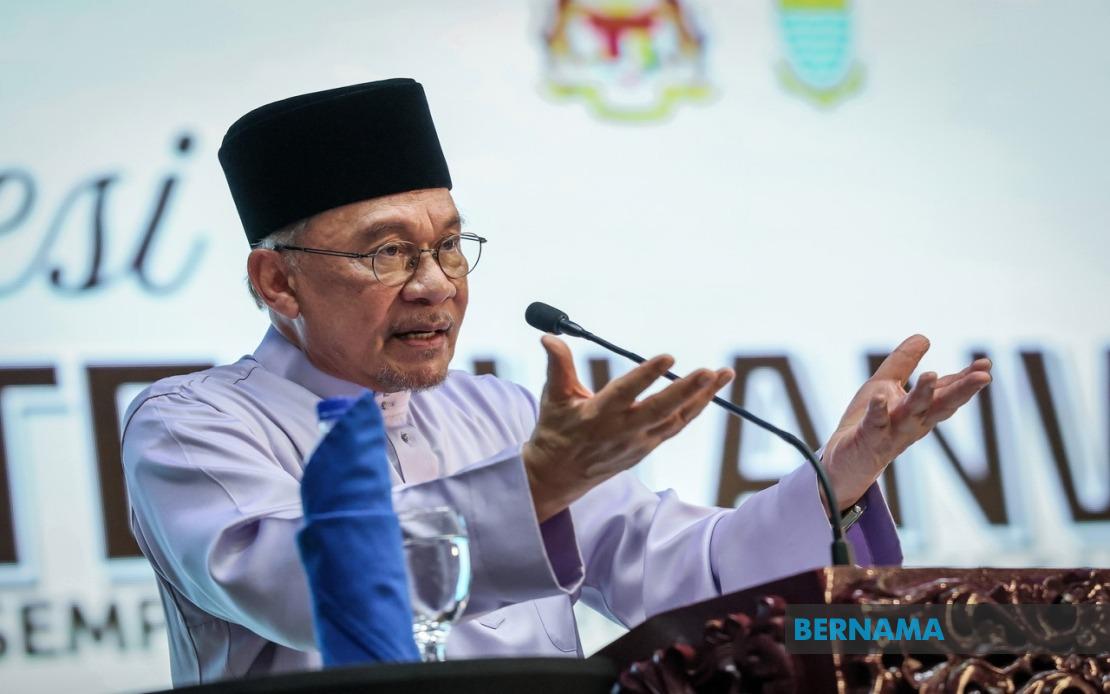
Prime Minister Datuk Seri Anwar Ibrahim has committed to allocating government funds for Form Six student allowances under the forthcoming Budget 2027, which will be presented to Parliament in October. The announcement was made during the Temu Anwar programme at the Tuanku Bainun Teacher Education Institute in Bukit Mertajam, marking a significant development in the government's approach to educational financing across all levels of study in Malaysia.
The decision to introduce this new allowance scheme represents a deliberate effort to eliminate what the government views as an inconsistency in its student support framework. Currently, Malaysian students receive financial assistance throughout primary school and secondary education up to Form Five, as well as during their university years, yet Form Six students—who represent a critical transition phase between secondary and tertiary education—have been excluded from this support network. Anwar highlighted this gap during recent dialogue sessions with pre-university students, recognising the financial pressures these learners face during an increasingly costly stage of education.
Education Minister Datuk Seri Fadhlina Sidek, who was present at the event, contextualised this announcement within the broader framework of student advocacy. The proposed allowance for Form Six students emerged as one of twelve resolutions tabled at the MADANI Pre-University Congress held in Klang earlier that morning. The congress, which brought together student delegates to discuss their concerns and aspirations, provided the immediate catalyst for the government's commitment. Fadhlina confirmed that the Education Ministry had formally accepted all twelve resolutions and committed to undertaking comprehensive studies to evaluate their feasibility and implementation pathways.
While the government's commitment is now public, significant questions remain regarding the practical details of implementation. Anwar explicitly stated that the precise monetary value of the allowance has not yet been determined, and that the final amount will depend on Malaysia's fiscal capacity when Budget 2027 is finalised. This measured approach suggests the government intends to balance its educational commitments against broader economic considerations and competing budgetary priorities. The flexibility in the amount reflects fiscal realities—the actual allocation will be shaped by revenue projections, existing expenditure commitments, and macroeconomic forecasts available to the Finance Ministry in the coming weeks.
The introduction of Form Six allowances carries significant implications for Malaysia's education policy architecture. Form Six represents a distinct educational phase that has historically occupied an ambiguous position in the national education system—neither purely secondary nor fully tertiary, yet serving as the primary pathway for university entry for many students. By extending financial support to this cohort, the government signals its recognition that pre-university education requires dedicated investment, particularly given rising costs for textbooks, learning materials, and examination fees. This move could strengthen social mobility by ensuring that students from lower-income families are not deterred from pursuing higher qualifications due to financial constraints.
For Malaysian families, particularly those with limited means, this announcement potentially removes a barrier to educational advancement. Form Six studies typically span two years and demand sustained financial commitment from households already supporting school-age children. The absence of formal state assistance at this level has previously placed additional strain on parents and may have discouraged some qualified students from continuing their education beyond Form Five. An allowance scheme, once implemented, could help narrow educational inequality by ensuring that capable students from all socioeconomic backgrounds have a genuine opportunity to access pre-university education.
The MADANI Pre-University Congress itself reflects a broader shift toward soliciting student input in educational policymaking. By elevating student concerns to the level of formal resolutions and committing to their study, the government demonstrates responsiveness to the voices of those most directly affected by education policy. The congress methodology—which brought together delegates from various pre-university institutions—suggests a consultative approach to education reform that extends beyond traditional bureaucratic channels. This participatory framework may establish a template for future policy development, particularly in areas affecting younger citizens.
From a regional perspective, Malaysia's development of student allowance schemes places it within a broader Southeast Asian trend of expanding educational subsidies and social support for secondary and pre-university students. Several neighbouring countries have implemented comparable schemes, recognising that financial barriers during secondary education significantly impact long-term human capital development. By extending its support framework to Form Six students, Malaysia positions itself as committed to comprehensive educational financing throughout the pre-tertiary phase.
The timeline for implementation remains crucial. With Budget 2027 scheduled for October presentation, the government has several months to finalise the allowance structure, determine eligibility criteria, and establish administrative mechanisms for distribution. These details—which will ultimately determine the scheme's effectiveness—have not yet been publicly disclosed. Questions regarding whether the allowance will be universal or means-tested, how it will be administered, and what quantum students can expect remain outstanding. The Education Ministry's commitment to studying the twelve congress resolutions suggests these operational details will be developed through a consultative process involving stakeholders.
Anwar's announcement also reflects the government's broader MADANI framework, which emphasises social protection and inclusive development. The allowance initiative aligns with stated commitments to ensuring that economic benefits are distributed equitably and that financial circumstances do not arbitrarily limit educational opportunity. By addressing this particular gap in student support, the government demonstrates responsiveness to specific feedback from the constituency most affected—young Malaysians navigating the education system.
Implementation challenges will inevitably emerge. Determining the appropriate allowance amount requires balancing the desire to provide meaningful support against fiscal constraints. Setting eligibility criteria that ensure fairness while maintaining administrative efficiency presents another complexity. The Education Ministry will need to establish clear procedures for identifying eligible Form Six students across Malaysia's diverse pre-university institutions, which include both government and private providers. Coordination between federal and state education authorities may also prove necessary, particularly if different allowance structures emerge across states.
For Malaysia's education sector and the families it serves, this announcement represents a concrete policy shift that could materially improve circumstances for Form Six students. The commitment to fund allowances signals governmental recognition that pre-university education deserves dedicated financial support comparable to other educational phases. As Budget 2027 takes shape over the coming months, the specific parameters of this allowance scheme will become clearer, offering Malaysian students and their families greater certainty about the financial landscape for pre-university education.

