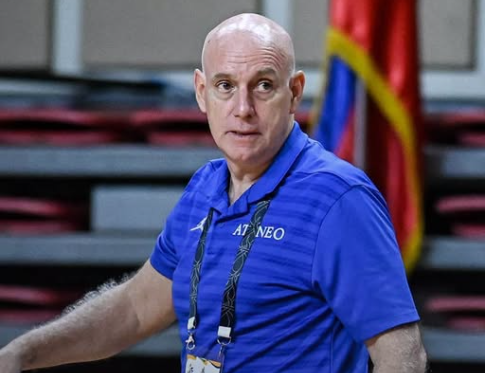
The Philippine National Police Criminal Investigation and Detection Group has moved to prosecute former Ateneo de Manila University men's basketball head coach Thomas Anthony Baldwin alongside ten team personnel for breaching the Anti-Hazing Act, stemming from the deaths of two squad members who drowned during a coastal training session in Dipaculao, Aurora on June 8.
The case underscores a troubling pattern in Philippine sports where aggressive conditioning practices can cross into dangerous territory with minimal oversight. Beyond Baldwin, the recommended charges extend to conditioning specialists Grant Dearns and Ceasar Vicent Javellana Elumba, assistant coaches Dean Caesar Castaño, Sandro Nicholas Romero Soriano, and Reynaldo Jacinto, student managers Paolo Manuel Maceda Adevoso and Andrew Lorenzo Salud, physical therapist John Eric Quiambao Rueca, and utility staff members Aris Ramos Pronce and Joel Palmiano Rapa. The investigating body emphasised that every attendant witnessed the exercise firsthand, with authorities noting that none intervened despite the evident risks involved.
Government officials have reframed this incident as quintessential hazing rather than a tragic accident, fundamentally altering how courts may view the event. Republic Act No. 11053 defines hazing expansively to encompass forced physical exertion and weather exposure in settings that exclude, test, or initiate participants. Authorities argue that modern interpretations of hazing extend well beyond ceremonial initiations to encompass any structured activity causing physical hardship as a precondition for membership or advancement. This legal interpretation carries profound implications for university athletic programmes across the Philippines, potentially subjecting numerous conditioning regimens to scrutiny.
The training sequence itself reveals a pattern of escalating physical stress. Players were summoned at 4am and directed to complete a four-kilometre running circuit. Following this initial exertion came rounds of intensive physical games incorporating punitive challenges for underperformers. The culmination came around 2pm with the seawater exercise, occurring precisely during the day's tidal peak at 2:27pm—a detail government prosecutors argue was not coincidental but rather demonstrative of reckless planning. Combining fatigued athletes with hazardous ocean conditions during peak tidal activity presented a compounded risk that supervisory personnel should have anticipated and prevented.
The strategic purpose of this sequence appears calculated. Among the twenty athletes present, only seventeen would ultimately qualify for the official roster submitted to the University Athletics Association of the Philippines. Officials contend that the Aurora activity functioned explicitly as a competitive winnowing mechanism, establishing whether marginal players possessed sufficient endurance and resilience for the programme. In this context, the hazing charges gain additional weight—the exercise served partly to eliminate rather than develop, with the harsh conditions potentially functioning as a de facto selection process.
Tidal conditions and ocean dynamics added a layer of environmental danger that organisers apparently underestimated or disregarded. The beach in Dipaculao during June typically experiences powerful rip currents, unpredictable wave patterns, and fluctuating seabed profiles. Inserting exhausted, unfit athletes into such conditions stretched the margin between challenging training and criminal negligence. The investigation found no weighted implements attached to the deceased athletes, ruling out certain theoretical accident narratives while reinforcing that the drowning occurred through straightforward submersion in hazardous waters following extended exertion.
Former coach Baldwin has publicly apologised through a lengthy video statement posted to the university's social media channels, acknowledging responsibility for the tragedy. His expression of remorse, however, does not legally absolve him of culpability under the Anti-Hazing Act, which assigns liability to organisers and supervisors regardless of subsequent acknowledgment of wrongdoing. The charges represent a watershed moment for how Philippine athletics programmes approach physical conditioning, particularly for university-level sports where young athletes may feel pressured to tolerate dangerous practices to maintain competitive positioning.
The case resonates across Southeast Asian sporting institutions where similar high-intensity conditioning methods persist without equivalent legislative oversight. Malaysia's sporting bodies, though operating under different regulatory frameworks, should note the precedent emerging from these charges. Many athletic programmes throughout the region employ training methodologies that push participants to physiological limits, often justified as character-building or competitive necessity. The Philippine case demonstrates that jurisdictions increasingly scrutinise whether such practices constitute acceptable hardship training or unlawful abuse masquerading as athletic development.
Prosecutorial strategy emphasises collective responsibility rather than singling out one culpable actor. By naming all eleven team officials, authorities signal that witness-only status provides no protection under the law. Everyone present bore an affirmative duty to prevent hazing-classified activity. The approach may catalyse changes in how university athletic programmes structure supervision, with implications for coaching hierarchies and staff accountability across Philippine higher education and potentially throughout regional academic sports institutions.
The Anti-Hazing Act itself, enacted relatively recently, remains incompletely tested through major prosecutions. This case therefore provides crucial case law development regarding what constitutes prohibited conduct, how organisational intent factors into liability, and what procedural mechanisms apply when deaths result from charged violations. The Department of Justice must now evaluate the investigative findings and determine whether sufficient evidence exists to proceed with formal indictment, with the decision potentially shaping enforcement patterns for years to come.
Beyond immediate criminal proceedings, the tragedy raises difficult questions about athletic culture in the Philippines and Southeast Asia more broadly. Institutional pressure to produce winning teams, combined with limited resources and competitive anxiety, sometimes normalises training practices that prioritise results over participant welfare. Universities must recalibrate how they balance competitive excellence with fundamental duty-of-care obligations toward athletes whose primary role remains student development rather than institutional asset generation.

