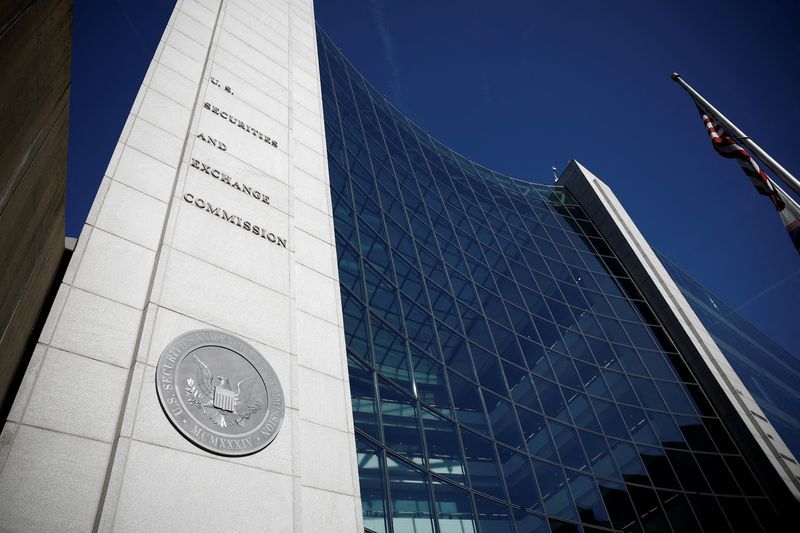
The U.S. Securities and Exchange Commission has taken action against a former senior investment banker at Bank of America, alleging he disclosed confidential information about a pending corporate acquisition to a personal acquaintance, enabling the friend to reap substantial illegal profits from the transaction. The charges, filed on Friday, centre on Jason Satsky, who held the position of co-head of Americas power and renewable energy banking at the institution, and Gavin Wolfe, who operates the investment firm Evergreen Capital. Authorities contend that Satsky provided Wolfe with material nonpublic information regarding the impending acquisition of South Jersey Industries, an energy holding company, in late 2021, granting Wolfe an unfair advantage in the financial markets.
According to the SEC's allegations, Wolfe capitalized on this privileged information by purchasing more than 2.2 million shares in South Jersey Industries' parent company, representing an investment of approximately $53 million. When the company announced its $8.1 billion acquisition on February 24, 2022, the share price surged, allowing Wolfe to crystallize gains of roughly 36 percent, netting him $18.5 million in profits derived from trading on information that had not yet reached the public domain. This substantial windfall underscores the considerable financial incentives that make insider trading schemes attractive despite their illegality and the serious consequences they carry for those involved.
The two men's relationship facilitated what regulators describe as systematic information exchange about the potential transaction. Satsky and Wolfe engaged in multiple conversations centred on the acquisition prospects, and their connection extended beyond professional boundaries into social settings. Notably, the pair attended a nationally televised college basketball game between Duke and Kentucky at Madison Square Garden, where they were accompanied by their wives and seated in a luxury box that Bank of America had arranged for Satsky. This social interaction provided an additional conduit for the alleged transmission of sensitive corporate information, suggesting that the information flow occurred across both formal and informal channels.
The regulatory action carries significant consequences for both individuals involved. The SEC's complaint seeks recovery of the unlawful gains that Wolfe obtained through the scheme, along with the imposition of civil financial penalties against both Satsky and Wolfe. The authorities are also pursuing officer-and-director bars that would restrict both men's participation in corporate leadership roles in the future. These remedies reflect the seriousness with which regulators view violations of insider trading prohibitions, which fundamentally undermine market integrity and fairness.
Both men have maintained their innocence and pledged robust defences against the accusations. Robert Anello, Satsky's legal representative, released a statement asserting that his client categorically rejects the SEC's allegations and expresses confidence that the evidence presented at trial will exonerate him of any wrongdoing. Anello contends that Satsky did not furnish Wolfe or any other party with material nonpublic information concerning South Jersey Industries. Similarly, Reed Brodsky, Wolfe's attorney, issued a statement characterising the allegations as baseless and promising vigorous litigation on his client's behalf. Brodsky further argued that the SEC overlooked sworn testimony and documentary evidence demonstrating that Wolfe's investment decisions regarding South Jersey shares were grounded in an independent and original investment analysis rather than in privileged information.
The professional histories of both men reflect their deep roots in the energy banking sector. Before establishing his independent investment operation, Wolfe held the position of senior power and renewable energy banker at Credit Suisse. Both Satsky and Wolfe transitioned to Bank of America in 2012, suggesting a longstanding professional relationship predating their alleged conduct. Wolfe subsequently founded Evergreen Capital, which manages assets for members of the Wolfe family. The SEC disclosed that Bank of America terminated Satsky's employment in March 2025, though the bank itself has faced no allegations of institutional wrongdoing in connection with the matter.
Bank of America issued a brief statement confirming that Satsky no longer remains on its payroll and affirming that it was not implicated in the alleged violations. The financial institution's separation from the matter underscores the capacity of individual employees to engage in unlawful conduct independent of broader institutional culpability. Evergreen Capital declined to provide immediate comment regarding the SEC's action.
The insider trading case carries particular significance for the power and renewable energy banking sector, which has experienced considerable growth and strategic activity in recent years. Major transactions in this space involve substantial valuations and attract significant investor interest, creating heightened opportunities for information asymmetries to be exploited. The alleged conduct illustrates vulnerabilities that exist even within the compliance frameworks of major global financial institutions, where senior professionals may possess access to transformational corporate information.
From a Southeast Asian perspective, the case reinforces the international commitment to combating insider trading and protecting market integrity. Many regional financial centres, including Malaysia's own Bursa Malaysia and Singapore's SGX, maintain close regulatory cooperation with American authorities and apply comparable insider trading prohibitions. The extraterritorial focus of U.S. enforcement, and the willingness of regulators to pursue cases involving complex schemes and substantial sums, demonstrates the global nature of market surveillance and the limited refuge that jurisdictional boundaries provide for those engaged in securities violations.
The allegations also raise broader questions about the controls and monitoring mechanisms that investment banks employ to prevent sensitive information from circulating inappropriately. Luxury entertainment events, while common in investment banking culture, evidently created an opportunity for confidential discussions to occur in settings potentially less subject to institutional oversight than formal office environments. This aspect may prompt financial institutions throughout the region to reconsider their policies regarding employee access to corporate information and the settings in which external interactions take place.

