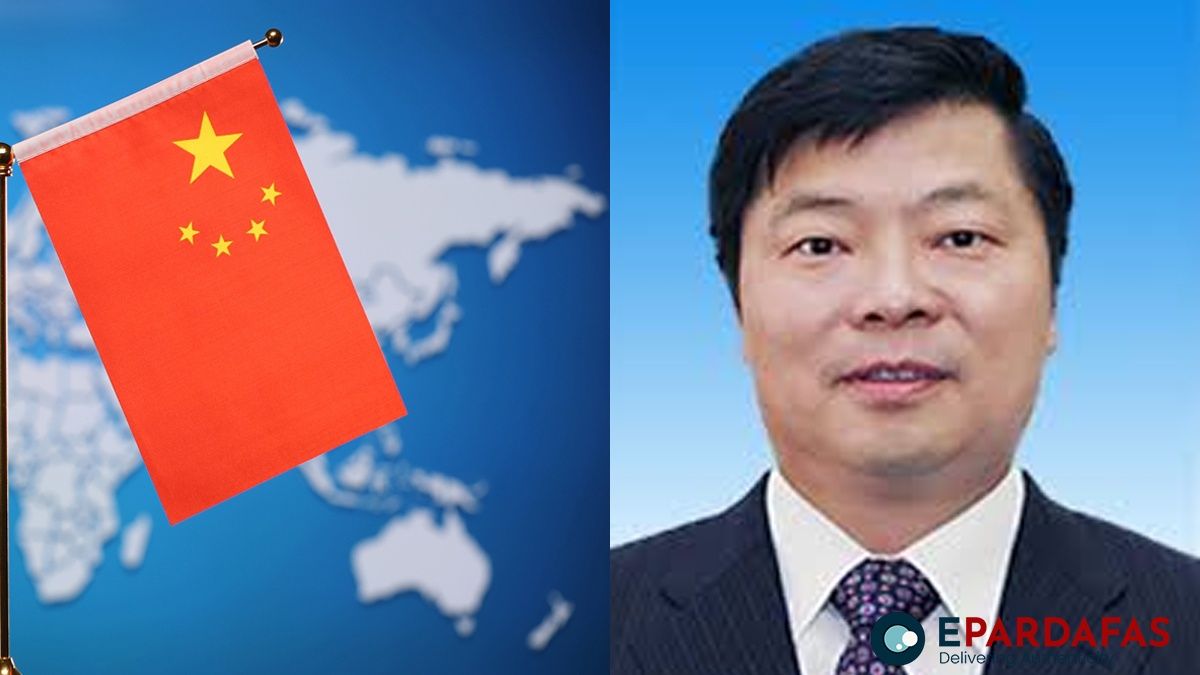
Beijing's top anti-corruption authority announced on Sunday that Ouyang Weimin, the former president of China Development Bank, is facing investigation on allegations of serious violations of party discipline and the law. The Central Commission for Discipline Inspection and the National Commission of Supervision jointly launched the probe without disclosing additional specifics at the time of the announcement.
Ouyang's career trajectory reflects the typical path of China's senior financial and political establishment. He joined the Chinese Communist Party in 1986 and spent formative years working within the People's Bank of China, where he built expertise in monetary policy and banking oversight. This early grounding in central banking institutions positioned him for subsequent advancement through provincial and national finance roles.
Before his appointment to China Development Bank, Ouyang held the position of vice-governor in Guangdong province, one of China's most economically significant regions and a crucial engine of growth adjacent to Hong Kong. His tenure in Guangdong likely exposed him to complex cross-border financial arrangements, foreign investment oversight, and regional development initiatives—experience deemed valuable for the nation's development finance sector.
In 2019, Ouyang was elevated to the presidency of China Development Bank while simultaneously holding the deputy party secretary position, reflecting the dual political-administrative structure embedded within Chinese state enterprises. He maintained this role for approximately four years before stepping down as president in 2023, though the circumstances surrounding his departure were not initially elaborated.
China Development Bank, established in 1994, operates as a state-owned development finance institution functioning under direct oversight from the State Council. Its mandate centres on catalysing economic development across strategic industries and economically disadvantaged regions, playing a crucial role in implementing the government's development priorities and long-term economic planning.
For Malaysian and Southeast Asian observers, the investigation carries significance beyond Beijing's financial sector. China Development Bank has been instrumental in funding Belt and Road Initiative projects across Asia, including infrastructure developments in Malaysia and neighbouring countries. The institution's leadership transitions and governance integrity directly influence financing patterns and project oversight that affect the region's borrowing relationships with China.
The probe reflects the intensifying anti-corruption campaign orchestrated under President Xi Jinping's leadership since he assumed power. This campaign has systematically targeted officials, military generals, and business executives across sectors, creating a pronounced emphasis on party discipline and compliance with central directives. Supporters characterise the initiative as essential housekeeping within China's sprawling bureaucracy, while international observers and critics have noted that investigations frequently align with Xi's consolidation of political authority.
Ouyang's case demonstrates how even senior financial officials overseeing state institutions remain vulnerable to investigation, suggesting either widespread governance concerns within the banking sector or the fluid political environment affecting senior appointments. The lack of specific charges in the initial announcement is characteristic of Chinese anti-corruption procedures, which often withhold details during early investigation phases.
The timing and nature of such investigations carry implications for institutional continuity and foreign confidence in China's development finance mechanisms. Countries evaluating partnerships with China Development Bank must consider leadership stability and the operational consistency of these arrangements, particularly regarding long-term project commitments and financing terms.
Historically, anti-corruption drives in China have served multiple purposes simultaneously—addressing genuine institutional problems while allowing political elites to neutralise potential rivals or consolidate control over critical state institutions. The financial sector, given its significance to national economic strategy and international relations, represents a particularly sensitive domain for leadership transitions.
For Southeast Asian policymakers, the investigation underscores the importance of diversifying development financing sources and maintaining scrutiny over international lending relationships. While Chinese development finance remains attractive due to flexible terms and capacity for large infrastructure projects, governance changes at key institutions warrant attention from borrower nations.
The investigation process itself will likely extend over months, with formal charges potentially following internal party discipline reviews. International media and analysts will be monitoring developments for indications regarding the specific allegations and whether the case reflects broader institutional reforms or targeted political action against an individual.

