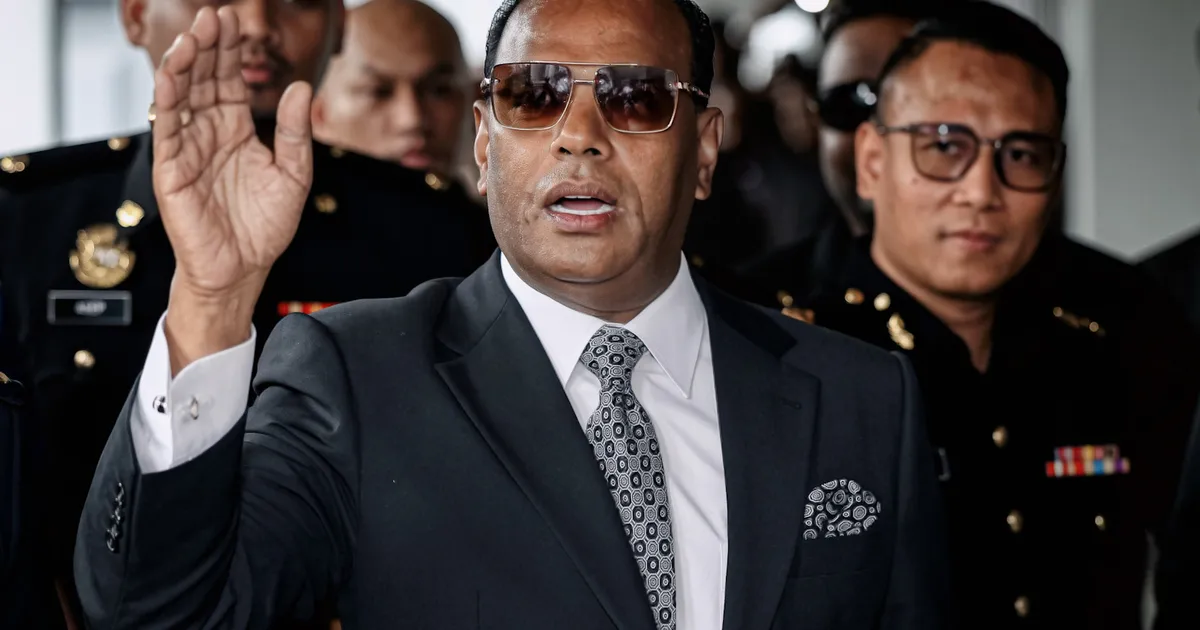
Former Human Resources Minister Saravanan has firmly rejected suggestions that his written communication to Prime Minister Anwar Ibrahim constituted an effort to obstruct justice or orchestrate a cover-up of his graft-related legal difficulties. Instead, Saravanan has characterised the letter as a straightforward appeal for a comprehensive and unbiased review of the allegations levelled against him, underscoring his conviction that the charges themselves lack foundational credibility.
The clarification comes as Saravanan finds himself navigating the complex intersection of political scrutiny and legal proceedings. His insistence that the missive served merely as a request for due process reflects a broader pattern among Malaysian political figures who face serious accusations—seeking to reframe communications with senior government officials as routine administrative appeals rather than attempts to influence investigative or prosecutorial outcomes. The distinction, however subtle, carries significant weight in Malaysia's political discourse, where perceptions of impropriety can damage reputations as severely as formal convictions.
Saravanan's characterisation of the charges against him as lacking substance represents a direct challenge to the investigating authorities and the prosecutorial machinery that has proceeded with his case. By questioning the foundational credibility of the accusations, he implicitly casts doubt on the institutions responsible for bringing forward the charges, a rhetorical strategy that reflects the broader polarisation surrounding high-profile corruption cases in Malaysian politics. This approach differs markedly from those who might choose silence or acknowledgement of procedural regularity.
The timing of Saravanan's clarification is significant. In Malaysia's contemporary political environment, where transitions of government and shifts in enforcement priorities have occasionally resulted in charges being withdrawn or reconsidered, questions about the motivation behind communications between political figures and the Prime Minister inevitably attract intense media and public interest. What might ordinarily be considered routine correspondence takes on heightened significance when the sender faces criminal allegations.
For Prime Minister Anwar Ibrahim, such communications from former ministers present a delicate challenge. The Premier must balance demonstrating respect for the independence of Malaysia's anti-corruption institutions while remaining accessible to citizens and former colleagues seeking clarification on their cases. Any perception that executive intervention has influenced investigative or judicial processes threatens to undermine public confidence in the rule of law, a cornerstone of Anwar's stated governance philosophy.
Saravanan's case occurs within a broader Malaysian context where corruption allegations against political figures have become increasingly common, yet outcomes remain inconsistent and occasionally controversial. The former minister's decision to make a public statement asserting both the innocence of his written approach and the weakness of the charges themselves suggests confidence in his political positioning, or alternatively, a determination to contest the narrative being constructed around both his case and his conduct.
The distinction between seeking a thorough review and seeking to suppress investigation hinges partly on interpretation and partly on the substance of what the letter actually contained. Without access to the full text and context of Saravanan's correspondence with the Prime Minister, the public debate inevitably becomes one shaped by selective disclosure, political positioning, and the credibility that various actors can muster. In Malaysia's media landscape, this has become a familiar dynamic when senior figures face serious allegations.
For Malaysian citizens and observers, Saravanan's case illustrates persistent questions about accountability and transparency at the highest levels of government. When former ministers engage in written communication with the Prime Minister regarding their own legal difficulties, the public has a legitimate interest in understanding whether such access represents unequal treatment or merely reflects the normal channels through which citizens can petition their government for fairness and impartiality.
The broader implications extend to Southeast Asia, where Malaysia's handling of high-profile corruption cases serves as a barometer for the region's commitment to genuine anti-corruption efforts versus selective enforcement driven by political considerations. Saravanan's public rejection of cover-up allegations, coupled with his assertion that charges lack credibility, contributes to a growing body of contested narratives around corruption enforcement in the region, where similar patterns have prompted international scrutiny and raised questions about the independence of investigating agencies.
Moving forward, the trajectory of Saravanan's legal proceedings will carry significance beyond the immediate matter of his culpability. The case will likely inform broader assessments of Malaysia's judicial independence, the integrity of its anti-corruption mechanisms, and the government's genuine commitment to impartial enforcement of anti-corruption law regardless of whether the accused holds political prominence or maintains connections to influential networks within government.

