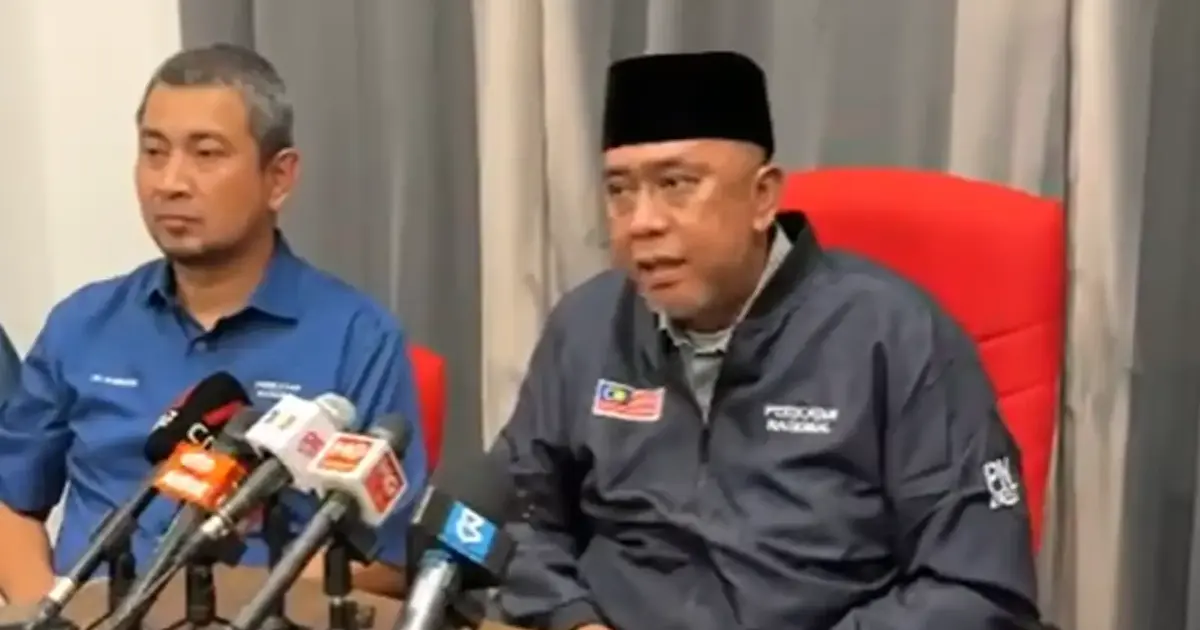
Abd Mutalip Abd Rahim, the former Member of Parliament for Layang-Layang, has announced his departure from Umno and his decision to join Bersatu following Umno's decision to cede his parliamentary seat to coalition partner MCA. The move marks another shift in Malaysia's fractious political landscape as coalitions negotiate seat distributions ahead of electoral contests.
The Layang-Layang seat, located in Selangor, has been a strategically important constituency within the Umno political machinery. Umno's determination to transfer the seat to MCA—part of the broader Barisan Nasional coalition structure—represents a recalibration of power-sharing arrangements between the two long-time allies. For Abd Mutalip, who had represented the constituency, the decision effectively closed off his path to defend his position under the party banner he had served.
Bersatu, led by Tan Sri Muhyiddin Yassin and operating as the primary Malay-Muslim party within the Perikatan Nasional coalition, has been actively recruiting political figures displaced by seat redistribution arrangements across competing coalitions. The party has positioned itself as an alternative for candidates and politicians who find themselves sidelined by their original party structures. Abd Mutalip's recruitment strengthens Bersatu's presence in Selangor, a state where it has sought to expand its footprint amid intensifying three-way competition involving Umno-led Barisan Nasional, Pakatan Harapan, and Perikatan Nasional.
The broader context involves Malaysia's complex coalition mathematics, where parties must negotiate seat allocations to maintain unity while satisfying internal factions and reward loyal members. These negotiations frequently create disappointment among sitting MPs and candidates who lose out in the process. Umno's yield of Layang-Layang to MCA reflects demographic calculations and electoral strategy, but it has triggered this defection, illustrating the precarious nature of political loyalty when organisational interests diverge from individual aspirations.
Abd Mutalip's transition to Bersatu and his intention to contest Layang-Layang on a Perikatan Nasional ticket inject uncertainty into an otherwise settled seat arrangement. While MCA was allocated the seat formally, a three-cornered fight involving Umno's coalition, MCA's actual candidacy, and Bersatu's challenger would splinter the Barisan Nasional vote and potentially benefit Pakatan Harapan in a constituency where Chinese and Malay voters coexist. Such fragmentation within the ruling coalition has become an recurring headache for Barisan Nasional strategists.
This development underscores the vulnerability of formal seat-sharing agreements when they do not align with ground realities and the ambitions of sitting representatives. Politicians who built local constituencies and community networks often view seat transfers as betrayals rather than strategic maneuvers, particularly when they are not offered alternative platforms or compensation within their original parties. Abd Mutalip's choice to contest under Perikatan Nasional represents a calculated decision to retain his political viability outside his original structure.
For Bersatu, acquiring an experienced parliamentary incumbent provides immediate credibility and ground organisation in Selangor, where the party has struggled to establish deep roots compared to longer-established rivals. The recruitment of sitting MPs or experienced candidates from other parties has become a central strategy for Bersatu to rapidly build electoral capacity without relying solely on party-building from grassroots level. Each defection to Bersatu signals the party's growing attractiveness to political operators seeking alternative career pathways.
Selangor remains a critical electoral battleground, and seat arrangements within it cascade across the state's political ecosystem. The Layang-Layang situation reflects the broader challenge facing Barisan Nasional as it attempts to maintain internal cohesion while preserving its electoral dominance. When seat allocations create redundant politicians with existing support networks, those politicians frequently explore alternative platforms, creating complications for the parent coalition's election planning.
Abd Mutalip's defection also reflects the ideological flexibility that characterises Malaysian politics, where parties frequently converge on shared policy positions despite different origins and founding narratives. Bersatu's Malay-Muslim emphasis and Perikatan Nasional's recent positioning as an alternative Malay-centric coalition have attracted defectors from Umno, suggesting that intra-Malay competition has intensified beyond the traditional Umno-PAS divide. This diversification of Malay political choices fragments voting patterns and complicates electoral predictions.
The timing of Abd Mutalip's announcement and his formal joining of Bersatu will depend on electoral calendars and party registration procedures, but his intention to contest Layang-Layang on a Perikatan Nasional ticket demonstrates that seat allocations within coalitions remain fluid rather than irreversible. Political actors who lose formal nominations frequently deploy alternative strategies, leveraging existing legitimacy and community support to challenge official party candidates. Such contests highlight the tension between party organisational decisions and democratic accountability to local constituencies.

