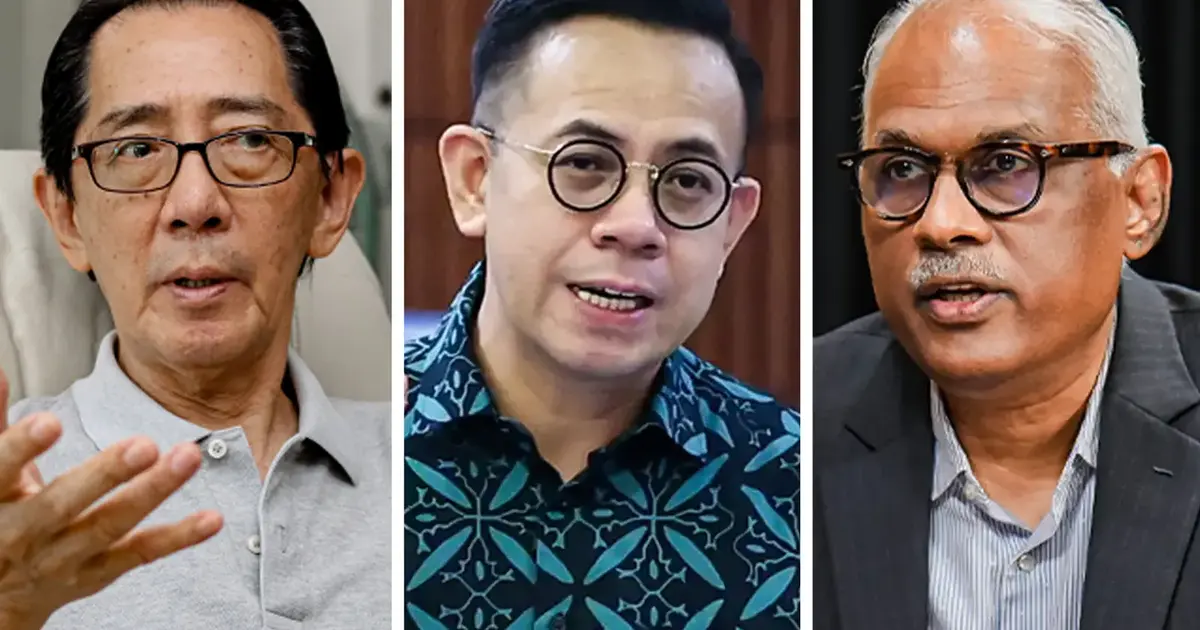
Two veteran opposition figures have cast doubt on Human Resources Minister Steven Sim's intention to review and propose modifications to government policies, suggesting that existing institutional channels already provide sufficient opportunity for such discussions at the highest level. The scepticism reflects broader questions about the necessity and appropriateness of the announcement, particularly given Malaysia's established Cabinet governance framework where ministers have regular access to the Prime Minister for substantive policy dialogue.
Kua Kia Soong, a former parliamentarian with decades of legislative experience, has called on Steven Sim to furnish concrete details regarding his proposed reforms. Rather than endorsing the broad initiative, Kua has signalled that meaningful assessment requires specificity—the actual policy areas targeted for change, the rationale underpinning each proposal, and the anticipated outcomes. Without such particulars, he has suggested, it remains difficult to evaluate whether the minister's intentions represent genuine innovation or merely rhetorical positioning.
Parallel concerns have been articulated by Charles Santiago, another former MP who formerly held positions within government structures. Santiago's perspective pivots on a procedural observation: that the Cabinet system itself, through weekly ministerial meetings presided over by the Prime Minister, already furnishes Steven Sim with a dedicated forum to present policy ideas, seek approval, and debate reform initiatives. This institutional arrangement has long been designed to facilitate exactly the sort of top-level policy dialogue that the minister now appears to be proposing through an alternate mechanism.
The tension underlying these critiques speaks to a fundamental question about governance efficiency and hierarchical protocol in Malaysia's executive branch. Ministers in the Cabinet system do not typically require external platforms or special announcements to lodge policy proposals with their Prime Minister—such matters form the substance of regular Cabinet agendas. By suggesting the need for a separate initiative to "moot" policy changes, observers wonder whether there may be an implicit suggestion that the standard ministerial channels are insufficient or unresponsive, an inference that carries political dimensions.
For Malaysian readers following developments in government administration, the exchange highlights how even straightforward policy initiatives can become scrutinised through the lens of political process and propriety. The Human Resources Ministry operates in a critical domain, overseeing labour regulations, workforce development, and employment standards affecting millions of workers across the country. Any meaningful policy adjustments in this sphere warrant serious consideration rather than casual announcement.
The comments from Kua Kia Soong and Charles Santiago reflect the kind of institutional accountability that former legislators continue to exercise within Malaysia's political discourse. Both have long track records of engaging substantive governance questions, and their intervention suggests that seasoned observers remain attentive to how ministerial initiatives are framed and pursued. Their emphasis on clarity and proper procedure underscores an expectation that government officials should operate transparently within established structures rather than circumventing them through alternative channels.
Steven Sim's proposed review, should it proceed, will likely benefit from the kind of scrutiny his former parliamentary colleagues have initiated. Specificity regarding which policies require reform, the evidence supporting such reform, and the consultation processes involved would strengthen the minister's case considerably. In Malaysia's political environment, where governance transparency and proper process remain contentious issues, ministers must anticipate such questioning and respond with detailed documentation rather than general statements of intent.
The broader context matters too. Malaysia has witnessed numerous policy initiatives announced by government figures that subsequently lacked follow-through or clarity regarding implementation. Citizens and observers have grown rightfully sceptical of announcements unsupported by detailed plans or clear accountability mechanisms. In this respect, the skepticism from Kua and Santiago reflects legitimate public interest in ensuring that ministerial proposals translate into tangible, beneficial outcomes rather than remaining symbolic gestures.
Moving forward, the credibility of Steven Sim's policy review initiative will depend significantly on how thoroughly he addresses the questions raised. Whether the minister opts to present his proposals through Cabinet channels, through public consultation forums, or through some combination of approaches, the substance and clarity of those proposals will determine their reception among both political observers and the Malaysian public. Without such specificity, even well-intentioned reform efforts risk being dismissed as procedurally questionable or substantively vague—a fate that former MPs Kua Kia Soong and Charles Santiago have now clearly signalled they will not let pass without critical examination.

