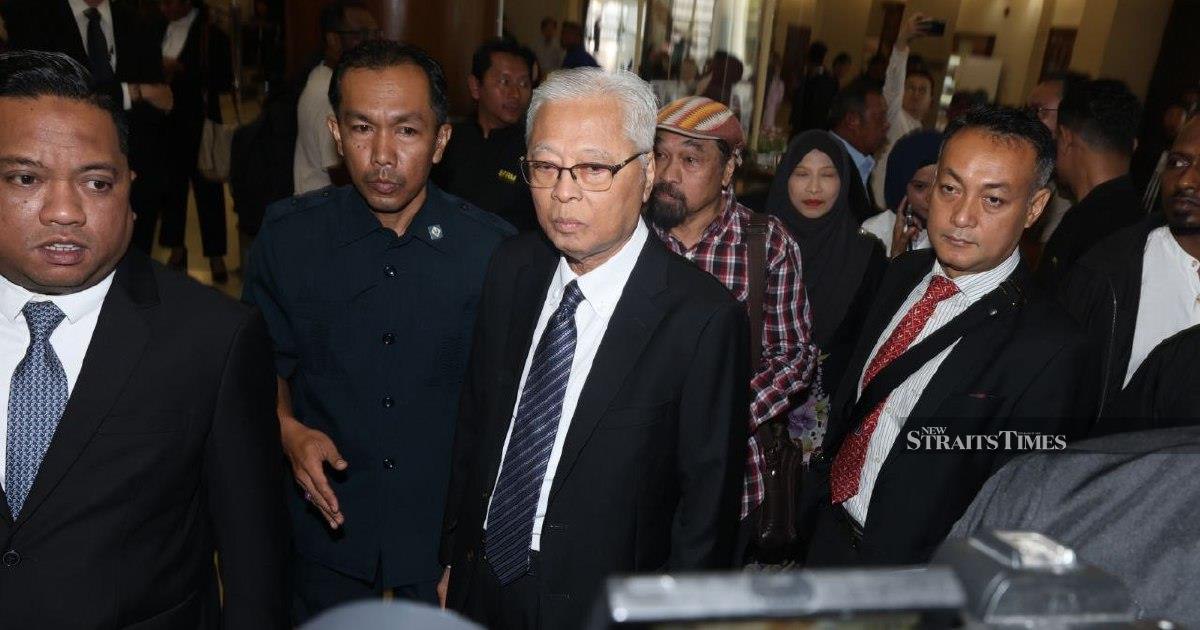
Former Prime Minister Datuk Seri Ismail Sabri Yaakob walked out of the court complex in Kuala Lumpur on Friday after his son successfully arranged his release by posting a RM300,000 bail. The development marks another chapter in what has become one of Malaysia's most closely watched legal proceedings, drawing public attention given his previous position as the nation's chief executive.
The bail posting represents a critical juncture in the legal process for the former premier, whose tenure as Prime Minister ran from August 2021 to August 2022. The specific bail amount, set at RM300,000, reflects the court's assessment of the circumstances surrounding his case and the necessity to balance his rights with the gravity of the proceedings. By having a family member post the bail rather than arranging it through commercial channels, Ismail Sabri has taken a path that keeps the matter within the private domain of his household.
The presence of his son at the court complex underscores the family's direct involvement in securing his conditional release. This personal intervention highlights the broader implications when individuals of high public standing face legal scrutiny—the actions invariably become matters of national interest and media scrutiny. The son's role demonstrates the family's commitment to ensuring the former leader's availability for subsequent court appearances and compliance with any conditions attached to his release.
For Malaysian legal observers and the broader public, the bail posting procedure itself carries procedural significance. The court's acceptance of the bail amount suggests that judicial authorities have determined Ismail Sabri's risk profile with respect to flight risk and potential non-compliance. The RM300,000 figure positions the case at a moderate to substantial level within Malaysia's bail framework, indicating that while authorities deemed his release acceptable pending further proceedings, they also wanted to ensure sufficient financial incentive for continued compliance.
The timing of this development occurs against the backdrop of Malaysia's political landscape, where former high-ranking officials have increasingly faced legal challenges. The case of Ismail Sabri joins a growing list of prosecutions involving prominent political figures, reflecting broader efforts by Malaysia's judicial institutions to demonstrate independence and accountability across all levels of society. This trend has significant implications for how Malaysian politics operates going forward, as no previous position appears to provide immunity from legal scrutiny.
For Southeast Asian observers, the proceedings carry broader regional significance regarding the rule of law and institutional strength. Malaysia's handling of cases involving former prime ministers serves as a barometer for the region's democratic maturity and judicial independence. The transparent nature of the bail proceeding—conducted openly in court and subsequently reported—demonstrates Malaysia's commitment to transparent legal processes, though opinions remain divided on whether the system operates entirely free from political influence.
The bail condition itself typically imposes restrictions that will define Ismail Sabri's movements and obligations during the period before his case concludes. Such conditions often include requirements to report regularly to authorities, restrictions on overseas travel, and prohibitions against tampering with evidence or witnesses. These limitations can significantly impact daily life and, for a figure of Ismail Sabri's prominence, carry consequences for any public roles or activities he might otherwise pursue.
The broader political ramifications cannot be overlooked. As a former UMNO member and two-time Prime Minister, Ismail Sabri's legal challenges resonate throughout Malaysia's establishment political circles. His situation serves as a cautionary note for current and aspiring political leaders regarding accountability mechanisms that appear increasingly willing to pursue even the highest office-holders. This development may influence how Malaysian politicians conduct their affairs and their willingness to engage in activities of questionable legality.
From an international perspective, Malaysia's willingness to prosecute former prime ministers demonstrates commitment to fighting corruption and maintaining legal standards that apply universally rather than selectively. This approach contrasts with some regional peers where former leaders enjoy de facto or de jure immunity. However, critics continue to question whether Malaysia's prosecutorial system operates free from partisan political influence, a question that remains contentious given the country's polarized political environment.
The release on bail does not signify exoneration or even a conclusion to the legal process. Rather, it represents a procedural milestone where the court has determined that Ismail Sabri can await further proceedings while maintaining his liberty, provided he fulfills the conditions established by judicial authorities. The substantial bail amount ensures meaningful consequences should he breach the conditions, while his son's direct involvement demonstrates family commitment to meeting the court's requirements.
Going forward, the case will likely progress through Malaysia's court system with further hearings and potential developments that will continue attracting public and media attention. The outcome will carry significance not only for Ismail Sabri personally but also for how Malaysia's legal system is perceived internationally and domestically as capable of applying consistent standards of accountability to all citizens, regardless of their previous positions.

