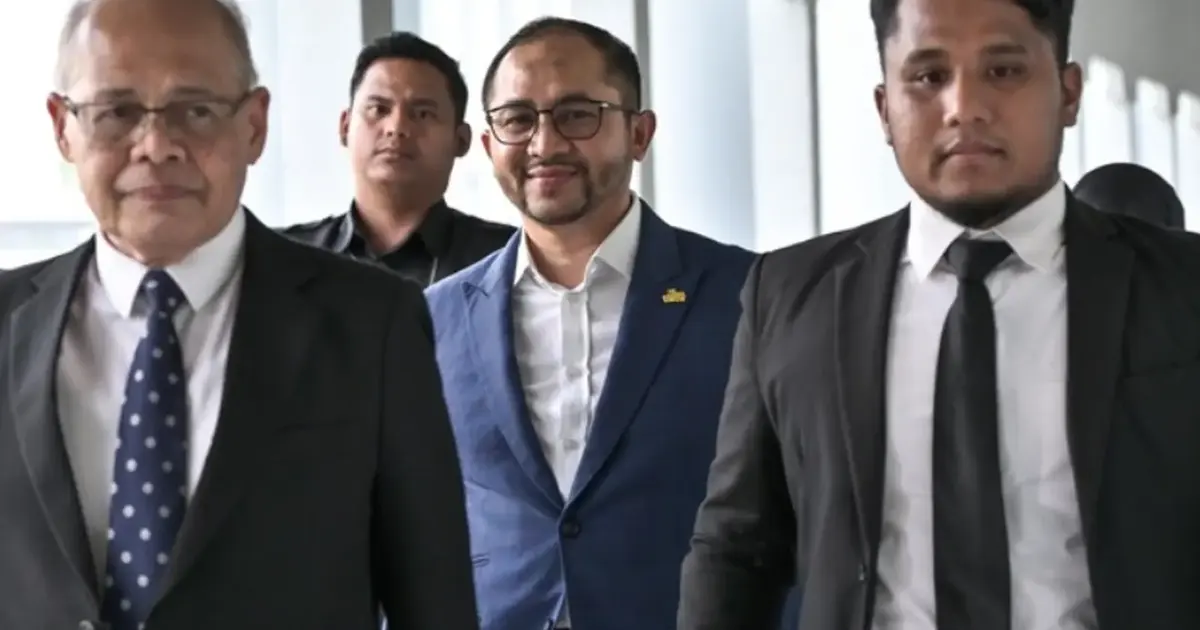
A managing director testified in court this week that a former political secretary applied significant pressure on him to surrender roughly half of a substantial consultancy fee obtained from a police procurement contract. Khairi Mat Jahya detailed how Sayed Amir Muzzakkir Al Sayed Mohamad, who previously served as political secretary to a senior government figure, demanded approximately RM9 million after Khairi had successfully negotiated a RM19 million consultancy agreement relating to a police tender.
The allegations emerged during legal proceedings that have drawn attention to the murky intersection between political connections, corporate consultancy arrangements, and government procurement processes in Malaysia. The case illustrates ongoing concerns about how political patronage networks leverage access to lucrative state contracts, a persistent issue that observers have flagged as undermining transparent and merit-based government procurement. The specific details of the police tender in question were not immediately disclosed in the court hearing, though the substantial sums involved underscore the scale of consultancy fees frequently attached to major government contracts.
Khairi's testimony provides a window into the pressure tactics allegedly employed by those in political spheres to extract financial benefits from business opportunities that flow through government channels. According to his account, the former political secretary's claim on the consultancy fee appeared to stem from his role in facilitating or enabling access to the police contract opportunity. This suggests a broader pattern where individuals positioned within political structures position themselves to capture financial rewards from commercial transactions connected to government business, regardless of their direct contribution to delivering the contracted services.
The demand for exactly RM9 million—precisely half of the RM19 million total—indicates a degree of calculation in the pressure campaign. Such specificity suggests either a negotiated position or a clearly articulated claim based on some perceived entitlement to a portion of the proceeds. For Khairi, resisting such demands from a former political secretary would have carried considerable personal and professional risk, given the leverage that proximity to political power typically affords in Malaysia's business environment. The fact that he proceeded to court rather than capitulate to the demand represents a notable willingness to challenge such pressure through legal channels.
The case intersects with broader governance challenges facing Malaysia, where the line between political service and personal enrichment has historically remained ambiguous. Consultancy fees attached to government contracts have long attracted scrutiny from anti-corruption advocates and civil society groups, who argue that such arrangements often lack genuine commercial justification and instead function as vehicles for channelling public money to political insiders and their associates. The police sector, in particular, has faced repeated questions about procurement practices and the role of intermediaries in securing contracts.
Sayed Amir Muzzakkir Al Sayed Mohamad's alleged actions, if established in court, would represent a fairly direct instance of leveraging political position to extract personal financial gain from government business. The structure of the claim—a demand for payment following the securing of a lucrative contract—follows patterns documented in previous corruption cases across the region. Observers have noted that such arrangements rarely leave clear documentary trails, making them difficult for enforcement agencies to detect and prosecute, which underscores the importance of witness testimony in such cases.
From a broader Southeast Asian perspective, Malaysia's experience with these dynamics is not unique. Similar patterns of political-commercial entanglement have emerged in other jurisdictions across the region, though the specific legal and institutional responses have varied considerably. Malaysia's relatively robust system of independent courts and willingness to hear politically sensitive cases has sometimes functioned as a counterbalance to executive power and patronage networks, though critics argue enforcement remains inconsistent and selective.
For corporate practitioners navigating Malaysian business environments, the case serves as a cautionary reminder of the risks inherent in securing government contracts through channels that involve political intermediaries. The consultation fee structure itself—RM19 million for a police tender—raises questions about whether such arrangements represent genuine commercial value or primarily function as mechanisms for transferring public resources to private interests with political connections. The court proceedings may shed light on how such fees were justified and whether legitimate consultancy services were actually delivered.
The testimony also highlights the vulnerability of individuals like Khairi who occupy middle positions in these transactions. Having secured the contract, he faced pressure to share the proceeds with the individual whose political position allegedly enabled the opportunity in the first place. The resolution of his case through the courts rather than private settlement suggests either principled resistance to extortion or practical recognition that ongoing demands would never truly cease, making litigation a more rational long-term strategy.
As the court case proceeds, its outcome may have implications beyond the immediate parties involved. A judgment against Sayed Amir Muzzakkir Al Sayed Mohamad could potentially embolden other individuals to challenge similar pressure tactics, while establishing clearer legal precedent around the permissibility of such claims. Conversely, a decision favouring the former political secretary might suggest that Malaysian courts view proximity to power as conferring legitimate financial interests in government contracts, a troubling signal for governance and anti-corruption efforts.
The police tender contract itself warrants scrutiny regarding its procurement process, the methodology used to determine the RM19 million consultancy fee, and whether appropriate competition and evaluation procedures were followed. Such questions remain relevant regardless of the outcome of the civil dispute between Khairi and Sayed Amir Muzzakkir Al Sayed Mohamad, as they speak to systemic governance challenges that extend beyond individual actors or isolated incidents.

