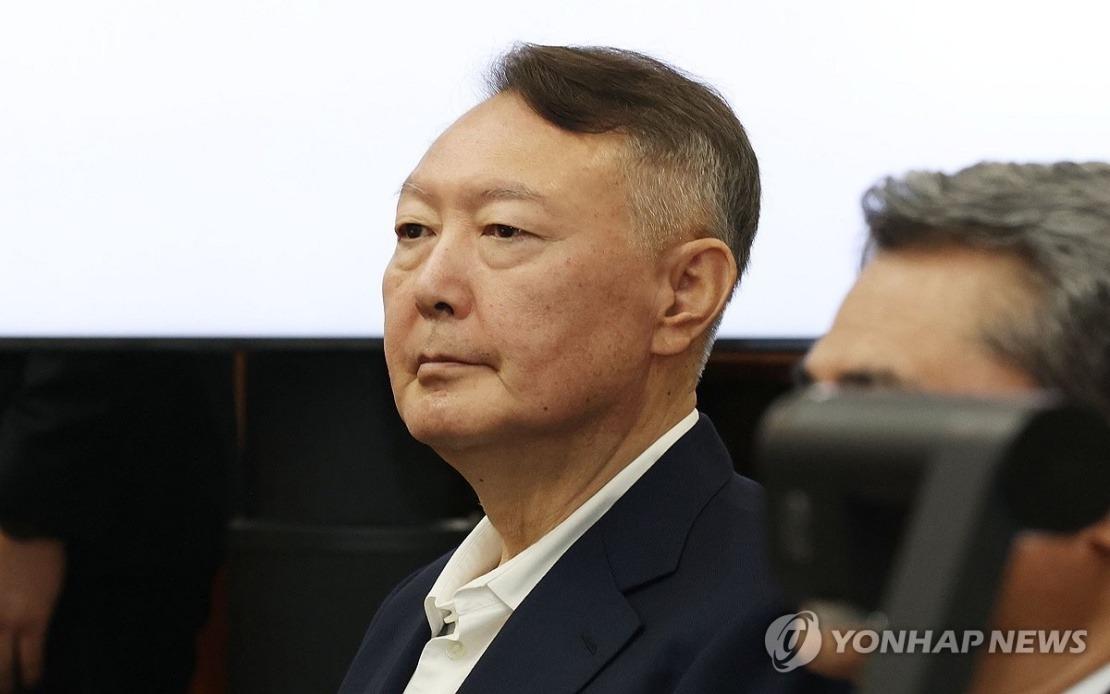
Former South Korean President Yoon Suk Yeol has been convicted of election law violations by a Seoul court, adding another layer of legal jeopardy to the embattled leader who is already facing more serious charges related to his failed martial law declaration. The Seoul Central District Court found Yoon guilty on Monday of making false statements during his 2022 presidential campaign, imposing an 18-month prison sentence that is suspended for three years. The verdict carries significant implications beyond Yoon himself, potentially requiring his People Power Party to forfeit nearly 40 billion won in campaign reimbursements that were paid out following his electoral victory.
The case stems from allegations that Yoon made deliberately misleading public statements on two separate occasions. During a press event in December 2021, he falsely claimed he had never introduced a lawyer to a former tax official. Later, in a January 2022 interview, Yoon denied having met with shaman Jeon Seong-bae and stated that a party official, not his wife Kim Keon Hee, had facilitated any introduction. The court accepted evidence from prosecutors showing that both statements were untrue, finding that Yoon had in fact made the lawyer introduction himself and had met the shaman through his wife's mediation.
Under South Korea's election law framework, political parties receive subsidies to cover campaign expenses when their presidential candidate secures at least 15 percent of the vote. However, this financial support becomes contingent upon the candidate's subsequent legal record. If a candidate is ultimately convicted and either fined at least 1 million won or sentenced to prison for election law violations, the entire reimbursement must be returned. The People Power Party received 39.7 billion won after Yoon's 2022 victory, a sum now at risk should his conviction become final through the appellate process.
The court's ruling emphasized the severity of Yoon's transgressions, noting that the false statements concerned matters that generated substantial public interest and debate during the election period. Prosecutors, represented by special counsel Min Joong-ki's office, had sought a two-year prison term, making the court's 18-month suspended sentence somewhat less severe than requested. The special counsel's investigation and prosecution represents one component of a much broader legal crisis engulfing the former president, whose political fortunes have deteriorated dramatically since his December 2024 martial law proclamation.
Yoon's legal team has signalled their intention to appeal the conviction, claiming the ruling contains multiple substantive errors in both procedure and fact-finding. The appeal process will move through higher courts within timeframes set by South Korean law governing special counsel investigations. Each appellate stage must conclude within three months, meaning that if the case reaches the Supreme Court, a final determination is anticipated by January of next year. This compressed timeline contrasts sharply with typical criminal appeals in South Korea, where cases can languish for years.
The election law conviction represents the latest judicial setback for Yoon in a mounting series of legal challenges. More ominously for the former president, he faces a life sentence handed down in February for leading an insurrection through his abortive martial law declaration in December 2024. That case remains under appeal, with the outcome still uncertain. Taken together, these convictions paint a picture of a once-powerful political leader now ensnared in overlapping legal proceedings that threaten his freedom and legacy.
For Malaysian and Southeast Asian observers, Yoon's predicament offers instructive lessons about the fragility of executive power once leaders lose office and political allies. South Korea's system of independent judiciary and vigorous prosecution has demonstrated capacity to hold even former presidents accountable for misconduct, though critics argue the process can become politicised. The targeting of campaign subsidies adds an economic dimension to political accountability, creating incentives for parties to discipline their own members who face legal exposure. This mechanism distinguishes South Korea's approach from systems in the region where former leaders have sometimes escaped prosecution or where political transitions occur more smoothly.
The ruling also highlights the intersection of campaign finance regulation with criminal prosecution. By linking party subsidies to candidate convictions, South Korea's law creates a financial incentive structure intended to discourage electoral misconduct. A major ruling party forfeiting billions of won in support sends a powerful market signal about the costs of false campaigning. The People Power Party must now grapple with whether to continue supporting Yoon's legal defence or distance itself from the former president to protect its own coffers.
Yoon's conviction on these relatively narrow election law charges—making false statements—contrasts with but foreshadows the more serious insurrection case. Election law violations typically carry lighter sentences than charges threatening state stability or democracy itself. The suspended sentence structure, while sparing Yoon immediate imprisonment, still constitutes a criminal conviction that will follow him regardless of whether he ultimately serves time. Such convictions carry social stigma in South Korea and can affect civil rights and political participation.
The special counsel law under which Min Joong-ki's office operates provides structured timelines but also reflects South Korea's commitment to expedited accountability for high-level officials. Rather than allowing cases to drift indefinitely through court schedules, the law mandates conclusion within specified periods. This framework enabled the rapid prosecution and conviction in the election law matter, though questions persist about whether speed serves justice or creates pressure that might occasionally compromise thoroughness.
For the broader Asian region where questions about democratic accountability and rule of law remain contested, South Korea's experience suggests that robust institutions can function even under strain. Yet Yoon's case also reveals vulnerabilities—the concentration of power in the presidency creates dramatic consequences when leaders fall, and the ability to pursue former executives through courts depends heavily on continuity of political will among successor administrations. Should Yoon's party return to power intact, such investigations might become vulnerable to reversal or amnesty, a pattern evident in some neighbouring democracies.
The road ahead for Yoon remains uncertain and lengthy. His legal team will contest the election law conviction through appellate stages while simultaneously managing the more serious insurrection case. The People Power Party faces its own calculations about maintaining association with a convicted former president versus cutting ties to preserve its political standing and financial resources. Meanwhile, South Korean society continues grappling with the consequences of Yoon's martial law attempt and the institutional shocks it created, making his ongoing legal proceedings less purely technical matters than ongoing national reckoning.

