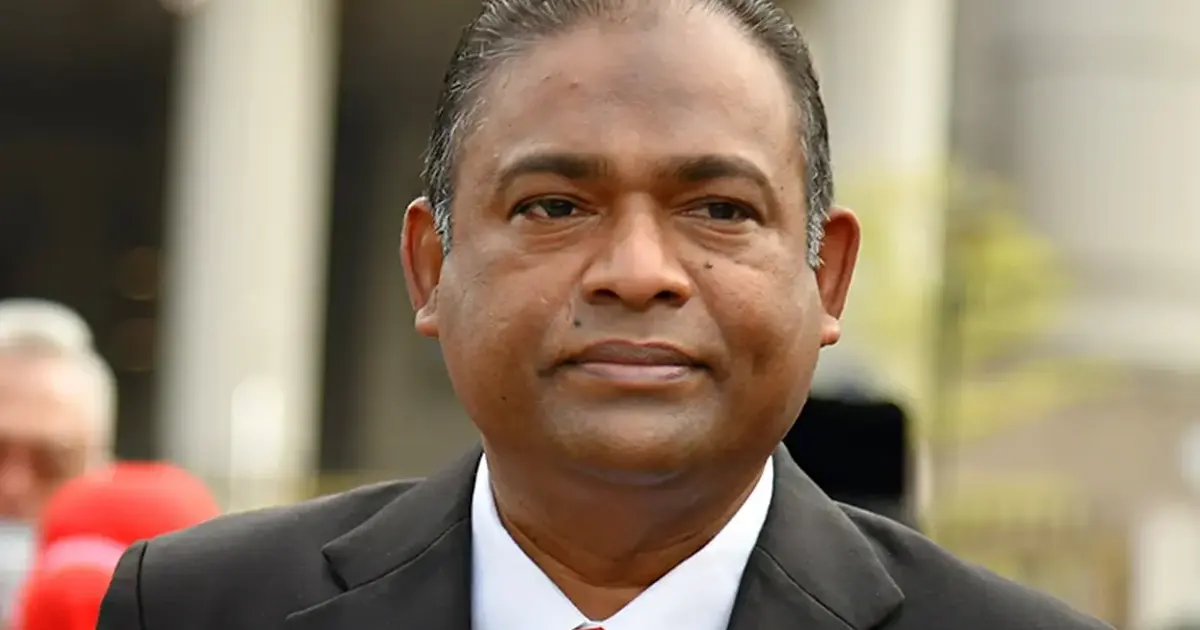
The son of former Baling MP Abdul Azeez Abdul Rahim has publicly denied that his father was arrested by the Malaysian Anti-Corruption Commission, moving to quash speculation that had spread rapidly across social media platforms overnight. The clarification came as misleading claims about the former Tabung Haji chairman's whereabouts gained traction online, prompting the family to issue a direct statement refuting the allegations.
Social media has become an increasingly unreliable source for breaking news on high-profile political matters in Malaysia, with unverified claims often circulating faster than official confirmations from authorities. The incident involving Abdul Azeez Abdul Rahim exemplifies how rumour and conjecture can proliferate in digital spaces, particularly when they involve figures associated with public institutions or government-linked entities. The speed with which misinformation travelled underscores the challenge faced by both the public and news organizations in distinguishing fact from fiction in the modern information landscape.
Abdul Azeez Abdul Rahim, a former member of parliament representing the Baling constituency, previously held the position of chairman at Tabung Haji, the pilgrimage fund that manages savings for Malaysian Muslims undertaking the Hajj to Mecca. His tenure at the institution placed him in a position of significant public responsibility, overseeing the finances of hundreds of thousands of Malaysian pilgrims. Any allegation concerning a figure of such standing naturally attracts considerable public interest and media scrutiny, making him a frequent subject of online discussion and speculation.
The Malaysian Anti-Corruption Commission operates as the primary enforcement body responsible for investigating allegations of corruption and misconduct involving public officials and public servants in Malaysia. When the MACC investigates or apprehends individuals, such actions typically become matters of public record, with formal announcements issued through official channels. The absence of any official statement from the MACC regarding Abdul Azeez Abdul Rahim's arrest would ordinarily suggest that no such action had taken place, yet social media users continued to circulate the unverified claim without awaiting confirmation from authoritative sources.
The family's intervention to publicly deny the arrest demonstrates the reputational damage that can result from sustained rumour-mongering, even when such claims ultimately prove baseless. For public figures and their families, the impact of false allegations can extend beyond mere inconvenience, potentially affecting business relationships, social standing, and psychological wellbeing. The need to actively counter misinformation places an additional burden on families already dealing with heightened scrutiny associated with public life.
This incident reflects broader patterns observed in Malaysian political discourse, where social media has become a primary vehicle for both legitimate political commentary and the spread of unverified claims. The absence of robust media literacy among portions of the online population means that sensational claims, particularly those targeting prominent individuals, find ready audiences willing to share and amplify them without independent verification. Political figures, whether in office or retired, remain particularly vulnerable to such treatment given the contentious nature of Malaysian politics and the intense tribal loyalties that often characterize online discussion.
Tabung Haji itself has faced considerable public and official scrutiny in recent years, with questions raised about governance, financial management, and the stewardship of pilgrim funds. The institution's high public profile means that anyone associated with its leadership becomes a potential subject of speculation, particularly when allegations of financial impropriety or administrative misconduct dominate news cycles. Abdul Azeez Abdul Rahim's former role as chairman necessarily links him to these broader institutional questions, however tangential his personal involvement may be to any specific controversy.
The timing of such rumours often correlates with political developments, parliamentary sittings, or moments when particular issues gain media attention. Social media users may deliberately amplify speculation about public figures during periods of heightened political tension, using false allegations as tools of political pressure or damage limitation. Distinguishing between genuine public concern and deliberate misinformation campaigns represents one of the principal challenges facing Malaysian society as it navigates the complexities of digital-age politics.
For journalists and news organizations, the situation underscores the importance of verifying claims through official sources before publishing, rather than simply aggregating social media posts or unattributed allegations. The MACC's official channels, court records, and statements from the individuals concerned represent the appropriate starting points for investigating such claims. Publishing unverified rumours risks amplifying misinformation and damaging the credibility of media institutions already facing declining public trust.
The family's decision to issue a direct denial rather than remain silent represents a strategic choice to confront false claims immediately, preventing further entrenchment of the misinformation. This approach, while necessary for reputation management, places responsibility on private citizens to engage in public debate simply to correct the record, diverting their time and energy from normal activities. The burden of countering misinformation should not rest solely on those targeted by false allegations, but on the broader information ecosystem that permits such claims to flourish unchecked.
Moving forward, this incident may serve as a reminder of the need for digital literacy initiatives and clearer public understanding of how to verify breaking news claims through official and credible sources. As social media platforms continue to serve as primary news sources for significant portions of the Malaysian population, the responsibility falls on both platform operators and individual users to consider the veracity and sourcing of claims before sharing them widely. For public figures, the reality of contemporary political life means preparing for the possibility of sudden, widespread speculation, regardless of factual foundation.

