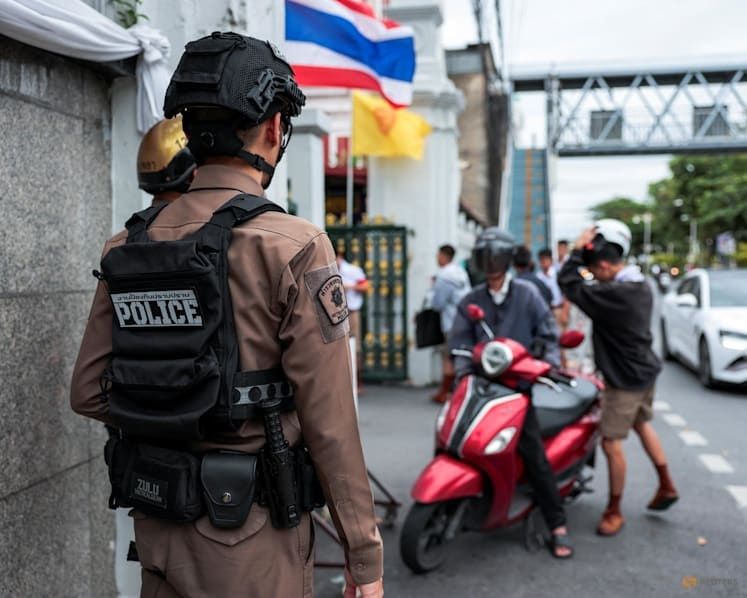
A former member of Thailand's parliament has been taken into custody by police after allegedly opening fire on a local government administrator and his driver in Nonthaburi province, which lies just north of the capital Bangkok. The incident, confirmed by Nonthaburi police chief Dejrapee Kongdee, marks the second major shooting incident in the region within days and has intensified scrutiny on Thailand's approach to firearm regulation.
Charong Riewrang, the former MP, was apprehended on Monday as investigators began examining the circumstances surrounding the alleged attack. According to the police chief, the chairman of the Nonthaburi local government administration sustained serious injuries in the shooting, while his driver was also wounded though authorities have not disclosed specifics regarding the severity of his injuries. Both victims are currently receiving medical treatment at a hospital facility.
The alleged perpetrator previously served in parliament as a representative of the ruling coalition, having been affiliated with the party led by Prime Minister Anutin Charnvirakul. The arrest has raised questions about the political dimensions of the incident, particularly given Riewrang's previous parliamentary tenure and the timing of the shooting in relation to broader concerns about gun violence in the country.
Investigators are actively pursuing leads into Riewrang's possible motivations for the alleged attack. Local news outlets have suggested that a private disagreement may have triggered the shooting, though police authorities have so far declined to confirm this theory or provide additional details about potential disputes between the suspect and victims. The motive remains a central focus of the ongoing investigation as authorities work to establish the full sequence of events.
The shooting in Nonthaburi comes at a particularly sensitive moment for Thailand's gun control debate. Just three days prior, the same province witnessed a devastating school shooting in which a 14-year-old boy fatally shot his grandparents before opening fire at his educational institution, killing six additional people before taking his own life. The rapid succession of these violent incidents has prompted renewed calls for comprehensive legislative action to address firearm accessibility and ownership regulations across the country.
Thailand's relationship with firearms presents a complicated picture when examined across the Southeast Asian context. The nation maintains one of the highest civilian gun ownership rates in the region, with estimates suggesting approximately 10 million firearms are currently in circulation among the population. This figure translates roughly to one firearm for every seven Thai inhabitants, reflecting a deeply embedded gun culture that has developed over decades and persists despite periodic public safety concerns.
The recent incidents have prompted government officials to make fresh commitments regarding stricter gun control legislation. Following Friday's school shooting tragedy, representatives from various government agencies pledged to introduce more rigorous measures governing firearm licensing, ownership, and registration. However, such announcements must be viewed against the backdrop of Thailand's history on this issue: previous administrations have made comparable promises in the aftermath of shootings, yet meaningful legislative changes have consistently failed to materialize or have proven insufficient in preventing subsequent incidents.
The challenge of implementing effective gun control in Thailand extends beyond simple legislative hurdles. Deep-rooted cultural attitudes toward firearms, combined with existing stocks of unregistered weapons and enforcement difficulties across rural regions, have historically undermined reform efforts. Additionally, the political instability that has characterised Thai governance over recent decades has often diverted attention and resources away from comprehensive social policy implementation, allowing gun-related violence to persist as a recurring crisis.
For Malaysia and other Southeast Asian nations observing these developments, Thailand's struggle with firearm-related violence offers important lessons about the complexities of introducing and sustaining effective gun control measures. The region faces shared challenges regarding transnational weapon smuggling, cultural attitudes toward firearms, and the political will required to enforce stricter regulations. Malaysia's own approach to gun licensing and ownership, while more restrictive than Thailand's framework, continues to face scrutiny following isolated shooting incidents.
The arrest of Riewrang and the circumstances surrounding the alleged shooting underscore the multifaceted nature of gun violence in Thailand, which extends beyond simple availability to encompass personal disputes, mental health concerns, and broader social tensions. As investigators continue their examination of the case, the incident will likely feature prominently in ongoing parliamentary debates about gun reform, potentially serving as a catalyst for legislative action or merely another episode in a cycle of promising but unfulfilled reform commitments.

