The International Court of Appeal of the Fédération Internationale de l'Automobile convened behind closed doors in Paris on Tuesday to determine the final outcome of June's Monaco Grand Prix, a dispute that has consumed the sport's attention for nearly three months and threatens to reshape the championship standings. The court's deliberation period of two to three weeks underscores the complexity of the case, which hinges on technical interpretations of pit-lane timekeeping systems and the application of sporting regulations that have exposed significant inconsistencies in how stewards have treated similarly situated competitors.
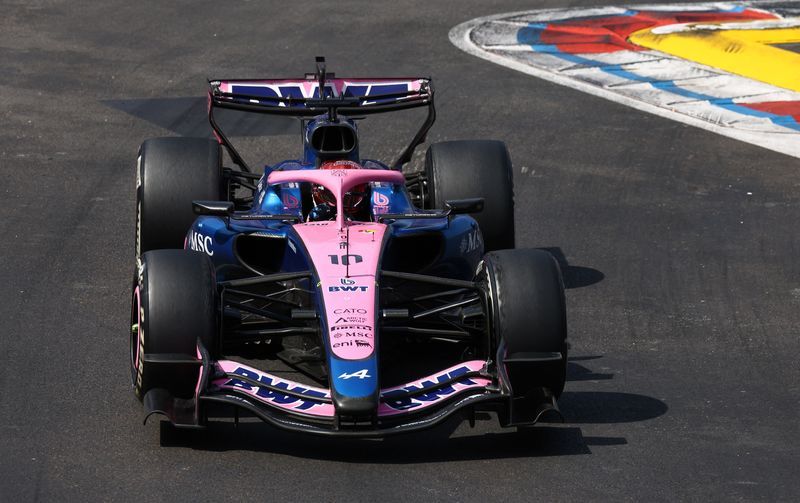
At the heart of the matter lies Pierre Gasly's third-place finish, which has ping-ponged between the Alpine driver and Red Bull's Isack Hadjar as different bodies have reviewed the underlying facts. Gasly crossed the line in third position on June 7, only to be stripped of the result and relegated to seventh place when stewards imposed two five-second penalties for exceeding pit-lane speed limits. Hadjar was correspondingly elevated to the podium, celebrated his achievement, and received the traditional champagne spray from his team. However, this order proved temporary when Alpine submitted evidence of a timekeeping error that stewards accepted during a review hearing on June 12. The penalties were erased, Gasly reclaimed third place, and Hadjar had to return his trophy in an extraordinary reversal that has no precedent in modern Formula One.
The intricate ripple effects of this single decision have created a cascade of championship implications that extend far beyond the two primary competitors. McLaren's Oscar Piastri currently occupies fifth position, having been pushed down from his original fourth-place classification. Similarly, the standings of Liam Lawson and Arvid Lindblad, both representing Red Bull-affiliated teams, have been affected. Mercedes' championship contender George Russell found himself without points after serving a pit-lane speeding penalty during the race, a consequence that could not subsequently be reversed through the review process that benefitted Gasly. The victory itself went to Mercedes' Kimi Antonelli, with Ferrari's Lewis Hamilton securing second place, meaning the championship picture remains uncertain pending this appeal's outcome.
The fundamental unfairness that has animated this dispute centres on the disparate treatment of drivers who committed identical violations under identical circumstances. Piastri, the Australian McLaren driver, received the same pit-lane speeding penalty as Gasly but served his during the race, incurring the full time and position loss. This distinction proved critical when Gasly's post-race penalties were overturned, as no mechanism exists within Formula One's rulebook to undo penalties that have already been served. Russell's situation amplified this concern; the Mercedes driver explicitly requested that his penalty be applied post-race rather than served immediately, evidently believing this would preserve his opportunity for a subsequent review. When stewards initially ruled on Gasly's penalty reversal, they acknowledged that the situation created unfair outcomes for other competitors, yet they proceeded with the decision anyway, noting that no regulation permits stewards to reverse a penalty that has already been executed.
McLaren's decision to lodge an appeal on June 16, backed by Red Bull's challenge to the reversal, reflects the commercial and sporting stakes involved in championship competition. Team principal Andrea Stella articulated the team's position at the Dutch Grand Prix, emphasizing that restoring Gasly's penalties raised substantial fairness concerns that extended beyond McLaren's immediate interests. Stella further acknowledged the dual motivation behind McLaren's appeal: the broader integrity of the sport's regulatory framework and the material impact on the team's championship campaign. This framing reveals the tension inherent in Formula One's governance structure, where teams must simultaneously defend the sport's credibility while protecting their own competitive positions and championship hopes.
The confidential nature of the appeal hearing on Tuesday prevented any detailed information about the arguments presented or the judges' apparent leanings from emerging into public view. Both Alpine and Red Bull presented their cases to the three-judge panel, who must now weigh the technical merits of the timekeeping evidence, the fairness implications of the original decision, and the legal precedents established within Formula One's sporting code. The judges face a genuine dilemma: upholding the reversal validates the timekeeping evidence that Alpine presented and respects the principle that errors should be corrected, but it simultaneously rewards selective application of the rules that disadvantaged other competitors who faced identical circumstances. Conversely, overturning the reversal would restore consistency but would effectively invalidate Alpine's technical evidence and set a troubling precedent for future cases involving timekeeping disputes.
The championship implications of this decision extend beyond the immediate points distribution at Monaco. McLaren's pursuit of the constructors' championship against Ferrari and Mercedes may ultimately depend on whether Piastri retains the points he currently holds or whether a reversal strips him of those positions. Red Bull's dual interest in both its main team and its affiliated racing entities means that the outcome affects multiple drivers' championship positions and the financial distributions that follow from final point totals. For Alpine, the battle represents vindication of their technical evidence and their claim that their driver was incorrectly penalized, but also a test of whether the sport's governing body will acknowledge and correct its own procedural errors.
The delay in reaching a decision, while frustrating to teams and the sport's followers, perhaps reflects the genuine difficulty of the legal and technical questions at stake. Formula One's rulebook has evolved organically over decades, with specific regulations often written in response to particular incidents rather than emerging from comprehensive philosophical frameworks. This creates situations where the letter of the regulations may conflict with broader principles of fairness and sporting integrity. The appeal court judges must interpret rules that were not designed to address this specific scenario, and their decision will inevitably establish precedent for how similar disputes are handled in the future.
The timing of the appeal's resolution, with a decision expected before or around the Italian Grand Prix on September 6, means that teams will finally understand the definitive championship standings after more than three months of uncertainty. The subsequent debut of the new Madrid circuit on September 13 will occur in the knowledge of how the regulations governing pit-lane infractions and penalty review will be interpreted going forward. For Malaysian and Southeast Asian Formula One enthusiasts, this case exemplifies the complex governance challenges facing the sport as it attempts to maintain competitive balance, regulatory consistency, and fairness amid the intense pressures of championship competition.

